In Case You Missed It: This article is from our January 2000 edition of our newsletter “Free-Range Thinking.” It’s a sneak peak at techniques for crafting an effective meeting agenda. If you enjoy this article, you’ll love our workshop Meetings for People Who Hate Meetings. The next class starts on Oct. 11th. Join us!

Photo by Andrea Piacquadio
A well-crafted agenda can be the difference between a meandering, frustrating, time-wasting conversation and a genuinely productive meeting. And when you consider how much time you spend in meetings…
“He came to the meeting with an agenda.”
On paper this reads like a simple declarative sentence, but try this test: say it to a colleague and ask what it means. Respondents in my informal focus group were unanimously suspicious: the guy was clearly coming to the meeting with an undeclared purpose. There was something he wanted, so he had an agenda. I wanted only to convey that he was carrying a particular document, but the A-word carries its own baggage these days, and that’s worth noting.
Even though business experts agree an agenda is a critical component of any meeting, I am constantly surprised how many meetings proceed without one. Maybe the word’s negative connotations are partly to blame. Or perhaps some people assume an agenda is merely a list of topics, so they figure there’s no reason passing one around if the list is short (as it frequently is) and everyone knows it anyway. And let’s not discount the factor that explains about 90% of organizational problems: sloth. Whatever the reason, the message here is simple: get over it. “A written agenda, distributed in advance, is the single best predictor of a successful meeting,” says the 3M Marketing Team, authors of the book, Mastering Meetings, and I’ve seen no evidence to the contrary.
The next time you’re invited to a meeting, insist on an agenda. (It’s a fair trade: someone is requesting a portion of your time, so why not ask for a slice of his – prior to the meeting — in return?) And when it’s your turn to call a meeting, make sure your agenda includes the following items:
1. A clear and concise statement of the meeting’s objective.
If you can’t state the purpose and desired outcome in a single sentence, you’re not ready to call a meeting. “The purpose of this meeting is to determine an approach for our new website.” Good: your participants know why they’re convening and what you intend to decide.

Photo by Oladimeji Ajegbile
2. Starting and ending times.
Let attendees know exactly how much time you’re requesting. Everyone announces start times – that’s the easy part – but including an end time gives yourself a deadline and helps your invitees plan the rest of their day.
3. The names of the meeting convener and all participants.
Have you ever attended a meeting where, once the objective was made clear, it was embarrassingly evident that key people were absent? An agenda that includes the objective and a full list of invited participants and that is distributed in advance helps avoid this awkward, time-wasting problem.
4. List of topics, how the group will handle each topic, and anticipated length for each topic.
Most meeting leaders have no problem listing the appropriate topics. For the sample objective noted above, the list might look like this:
A. Different Models of Websites (e.g., content, community, activism)
B. Competitive Profile – What Are Similar Organizations Doing?
C. Financial / Staffing Considerations
D. Brainstorming Ideas
E. Next Steps
What’s not evident here, however, is the kind of interaction planned for each topic. For most meetings, interaction among the leader and participants tends to fall into 3 distinct categories:
Information – a one-way download that doesn’t require feedback (e.g., a manager bringing new information to her team)
Discussion – a solicitation of ideas and suggestions that is not intended to culminate with a decision (e.g., brainstorming)
Action – making a decision or committing to a plan (e.g., next steps)

Photo by fauxels
Designating item A above as “Information” alerts participants that this portion of the meeting will be a presentation requiring listening only. Adding “Discussion” to item B signals that comments will be requested (so come prepared). Finally, noting the anticipated time length for each item lets participants know what to expect and helps them see in advance what is being prioritized (since more important items tend to be allotted more time).
5. Speakers for each topic.
“Oh, I didn’t know I was supposed to talk about this.” Have you ever heard that in a meeting? Identifying individuals who will lead the various segments in your meeting avoids this problem and helps ensure key participants will adequately prepare.
6. Instructions on how to prepare, what to bring.
If there’s research your invitees need to complete or materials they need to bring (e.g., memoranda, legal pads, doughnuts), your agenda can cover this ground as well. Those who run the best meetings leave nothing to chance, and item #6 is a good catch-all for preparatory steps not covered by #1-5.
When your agenda is completed, circulate it to all invitees a few days prior to the meeting and solicit feedback. You may discover that someone who should be invited has been omitted, an item you thought would only take ten minutes will probably require thirty, or a particular invitee doesn’t have the background materials that are required reading prior to the meeting. By collecting everyone’s feedback, you can improve the agenda and expect more buy-in from your participants.

Photo by Mihis Alex
An agenda is much more than a list. Thoughtfully prepared, it is a road map that will get you where you want to go and will use everyone’s time more efficiently in the process. “He came to the meeting with an agenda?” Good for him!
BEYOND THE AGENDA
According to a study conducted by the Annenberg School of Communications at the University of Southern California, there are 6 reasons why most meetings fail. The absence of a written agenda is one of them. Here are the other five:
1. Lack of sufficient notification (i.e., no time to prepare).
2. Wrong people in attendance.
3. Lack of control – attendees had no real impact on decision-making process, or the leader didn’t exert proper control of the meeting (or both).
4. Political pressure – attendees were forced to express views which they didn’t endorse (or were reluctant to speak candidly).
5. Hidden agendas.
If you want to improve the quality of meetings you attend, consider investing a few hours learning how to create the conditions for success while avoiding common pitfalls. “Dramatically Better Meetings” is a half-day workshop specifically designed for public interest groups, foundations, or progressive businesses that want to get more from their meetings internally and externally. To find out more, please read the brochure enclosed with this newsletter.
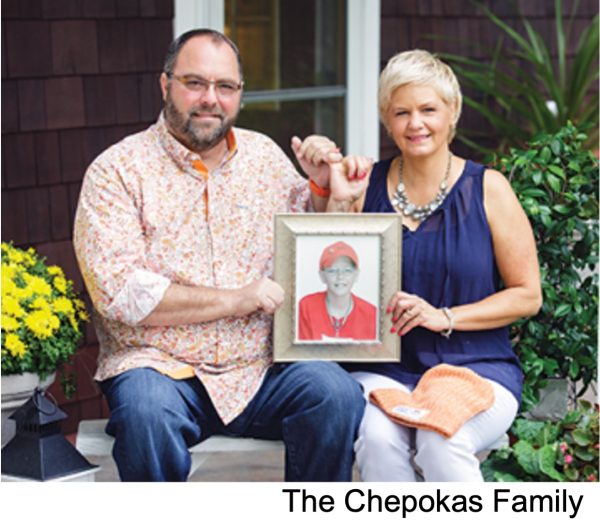 The first story you are likely to hear about Pinky Swear, is their origin story: 9-year-old Mitch overhears a family talking about not being able to afford Christmas presents. Mitch decides to empty his bank account and share all he has with the families who are in the cancer ward at the hospital where he is receiving treatment for bone cancer. Mitch asks his father to ‘pinky swear’ to do the same the next year, after Mitch is gone. You can see the story
  At least once a month at staff meetings, the Pinky Swear team does an exercise led by All-Star Engagement Manager, Sue Ratcliff. Sue’s role at Pinky Swear is to connect with families who are battling cancer (who they call “All Stars”). For the team exercise, Sue will share information from an interview with a family, write up a story version, and then each staff member will practice sharing the story. They don’t read it word for word. Instead, they practice telling it in their own words; how they might share it with a potential donor or supporter. This way the story won’t feel like a canned speech but will come from the heart.
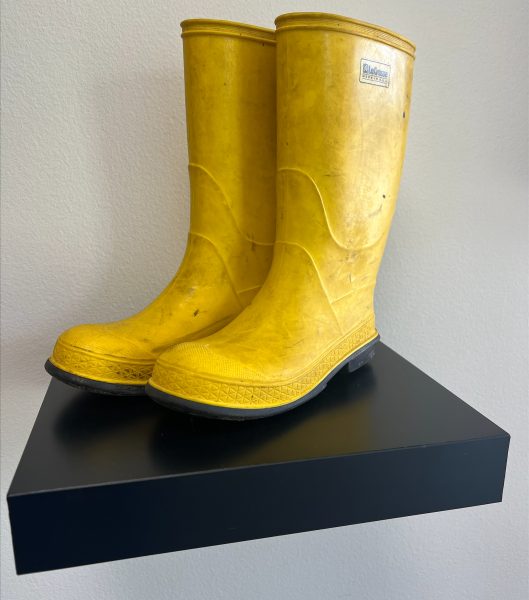 I got to take an abbreviated version of the tour via Zoom. Erica started by bringing me to “Mitch’s Corner.” This is a collection of Mitch’s memorabilia, like his yellow rain boots, a fireman’s hat and Wheaties box. There is a story about each item.
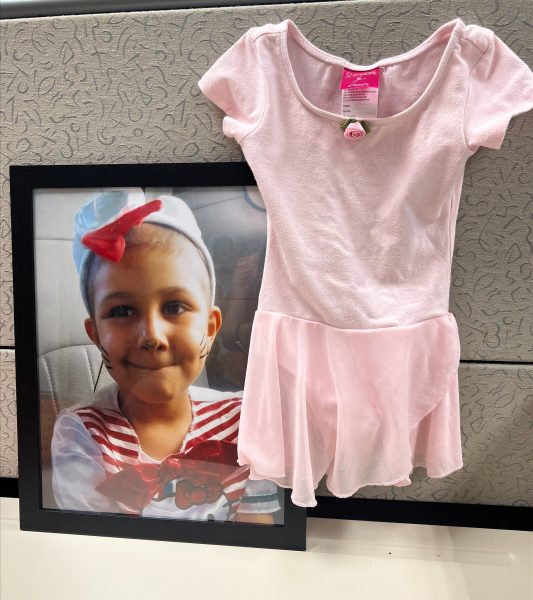 Next to Mitch’s Corner, a small pink leotard lays over the back of a kid’s chair next to a picture of Victoria. Victoria’s mom got a phone call about her daughter’s cancer diagnosis right after a dance class. So, they rushed to the hospital with Victoria still wearing her blush pink leotard.
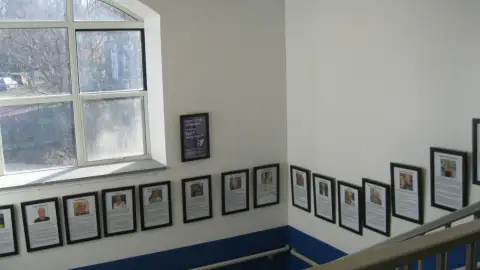
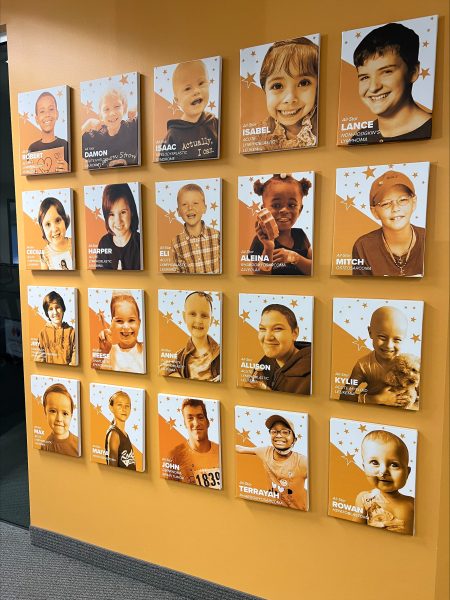 The tour isn’t over yet! There is a wall of pictures of several kids the foundation has worked with. The tour guide can ask which picture speaks to you, and then they can tell the story of that kid and their family: who they are, what their goals and dreams are and how Pinky Swear is supporting them every step of the way.
 In the less-is-more spirit of TED conferences, all the talks are relatively short (generally running between 10-15 minutes), and all 30+ recordings are worth watching. If that feels overwhelming, we recommend starting with the following five presentations that do what frank does best: entertain, inform, and inspire you to follow the frank credo, “Don’t settle for small change.”
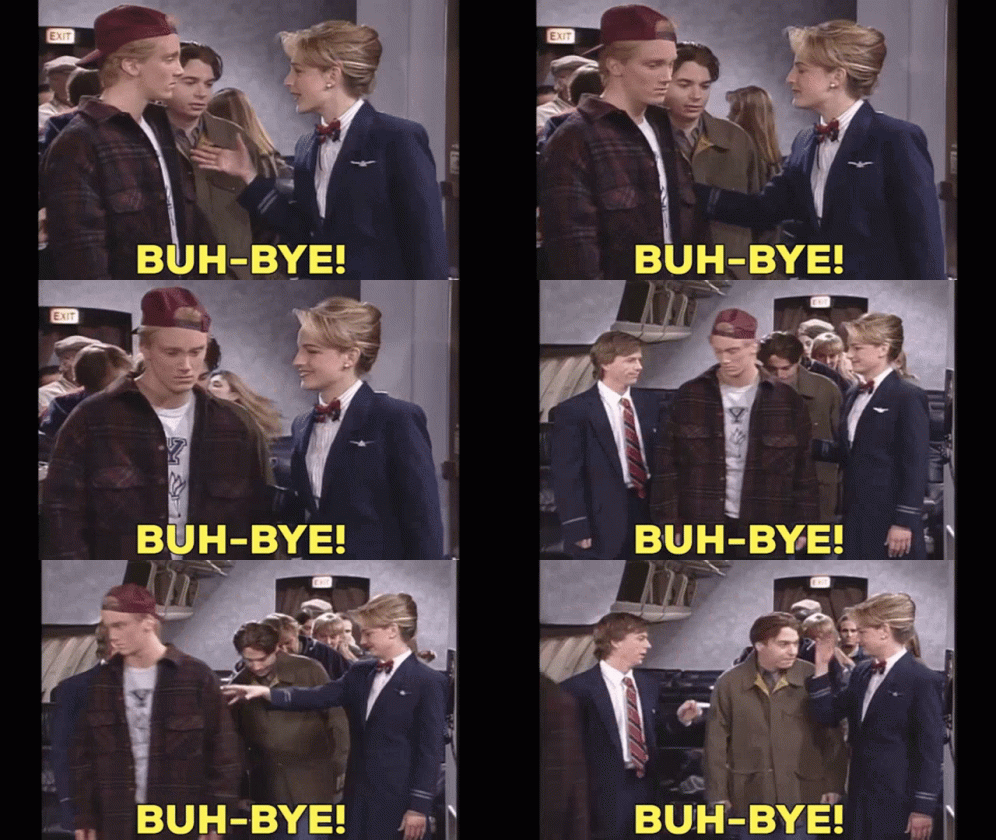 If you wanted to be a stewardess in the 1960s, you had to be young, pretty, trim, and single. And should any of those things change, you could be fired faster than you could say, “Buh-bye!” None of that would be accepted today, but remember this was the heyday of high-flying Mad Men and a low point for the rights of working women. In this talk based on her book, “The Great Stewardess Rebellion,” Nell McShane Wulfhart tells the under-appreciated story of how airline stewardesses led a worker’s revolution that changed labor laws and advanced the rights of working women everywhere.
 Since 1988, CLINIC has been providing training and support to charitable immigration law offices as well as specialized direct legal representation and advocacy for immigration policy at the federal, state and local levels. Communications Project Manager Kathleen Kollman Birch and her team began “Neighbors, Not Strangers” in order to “help shift the narrative” around immigration, and they are off to a great start. (Scroll down to read the whole story.)
 The first excerpt is from the story, “In the Name of Compassion: The Journey of Aden Batar.” Batar is the director of migration and refugee services at a CLINIC affiliate organization, where he has worked for more than 25 years. His story begins in Somalia in March of 1992, but this section picks up in Nairobi, Kenya in May of 1992.
 The second excerpt is from “A Dream Uncaged: Part One,” another story written by Kollman Birch with beautiful art by

 Failing the “at-a-glance” test: Readers page through newspapers and magazines fairly quickly, so an ad only has a second or two to grab your attention. Consequently, it has to give you some idea of what it’s about in just a glance. All four of these ads fail that test miserably – there is absolutely nothing in any of the imagery or headlines that signals these are about smoking.
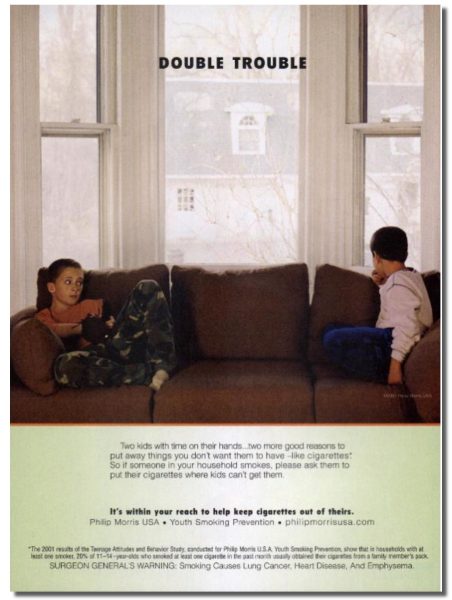 Ambiguous or confusing headlines: If a headline should make you want to read more, all of these ads fail at that level, too. The headline, “What else is within your kids’ reach?” could have worked, Morse said, “but only if the ad had showed something that immediately conjures up danger.” As it stands, who could fault a parent for reading the headline and thinking, “So my kid can reach fruit – that’s a problem?”
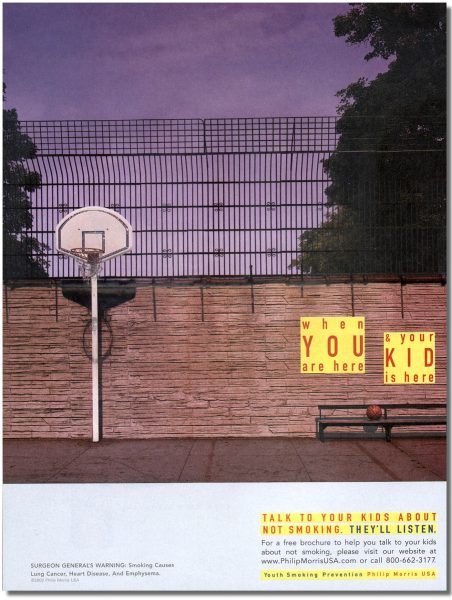 Trapped space: This design flaw is present in all four ads, but it’s most problematic in the one featuring the image of a basketball court. The pole supporting the backboard and hoop creates one visual boundary on the left side of the ad, and the two yellow blocks of text create another boundary on the right. The area in between is trapped space: empty and devoid of visual interest. And while this might seem counterintuitive, it’s probably the first thing you looked at. “Your eye goes straight to where there is nothing,” Morse said, and the next step is often to turn the page – the rest of the ad goes unread.
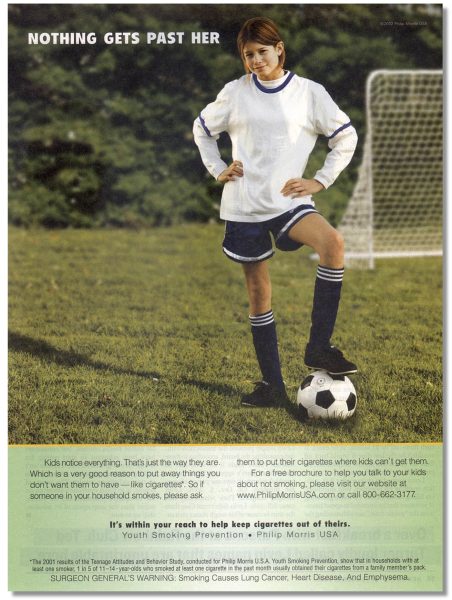 Other problems: “It’s shaming, which is another way of saying it’s a one-way conversation. That kind of command-and-control marketing doesn’t work anymore. And it’s not straightforward. It has a weird circularity to it. It’s within your reach to keep cigarettes out of their reach so they won’t reach for them, etc., etc. And doesn’t ending a sentence with the words ‘theirs’ look like it’s a mistake? By the time you get there, your brain thinks, ‘What’s theirs?'”

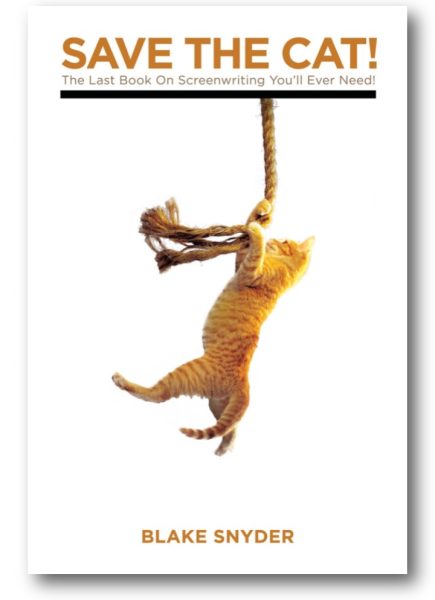 Storytellers accomplish this by creating scenes in which the main character does something that is universally recognizable as likeable or even heroic. The legendary screenwriter Paddy Chayevsky dubbed these “pet the dog” scenes. (Or for you cat lovers, check out Blake Snyder’s book, Save the Cat.) The possibilities are endless, but whatever you choose, make sure you show the main character exemplifying a strength, a value or some behavior that will generate an emotional connection to the audience.
 In a recent Goodman Center storytelling webinar, one of our students, Josh Taylor from

 Twenty-four years later, I can report that attitudes have changed dramatically. It’s hard to find a public interest organization today that isn’t telling stories or talking about ways to “change the narrative.” That said, I cannot report that all the stories I’m seeing are well-told or are the best kinds of stories to tell. Even more troubling are the stories told in ways that do more harm than good. So, for this month’s edition of free-range thinking – the last I’ll author – I have five requests for those who still aspire to tell truly world-changing stories.