ICYMI: The 5 Parts of the Perfect Pitch

In Case You Missed It: This article is from our November 2012 edition of our newsletter “Free-Range Thinking” originally authored by Andy Goodman. When attention-spans are fragile and time is of the essence, presentations of any kind must be top-notch! Here are five questions to answer in a perfect fast pitch.

The 5 Parts of the Perfect Pitch

You’ve got a handful of minutes to pitch your nonprofit. What do you say? What do you leave out? Whatever you do, make sure you answer these five questions.

It’s a moment that nonprofiteers dream about yet also secretly dread. Whether by luck or design, you find yourself face to face with a VIP – a Very Important Prospect – someone who can help your organization in a big way. Invariably, this VIP (a) is only vaguely familiar with your work, and (b) has only a few minutes to spare. “So, what do you do?” the VIP asks, not-so-surreptitiously glancing at her watch. What do you say?
For the last five years, Los Angeles Social Venture Partners (now the Social Justice Partners LA) has been preparing nonprofit leaders for this moment through a unique program called The Social Innovation Fast Pitch Competition. Over eight weeks, participants in this program are trained in the art of telling their organizational stories in precisely three minutes. The training culminates in a competition with $45,000 in awards for the best pitches.

The program has proved so popular that Social Venture Partners chapters in nine cities have replicated it, and I’ve had the privilege of coaching participants in Los Angeles, Seattle and Pittsburgh over the last three years. Having witnessed dozens of pitches, I’ve had a firsthand look at what works (and what doesn’t) in this high-pressure scenario.

From my perspective, the best pitches answer five questions. The order of the answers and the amount of time devoted to each can vary, but every question must be addressed if you’re going to tell the whole story:

Who are you?

This is always the first question in your audience’s mind, and an answer such as, “I’m the executive director of People for Good Things” may be sufficient. In some cases, though, your personal history may directly relate to your organization’s mission and is worth including.

John Sullivan, a finalist in LASVP’s 2010 competition, represented a nonprofit advertising agency housed within a drug treatment center. His pitch began with this stunning answer to question #1: “My name is John Sullivan. I’m an Eagle Scout, an ex-convict, a recovering heroin addict, and the founder and creative director of BTS Communications.” The rest of his pitch was equally compelling, and there was little surprise at the end of the event when the judges handed him a $10,000 prize.

What problem does your organization solve?
Note that this question does not ask, “What do you do?” Too often, nonprofiteers will gladly describe their programs and services – often diving deep into the weeds in the process – but what remains unclear is exactly how (or even if) these efforts solve the problem.

Photo by Lena Khrupina

Rick Nahmias, founder of Food Forward, used the opening of his pitch to answer this question: “In January 2009, while walking my dog Scout around the neighborhood, I’d see pound after pound of citrus fruit rotting in driveways or carried off by squirrels. My neighbor’s tangerine tree was full, food pantries were empty, I got an idea. With a single volunteer recruited from Craigslist, from 20 feet up, I saw yard after yard of fruit unpicked. Three months later, Food Forward was born.”

What is distinctive about your solution?
To say “we help more students graduate” or “we break the cycle of homelessness” or “we protect valuable habitats” is a start, but it’s not enough. If other nonprofits are working on the same issue – and it’s rare that you’ll have an entire field to yourself – you have to make it clear what makes your approach different and even preferable.

Imagine LA is one of several organizations addressing the problem of homelessness in Los Angeles. To ensure that it stood out in a crowded field, President and CEO Jill Bauman opened her pitch by addressing that question head on: “Did you know that in Los Angeles there are 8,000 homeless families? Remarkably, also in Los Angeles, there are 8,000 faith communities: churches, synagogues and mosques. Imagine LA’s vision is to match each family with one faith community in such a way that the family permanently exits homelessness and the children thrive. Eight thousand plus eight thousand equals zero, a simple yet powerful equation.”

What evidence can you offer of impact and sustainability?
Once your audience has a clear understanding of your organization’s unique approach to a particular problem, they’ll want evidence that your work is making a difference. Be careful, however, that you demonstrate clear progress (i.e., outcomes) and not just measures of your effort (i.e., outputs).

Girls and Gangs is an LA-based nonprofit serving girls in the juvenile justice system. When Dawn Brown was executive director in 2009, her pitch included this information: “Last year we served 340 girls ages 12-18 with only 3 staff members. We do this at an average yearly cost of $1,000 per child. It costs the county$45,000 to incarcerate that same child.” The cost differential is impressive, but all these numbers do not add up to evidence of impact.

Fortunately, later in the same pitch, Brown added this: “The experts say if you can keep one-third of the girls [from returning to jail], you’re doing well. Last year, we kept two-thirds out.” Now that’s evidence of impact.

What do you need now, and how will it help?

Photo by Pixabay

Whether you’re ultimately asking for advice, time, money, or all of the above, it’s the second part of this question that’s critical. VIPs, like everyone else these days, are overwhelmed with requests for help. It’s not enough to be clear about what you need. You must also make it clear how their help will make a critical difference.

Caroline Kunitz of LA Diaper Drive, a nonprofit that supplies disposable diapers to families that can barely afford them, was a double award winner at LASVP’s 2011 competition. Her pitch ended by answering this fifth question: “We’re requesting $200,000 for the next two years. This will allow us to hire staff, fund-raise, get a permanent warehouse, and buy more diapers at our incredible discount of 65% off the store price. LA Diaper Drive already has a broad audience. Imagine what we could do with funding.” And then she added the clincher: “I guarantee: families and tushies across Los Angeles will thank you.”

Special thanks to Diane Helfrey and all the partners at LASVP for their help with this article.

Level up your presentation skills for pitches, meetings, and more in our Platinum Rules of Presenting class coming this January 24th & 26th, 2024!

 

Beginnings and Endings

2023 has been a year of beginnings and endings for the Goodman Center. I became the new Director, Andy began the next phase of his career as Director Emeritus (the end of an era!), and Madi Goff joined our team.

In this month’s free-range thinking, Andy is popping in with a newsletter item about beginnings, and I thought I’d include some great wisdom to live by for ending strong. Thank you so much for subscribing to our newsletter and being part of The Goodman Center community. We hope that this season brings bright beginnings and satisfying endings to each of you. 

Sincerely,
Kirsten Farrell

A New Way to Start When You Want Them to Learn

by Andy Goodman

Looking for an engaging new way to begin your next speech or workshop? If your goal is to have your audience learn something on the spot, you may want to consider the following:

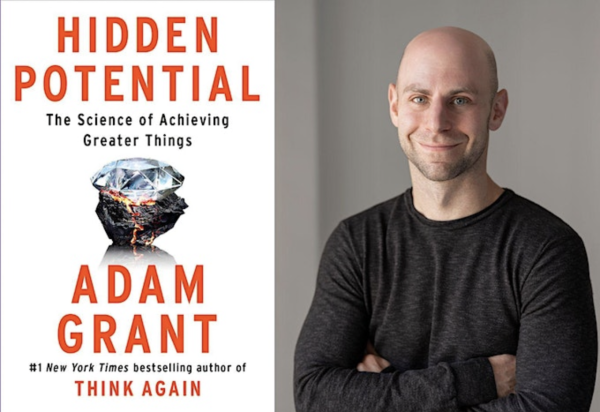
Adam Grant is a professor at the Wharton School of the University of Pennsylvania who specializes in organizational psychology. He’s currently promoting his new book, Hidden Potential: The Science of Achieving Greater Things, and he was recently interviewed by Malcolm Gladwell at the 92nd Street Y in New York City. 

During that conversation, Grant asserted there is one human quality that correlates with the ability to learn more strongly than any other. Before Grant continued, you could hear people in the audience whispering to each other what they knew to be the answer: curiosity. But that wasn’t the next word out of Grant’s mouth. It was humility. 

Humility, Grant explained, is the willingness to say, “I don’t know.” Or “I may think I know, but perhaps I have it wrong.” Humility is a driver of curiosity, which makes perfect sense. After all, if we think we know something already, why would we be curious to hear more about it? 

So, how do you turn Grant’s finding into an opening for your next talk? We recommend briefly sharing the story above, and then explicitly asking your audience to try approaching the rest of your talk with humility: to acknowledge to themselves what they don’t know, or to consider that what they think they know may not be the whole story. 

In short, set them up to learn in the best way possible.

Don’t Put a Hat on a Hat

by Kirsten Farrell

As the year comes to a close, we can’t help but think about the importance of a strong ending. Whether it is the end of a story, presentation, pitch, meeting or the end of an era, a year or one day. When we get to the end, we want to know what it all meant. Why have we taken this journey? 

One of the biggest problems with endings in public interest communication has been that communicators blow right past them. We finish the slides on our presentation and say, “ok, that’s my last slide, now I’ll take some questions.” There’s no ceremony. No satisfaction.

image by Eric Anada

As a reader of this newsletter or alumni of The Platinum Rules of Presenting, we hope you are well beyond such mistakes. You know to make the ending count. You know to leave your audience with a closing thought – to provide some meaning.

But what happens when we overcorrect? Can we try too hard to make the ending meaningful? Oh yeah… we definitely can. We look straight into the audience’s eyes and say “Let me leave you with one final thought.” We lay it down. The audience starts to applaud but we interrupt, “and in conclusion…” We share another beautiful nugget of wisdom, but before they can rush out of their seats there’s “just one more thing” we want to say, “and I hope you will remember this…” Essentially, we broke a cardinal rule of endings that comes from the world of comedy: we put a hat on a hat.

In stand-up, sketch and improv comedy, you need a great ending: the perfect punchline or a satisfying callback. But often, a witty writer will come up with more than one great idea. They’ve got two great “last” lines, and if they don’t make a tough editing choice and try to cram in both… they ruin the joke, the scene, maybe the night. That’s what they call putting a hat on a hat. 

Picture Indiana Jones in his fedora, Sam Jackson in his Kangol or Carmen Miranda in her fruit-filled turban – a good hat can make the man, but a second hat? That’s just silly. 

So please, take the time to share one last thought! Give the audience something to inspire them, to move them, and make some meaning. Don’t put a hat on a hat. Know when to say “When!” Leave well enough alone. Wrap it up. Stick the landing. And finally… oh wait, I’m doing it, aren’t I?

ICYMI: Falling Flat on Your Ask?

In Case You Missed It! This article is from the February 2008 edition of our Free-Range Thinking Newsletter. ‘Tis the season for inspiring your supporters to make your organization is part of their giving. Here are our tips to create a clear, specific, and actionable ASK.

When public interest organizations reach out for support (financial or otherwise), it’s almost always advisable to forget about engaging “the general public” and focus on a more manageable audience closer to the heart of your cause. But that’s only step one.

Photo by Pixabay

With target audience in mind, you have to craft a message that will cut through the clutter, grab their attention, and pluck a heartstring or two. No easy feat, and even with that accomplished, your work is far from done.

Now you need to select spokespeople and choose media that will deliver your message with the utmost impact. And should you make the right choices at this stage, it’s still no guarantee of success. Because in the end, virtually every form of public out-reach comes down to the “ask,” that make-or-break moment when your audience — having stopped, looked, and listened — says, “So, what exactly do you want me to do?”

The right kind of ask can seal the deal, while the wrong kind can let your audience slip away. Here you’ll find classic examples of each, and they’re worth studying some time soon. Lessons learned here might just save your ask.

Take It Outside

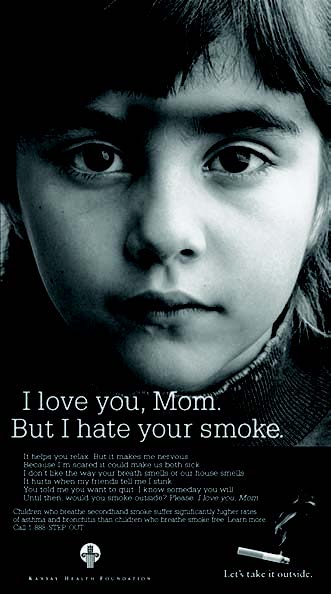
To protect children from secondhand smoke, the Kansas Health Foundation (KHF) launched a campaign aimed at parents who smoke. The objective: reduce in-home smoking. The first hurdle that had to be crossed: parents believing their home is their smoke-filled castle. This ad was typical of the campaign and displays all the characteristics of a compelling ask:

Clear and easy to do. If you must smoke, do it outside.

Compatible with the audience’s values. Parents love their children, and smoking outside is positioned as an expression of that love.

Actionable now. Allow too much time between your ask and the audience’s opportunity to act, and your request will probably be set aside and forgotten. Moving smoking to the stoop or backyard can begin immediately.

Clearly makes a difference. Remove the smoke and you remove the hazard. You don’t need a PhD to understand the campaign’s premise.

Measurable. KHF was able to establish a baseline of public attitudes on smoking and monitor shifts as the campaign progressed.

Within three months, KHF was able to reduce by 50% the number of parents who still agreed with the statement, “I have a right to smoke in my own home.” A well considered ask was one reason for the campaign’s initial success.

Youth Smoking Prevention

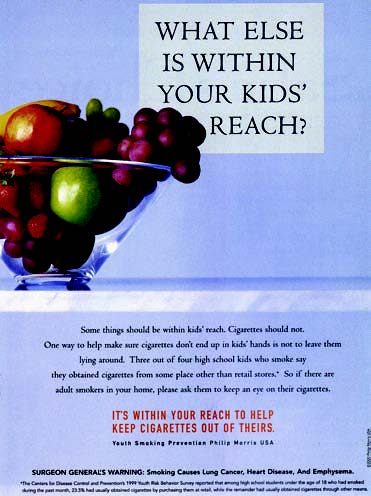
As part of the Tobacco Master Settlement Agreement in 1998, Philip Morris was required to produce advertisements intended to reduce smoking among teenagers. This ad was part of the company’s Youth Smoking Prevention campaign. Note how the characteristics that make KHF’s ask so compelling are entirely absent here:

The ask is indirect and vague. “So if there are adult smokers in your home,” the body copy reads, “please ask them to keep an eye on their cigarettes.” This means the ad is not talking directly to the target audience and expects the reader to deliver its message. And that message — keep an eye on your cigarettes — is not exactly a clarion call to action.

The audience’s values are not engaged in a serious way. If you want parents to think about their children, which would you show: a child’s face staring right at you or a bowl of fruit?

The action can be taken now, but…

It’s not clear how it will make a difference. The red text reads, “It’s within your reach to help keep cigarettes out of theirs.” Fine. And…?

It’s not measurable in a meaningful way. Even if you could determine how many readers actually went
on to deliver the message, can you reasonably project any amount of reduced smoking among teens as a result?

Some critics have wondered if the ask is deliberately weak given that the advertiser is not genuinely invested in the campaign’s success. To which I must reply: do you really have to ask?


Do You Know the Four Connecting Points?

Every time you reach out, there are four potential points of connection between you and your target audience. When you know all four points and build your campaign around them, every minute and dollar you invest have a better chance of paying off. (“The Ask,” detailed in this issue, is connecting point #4.) Fail to connect on even one point, however, and you give your audience an opportunity to walk away. And don’t kid yourself: in this Age of Too Much Information, most people are looking for opportunities to tune out anything they can quickly categorize as noise.

If you like what you read here, you can learn about “The Four Connecting Points” in our Strategic Communications workshop on Dec. 5 & 7!  

Storytelling for Community and Advocacy at El Centro

It is easy to get inspired by the power of storytelling, but often putting it into practice feels much more challenging. El Centro, in Kansas City Kansas, has found many fantastic ways to create storytelling culture in all they do.

Erica Andrade is the President and CEO of El Centro, which is a Latino-led and Latino-serving organization in their 46th year of services in early education, health, and economic empowerment.

I had a chance to Zoom with Erica after working together as a part of the Bank of America Neighborhood Builders program. Erica shared with me how she’s quickly and effectively used Goodman Center trainings on sharing your story of self and ethical storytelling. I had to hear more!

Kirsten
Erica, when I saw you in Charlotte, you were telling me that you have already begun using the Story of Self and Public Narrative model with your team. How have you done that?

Erica Andrade

Erica
In a lot of the work that we do, especially in our advocacy work, the stories of the clients that we serve are not in the mainstream.

So, using that method of the story of me, the story of us, and the story of why now, which is the call to action, that’s a great tool to use.

Kirsten
That’s what public narrative is all about! That’s awesome.

Erica
So, how do we get community issues and their stories into rooms with the legislators, to the Commissioners, into the school districts so that they’re able to tell their story and the things that are happening to them and their community? How can they have a sense of “My voice matters” When it comes to civic engagement, and addressing policies that affect me?

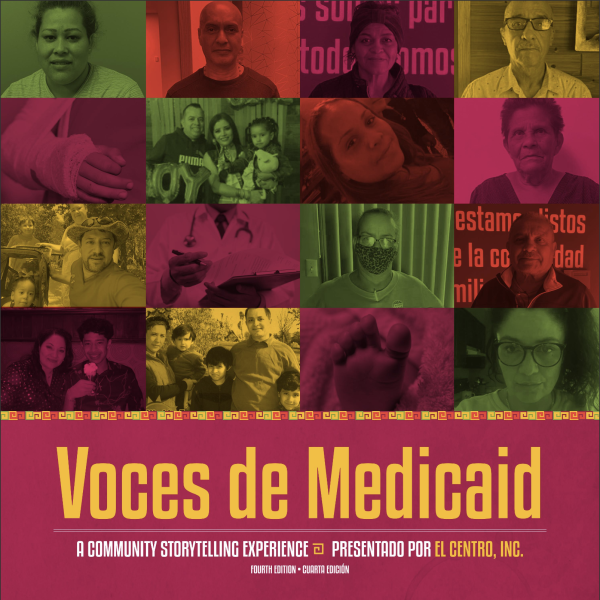
One example of how we do this is [a project] called Voces de Medicaid. This is the 5th year of advocacy work that we do around Medicare and Medicaid exposure. There have been four volumes of relaying stories from our clients’ perspective. We publish them in a hardcover book, so they can see where their words and their stories are going, and then we send it out to state legislators, the governor, and other advocates.

Kirsten
Wow, 5 years of this program. So, obviously it is working well.

Erica
We have found it the most helpful when engaging with our community and showing the importance their voices and stories can have when building a base to help advocate for policy change. They can see this as a part of the larger state-wide initiative to help advocate for Medicaid expansion.

Kirsten
How do you equip the staff at El Centro to use these programs?

Erica
We want to make it less scary and make sure that everybody at El Centro can be a part of [storytelling.] It even starts at onboarding. Regardless of what your job title or role in the organization is, everybody that works with El Centro is an advocate. The best way you can be an advocate for a client is to relay that story.

Kirsten
How does storytelling show up in onboarding? Is it part of the training?

Erica
Yes, for onboarding we use it to help our employees see the bigger picture of what our purpose is. How and why El Centro was founded and the importance of the work they do and how that might only be a piece of the puzzle but without their part the whole picture would be in focus. If they understand the strength of where we came from, they are more dedicated and passionate about the work they do.

Kirsten
It’s clear from all the ways I see story used on your website and from the focus you have put on communications and outreach that this is a deep value for you. Where does that come from?

Erica
Honestly, I think a lot of it comes from our culture. Our community and clients use word of mouth. “My friend told me. My cousin told me. I heard.” If we want to engage with the community, that only works through stories. This happened to me and that’s what made me become engaged.” “This is why I’m out here now talking to you, because I know that this would have really helped me if somebody had told me this.” It’s all relational. That’s why it works so well. That’s why for El Centro, it’s literally the capstone of how we’re able to function: it’s through personal relationships and stories.

Check out all the ways Erica and her amazing team at El Centro are leveraging the power of storytelling with Voces de Medicaid, as well as a public awareness campaign they did around Covid-19 to promote vaccination, social distancing and seeking support around financial and emotional loss.

El Centro is an excellent model for building and empowering community with stories. Thanks so much to Erica Andrade for taking the time to share part of their story with me.

ICYMI: The Road to Action: See-Feel-Do (Updated!)

This month’s In Case You Missed It article is from the September 2015 edition of our Free-Range Thinking Newsletter. The original article is about activating the audience’s mind’s eye, to create emotion, and elicit action. And now, in October 2023, we’ve have an addendum (written by Madi Goff). The original title of the article was “See-Feel-Do”, and Madi’s update transforms the title into “Experience-Feel-Do”.

First off, the original article from September 2015:

Photo by Khoa Võ

Good storytellers paint vivid pictures with their words because they understand a fundamental truth about their audience: if they can see the story in their mind’s eye, they will be able to feel it in their heart. Then – and only then – will they be ready to do something in response. Nonprofiteers often tell stories to elicit a “do” – join, give, sign, march – but all too often their stories fail to meet the first requirement. Unable to see, the audience is unlikely to feel and even less likely to do, and an opportunity is lost. It doesn’t have to be that way.

Consider this introduction of a teenage woman taking on the challenges of motherhood. Having read literally hundreds of nonprofit stories, I can assure you it is typical of the language used by organizations large and small working in this field:

The client, who was 17, was struggling to keep up with her one-year old son. He was extremely active and was into everything he could get his hands on. By the end of the day, the client was very frustrated and distraught.

Structurally, the story is off to a good start. We have a protagonist (the client), we can infer what she wants (to be a good mother), and we understand the challenge facing her (an extremely active child). The abstract language, however, prevents us from seeing the characters, setting and action. Now, contrast that introduction with the following version, which uses exactly the same number of words:

Karen, 17, struggled to keep up with Marco, who had just turned one. He would frequently climb all over her, open her purse, and dump its contents on the wood floor. By day’s end, Karen often had tears streaming down her cheeks.

Doesn’t this version feel different? Consider all the changes that contribute to that feeling: introducing the characters as Karen and Marco (instead of “the client” and “her son”) humanizes them as only names can and helps the audience identify with them.

Abstract terms that don’t conjure images have been replaced with specifics that help the audience visualize. “Extremely active,” which is vague, is brought into sharper focus with an image of Marco climbing all over Karen. “Into everything” becomes a purse that is emptied on the floor – you can almost hear the keys and loose change rattling on the hardwood. And rather than simply telling us that Karen is “frustrated and distraught,” the second version show us “tears streaming down her cheeks” and lets us draw our own conclusions.

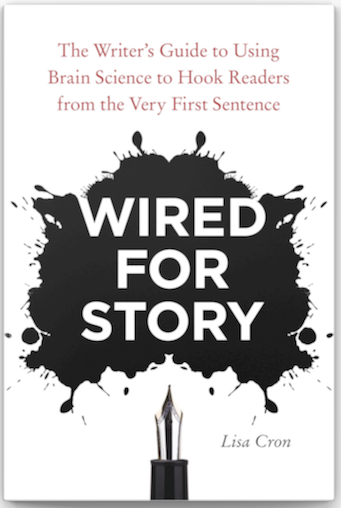
Wired for Story by Lisa Cron (Book cover)“Abstract concepts, generalities, and conceptual notions have a hard time engaging us, because we can’t see them, feel them, or otherwise experience them,” writes Lisa Cron in her excellent book, Wired for Story. “What all this boils down to is,” she adds, “the story is in the specifics.”

Stories can be the most powerful tool you have to engage an audience and move them to action. But keep in mind that people will not act if they don’t feel something first, and it’s hard to feel what you cannot see.

And now, an addendum from today, October 11th, 2023:

Since writing this article we’ve learned that not everyone has a visual imagination. While many people do create mental images, there’s a large number that think verbally, conceptually, in patterns or ways we have yet to discover – simply put, our human brains are brilliant and unfathomably varied. How does that change our storytelling? Engage a variety of senses! This not only makes our stories more accessible, but also it’s more effective storytelling. Help the audience, not just see, but experience your story. Experience creates feeling, and feeling creates action.

There is debate among neuroscientists and philosophers on how many senses humans have. The five well-known senses are sight, sound, touch, taste, and smell. Do you notice that your writing leans heavily on one of the senses more than others? Would it be difficult to switch it up?

A person smelling a mug of steaming coffee

Photo by Pixabay

Our challenge to you is this: In your next story, activate at least one sense that you don’t normally think to activate. In fact, you could try it right now, wherever you are. Are there any scents you can detect? Do you notice any tastes? What’s the furthest sound you can hear in this moment? Is there a texture that you notice touching your skin? As we teach in our Storytelling workshop, one vivid and concise detail can give the audience all they need to experience a moment or connect to a character.

Eggs with emotional faces painted on them

Photo by ROMAN ODINTSOV

Final thought, if we were to add one sense to the five senses, we’d add an emotional sense. An emotional sense can be thought of as the awareness of an emotion in your body and what it feels like. It can be hard to describe how an emotion feels, so, sometimes, we turn to poetry-like descriptions. If these feel silly to you, practice them. Don’t shy away! You’re a storyteller! An emotional sense is an effective tool in storytelling. It can help your audience connect to and care deeply about your characters. When you’re creating a story try using physical, emotional language. Help us experience the emotion by giving us a sense of what is happening in the character’s body. Does a joyful smile sneak across your protagonist’s face? Or maybe they sigh in frustration? Or bounce in anticipation? Perhaps their head falls into their hands as they hold back tears? Or, like Karen above, do they have tears streaming down their cheeks? All of these examples create a physical sense of emotional life. Sometimes you’re handing the emotion right to the audience in your description, sometimes your letting them draw their own conclusions. Either way, you’re helping the audience experience and feel the story. That’s the surest way to move your audience to action.

How To Honor Your Audience’s Experience

It’s happened to all of us: speakers, presenters, workshop and meeting leaders. You have prepped like mad and given our all, but the audience does not seem engaged. They are quiet, distracted or they don’t ask any questions. You start to make assumptions. They find your training draining. They are bored. You try to exit the stage or conference room as gracefully as you can, wondering what went wrong.

Just when you think the torture has ended, someone from that reluctant audience comes up to you. They express the opposite of what you assumed. They are encouraging. They say, “Great work! Thanks for speaking to us.” You force a smile, confident they are just being kind, you exhale and say, “Ugh, that was not my best.”

And just like that, you have made a classic mistake in public speaking and negatively affected your audience’s experience. Rather than show your appreciation for them and their kind words, you make it about yourself, and undercut the presentation, and their graciousness.

Here are 3 ways you can handle those awkward moments, check your ego and honor the group’s experience.

    1. Don’t make assumptions. A quiet audience may be listening to every word. Someone on their phone might be taking notes or using a translation app. Every audience is different and comparing how they take your information is fruitless.


When judgmental thoughts creep in (i.e. “I’m boring.” “I’m not what they wanted.”), take a deep breath and place your focus and objective back where it needs to be: on the audience.

When an audience member tells you, “Great job!” Believe them. Thank them. It can be as simple as that. “I’m glad you enjoyed it.”

    1. Make it about them. At the Goodman Center, we teach in our Platinum Rules of Presenting, that a presentation is always about the audience. It’s not about you and what you want to tell them. It is about their journey from where they are when they enter the room to where you want them to be when you are finished speaking.

If someone approaches you after your presentation, you can ask them about their work. Ask them what they might take with them from the presentation. Ask them for stand-out moments from the conference or convening so far.

It can be hard to accept praise (especially when we assume it’s undeserved), but you can still connect with this person and maybe even learn a thing or two from them.

    1. Focus on gratitude. In this busy world, our attention and time is under never-ending demand. Yet, this audience chose to spend that time and attention with you. So, even if they didn’t give you a standing ovation, they have given you something very valuable: their time. So, say “Thank You.”

“Thank you for being here.” “Thanks so much for saying that.” “I am grateful to be part of this.” This honors their experience and keeps the focus and gratitude on them.

Taking care of your audience starts the moment you accept the charge of speaking, leading a meeting or presenting, and it isn’t over until you are back home, in your hotel room or off that Zoom. When you stay away from assumptions and focus on your audience’s experience, you’ll be a better speaker, leader, presenter, and chances are, you’ll feel better about yourself as well.

ICYMI: Five Questions to Build Your Message

ICYMI (“in case you missed it!”): We dove into the archive of past Free-Range newsletters and found this article from October 2001 about a campaign that demonstrates how answering five questions can help any public interest group craft the most persuasive message.

Baby in a chef hat

Few things seem as instinctive and natural as breastfeeding, and, if a new parent is able to breastfeed, its advantages over formula appear overwhelming. For babies, a parent’s milk can decrease the incidence of allergies, respiratory problems, ear infections, sudden infant death syndrome and diabetes. For those who are nursing their babies, breastfeeding can reduce the risk of breast and uterine cancer, improve bone density, and speed weight-loss after pregnancy. Little wonder, then, that the American Pediatric Association recommends breastfeeding exclusively for the first six months of a baby’s life and as part of the diet for at least a full year.

Nevertheless, only about six in ten Americans breastfeed their children immediately after delivery, and by six months that number drops to roughly two in ten. Infant formula, with its promise of greater freedom and flexibility (not to mention corporate marketing muscle), continues to be a powerful competitor, and it now requires millions of dollars to convince new parents to breastfeed. One such campaign, the USDA National Breastfeeding Promotion Project, launched by Best Start Social Marketing, a Tampa-based nonprofit, is noteworthy for two reasons. While the campaign successfully increased breastfeeding rates, it also demonstrates how answering five questions can help you craft the most persuasive message:

1. Who is your target audience?
With a sizable grant from the US Department of Agriculture, Best Start was able to develop a campaign for ten states. The group did not want to waste any dollars, however, talking to people who were already planning to breastfeed. For the targeted areas in which the campaign would run, this meant keeping the focus on at-risk parents and economically-disadvantaged single parents primarily from Latino, Haitian, and Native American communities.

2. What does the target audience believe that supports your objectives?
Focus groups revealed several positive attitudes about breastfeeding upon which a message could be built. Those interviewed were well aware of the health benefits for the parent and child, they enjoyed the physical experience, felt it was an important part of the bonding process with their babies, and also reported that breastfeeding distinguished them from other caregivers. The importance they attached to each of these factors, however, was what mattered most to Best Start. “As we were teasing out the proper way to reach these women,” said Best Start’s Director, Jim Lindenberger, “it became evident that health messages weren’t going to do it. Number one: they already knew it, and number two, that’s not why they were having babies.” The bonding aspects of breastfeeding, in contrast, were emerging as extremely persuasive.

3. What does the target audience believe that creates barriers for your objectives?
Audience research also uncovered attitudes so strongly negative that overcoming them became as important (if not more important) than building on the positive. “It’s like showing your body in public,” said one parent who had already decided against breastfeeding. “The life of a breastfeeder revolves around the baby. You have no life,” said another. There were also numerous complaints about hospitals, friends, and especially family members who made the process more difficult. Among all these “costs” of breastfeeding, lack of support was clearly another major factor.

Photo by RDNE Stock project

4. Where does the target audience get information about your issue?
If you’re going to change the way people think and behave, you have to know where they turn first for information and advice. In Best Start’s focus groups, the answer came back loud and clear: the breastfeeding parent’s own parent was the primary source. Ann Altman, a principal in the advertising agency that developed the campaign’s message, recognized this as another critical piece of the message puzzle. “We saw that the target was incredibly influenced by their mothers, husbands or boyfriends,” Altman said. “The challenge would be to encourage all these people to provide the support necessary for women to breastfeed.”

5. Which spokesperson(s) will the target audience most readily believe?
Even the most finely crafted message may fall flat if it comes out of the wrong mouth. Once again, Best Start turned to focus group participants to learn whom they trusted most. Predictably, parents said they would trust people like themselves: working people from a range of racial and ethnic backgrounds. Consequently, the ads Altman’s team developed prominently featured a rainbow of nursing parents and, of course, their co-starring babies.

Photo by Tima Miroshnichenko

With answers to these five questions in hand, Altman’s agency developed a campaign around the theme, “Loving support makes breastfeeding work.” Posters and brochures in public health centers, carefully selected billboards (like the one pictured), and broadcast ads featured nursing parents bonding with their babies while explicitly encouraging the people around them to support breastfeeding. As the research predicted, the campaign struck a chord. Breastfeeding rates increased in the targeted states and today, according to Lindenberger, “every state in the country uses this program in some form or another.”

Lindenberger is quick to add that communications was only one contributor to an effort that also relied on heavy doses of community, in-hospital programs and other forms of outreach. There can be no doubt, though, that starting with the right message was critically important. So even if someone on your team thinks they have all the answers, take a moment to work through these five questions. It’s one formula even Jim Lindenberger will endorse.

The Existential Meeting Question: Why Are We Here?

A number of years ago, I took on a job as Operations Manager at a small nonprofit. I had been a part of their community for a long time, and I couldn’t wait to answer the call to improve systems and workflows to make the organization and community stronger.

One of the first items on my to-do list was reformatting the weekly staff meeting. I had heard from nearly every person in that meeting that it was a drain on energy, and it felt like the same meeting every week. I even sat in on a couple before officially beginning my job there. They were painful.

What was so egregious about this meeting? What horrible structure had they put in place to make it unbearable? Well, uh, there was nothing egregious, and the structure was to hear reports from each person in the meeting about their current projects – pretty run of the mill. So what was the problem?

Pancakes on a plate

I was pretty sure at the time that the issue was the agenda. So, I changed the format of the agenda and tried to get us focused on deadlines and actions so that projects had movement from week to week. I also added a cute title slide to the agenda to celebrate International Pancake Day or Pizza Day to try to alter the vibe of dread that had become the norm.

For two meetings, there was a lift in energy. The staff was smiling – even breathing sighs of relief. It was working! However, within one month, it went back to the same draining experience it always had been. I didn’t know at the time that I was missing the ultimate meeting question: “Why have we gathered?”

Many leaders skip the step of crafting a purpose for their meeting. In The Goodman Center class Meetings for People Who Hate Meetings, we focus how to build your meeting agenda using an objective statement, the why of your gathering. Our method for digging into the objective is to keep saying “…in order to” until you have landed on a purpose, not just a process.

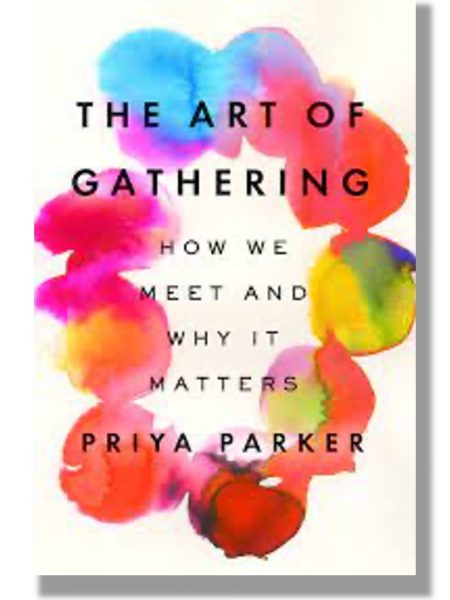
Book cover to "The Art Of Gathering" by Priya ParkerPriya Parker talks about this in Chapter 1 of her book, The Art of Gathering – How We Meet and Why It Matters. Parker advises that for every gathering you lead you “Ask why you’re doing it. Every time you get to another deeper reason, ask why again. Keep asking why until you hit a belief or value.”

For example, you might think the purpose of your weekly staff meeting is to “keep everyone informed.” Why? In order to… what? At that unnamed nonprofit above, one coworker thought we needed to be informed in order to offer ideas to each other, one thought it was because there were problems when “the right hand doesn’t know what the left hand is doing,” someone else thought it was for accountability. No wonder these meetings never felt like a success. Everyone was there for a different reason, and no one was getting what they expected. A cute title slide wasn’t going to help. We needed an objective statement and to understand our roles in the context of that objective.

Join us on October 11th and 13th for our next Meetings for People Who Hate Meetings class. In this gathering, we will share tools for agenda-building, meeting leadership, and brainstorming in order to make sure your organization can stop draining your time and energy and save that energy for making the world a better place.

ICYMI: Telling Tales in Tight Spaces

In Case You Missed It: This article is from our April 2010 edition of our newsletter “Free-Range Thinking.” It’s the beginning of an answer to the “This is the age of TikTok! What if I don’t have the space/time to tell a story?” conundrum.

When you don’t have much time (in a presentation) or room (in a letter) you can still tell enough of a story to make a real connection with your audience.

Jane Goodall in 2015

Jane Goodall in 2015

A few years ago, Dr. Jane Goodall came to Los Angeles to meet with​ film, television and commercial producers who were using chimpanzees​ as actors. Dr. Goodall had assembled indisputable​ evidence that these chimpanzees were being​ cruelly beaten by trainers to make them “more​ compliant” performers. She had come to​ Hollywood to plead with the producers to help end​ the abuse.

Nearly 200 members of the creative community​ attended Dr. Goodall’s briefing, and each received​ a 25-page report documenting the abuses. Given​ the notoriously short attention span of Hollywood​ types, Dr. Goodall didn’t expect her audience to​ read every word, but she was hopeful they’d open the booklet and at​ least read the introduction on the inside cover. It was deliberately brief –​ less than 250 words – but it still packed an emotional punch:

Chimp in tree

Photo by Jesús Esteban San José

In the late 1960s, Washoe, a female chimpanzee, was taught American Sign Language under the care of Drs. Allen and Beatrix Gardner. The Gardners hired a young researcher named Roger Fouts to work closely with Washoe, and Fouts would later write about his remarkable experience in the book, Next of Kin: What Chimpanzees Have Taught Me About Who We Are.

In the following excerpt, Fouts describes an incident involving Washoe and a volunteer researcher named Kat. Capitalized words and phrases are used to indicate the signs exchanged by Washoe and her human friends.

“In the summer of 1982, Kat was newly pregnant, and Washoe doted over her belly, asking about her BABY. Unfortunately, Kat had a miscarriage, and she didn’t come in to the lab for several days. When she finally came back, Washoe greeted her warmly ​but then moved away and let Kat know she was upset that she’d been gone. Knowing that Washoe had lost two of her own children, Kat decided to tell the truth. MY BABY DIED Kat signed to her. Washoe looked down to the ground. Then she looked into Kat’s eyes and signed CRY, touching her cheek just below her eye. When Kat had to leave that day, Washoe wouldn’t let her go. PLEASE PERSON HUG she signed.”

​This report is dedicated to Washoe and all great apes who, for better or worse, are now reliant on their human cousins for protection and survival.

​The third paragraph of the introduction is an excellent example of a “connecting narrative moment,” a term coined by Frank Dickerson (a fundraising expert profiled in our September 2009 issue). In just a few sentences, you are pulled into a scene featuring two characters. You witness an exchange revealing the humanity in the character you​ wouldn’t have identified as human, and when Washoe signs, PLEASE​ PERSON HUG, you simply have to feel something.

The paragraph is not a full-fledged story, but it has enough of a​ narrative thread to engage us, and it stands as a reminder that even​ when we think there isn’t enough room, we can still tap into the power of​ storytelling.

​On the web, everyone reads content like a Hollywood executive, so if you’re going to tell a story, keep it brief.

(Note: In the original version of this newsletter, we gave an example of a story from The United Ways of California. However, that story and those links have expired. We’ve included a new example below from our friends at CLINIC.)

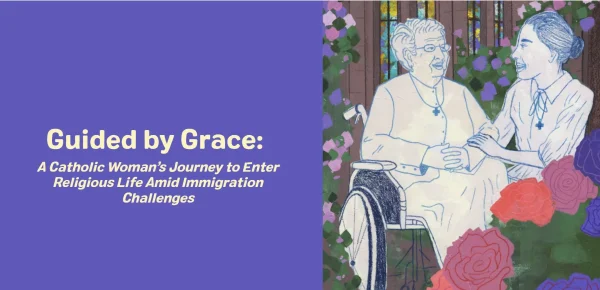
Illustration by Michelle Garcia at historiapersonal.com

The Catholic Legal Immigration Network (CLINIC) demonstrates this nicely in the “Our Stories” section of their “Neighbors not Strangers” project. On their project website they have a mini-story of a Catholic woman named Tabu from South Asia. An engaging teaser to Tabu’s story appears in a single paragraph of only 53 words, accompanied by an beautiful graphic of two women in a flower garden (see graphic on left). These 53 words contain a description of our protagonist (Tabu), a beginning (feeling a call from God), middle (forced to leave the country), and unresolved conclusion, priming the mind with curiosity. If the initial mini-story sparked the reader’s interest, Tabu’s full story is one simple click away. A bright orange button with white text saying “Read the Story” sits just below this initial narrative. Several stories are set up in this way on the “Neighbors Not Strangers” website where, in just a few words, the storytellers at CLINIC engage their readers to dive deeper and discover the full story.

​”In a complex environment,” writes Annette Simmons in The Story Factor, “people listen to whomever makes the most sense – whomever tells the best story.” Our environment is getting more complex every day, and the time we have to listen (or read) seems to be getting shorter by the minute. So take advantage of every opportunity you have by telling a story, or as much of a story as you can. More often than not, even a little narrative is better than none.

The 22nd Annual Summer Reading List

If you can find a spot in the shade (or a/c), there are three books that we recommend this August for upping your game as a communicator.

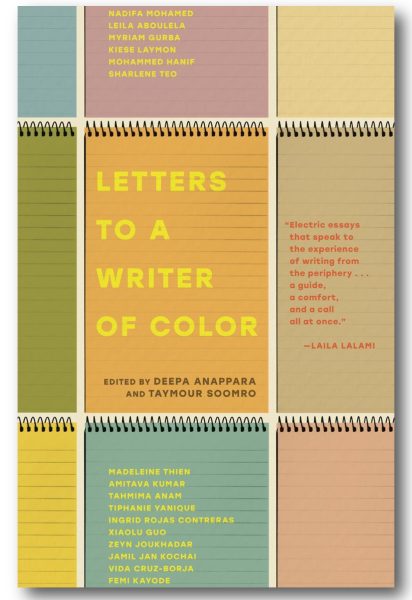
Letters to a Writer of Color (Random House © 2023) edited by Deepa Anappara and Taymour Soomro

This collection of essays features writers of color from all over the world and offers paradigm-shifting ideas around narrative and how we write and read culturally. Though these essays talk primarily about fiction, many of them should be elevated to ‘required reading’ for public interest organizations who want to utilize story to create positive change.

Jamil Jan Kochai’s essay On Telling and Showing made me reconsider writing advice that feels almost sacred to storytelling instruction. Ingrid Rojas Contreras’s On Trauma is a must-read for anyone telling impact stories that include human suffering. There are too many transformative essays to name, but I will be reading them again and again.

And, just in case you worried that three books is too short for a Goodman Center reading list, every contributor in Letters to a Writer of Color includes their own recommended reading. That’s become my reading list for 2024!


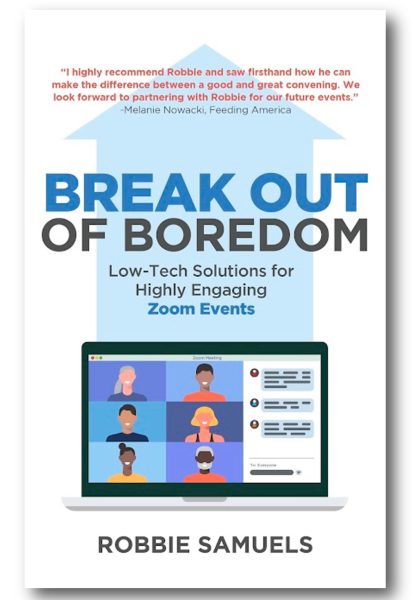
Break Out of Boredom: Low-Tech Solutions for Highly Engaging Zoom Events  (Wordsworth Lane Press © 2023) by Robbie Samuels

Andy Goodman and I had the privilege of meeting and working with Robbie Samuels as part of a virtual conference last year. Samuels was their Executive Zoom Producer, and he impressed Andy and I with his expertise on running a successful Zoom convening. We knew we were kindred spirits.

In February, you may have seen our blog post A Brilliant Tip for Virtual Presenting on the Road. That came from Samuels, who had sent out a preview for Break Out of Boredom. He included instructions for screensharing your slideshow for your audience, while being able to access presenter view for yourself. A total gamechanger if you present from the road.

This book is full of tips and tricks to make your Zoom meetings and presentations not only run more smoothly, but also to create more engagement with your audience. Break Out of Boredom is easy enough for beginners to follow and serves up new ideas for pros who have been at this a while.


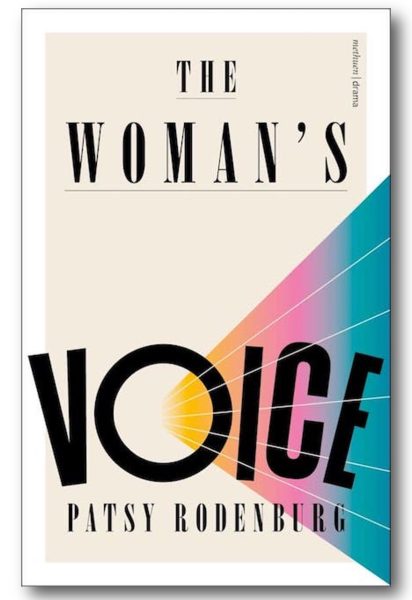
The Woman’s Voice (Methuen Drama © 2023) by Patsy Rodenburg

An expert on teaching voice, speech and presentation skills, Patsy Rodenburg is a hero of mine from her work on presence. I studied Rodenburg’s work as an actor and improvisor, but what she teaches can serve anyone as a gateway to powerful connection and communication.

In The Woman’s Voice, she tackles the challenges women face as we seek to speak and be heard. Through practical exercises and her own formative experiences, Rodenburg confronts how and why women’s voices have been shushed or diminished and gives us some tools and inspiration (literally) to access our natural, empowered voice.

If you speak publicly, lead your team, struggle to speak up or be heard in meetings, worry about whether you are concise enough, dislike the sound of your voice, rush through what you have to say or feel like you have to control your tone to be heard – this book is for you.