ICYMI: The Art of Playing Yourself

In Case You Missed It: This month’s ICYMI (from the October 2004 issue of Free-range Thinking) asks the question… when it’s your turn to present is the audience seeing the real you? In an interview with the late Eda Roth, Andy Goodman uncovers the secret to playing yourself.
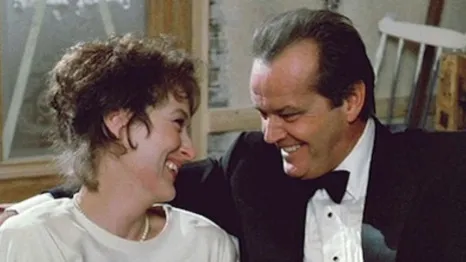
Meryl Streep and Jack Nicholson in Heartburn. A white woman with dark hair and a white man in a tuxedo face each other, smiling.

Meryl Streep, as Nora Ephron, with Jack Nicholson in Heartburn.

In the movie “Heartburn,” Meryl Streep played a character based on novelist and screenwriter Nora Ephron, so when the American Film Institute honored Streep earlier this year, Ephron was among the luminaries invited to speak. Never one to miss an opportunity for a trenchant observation or two, Ephron had this to say about watching America’s finest living actress portray, of all people, her: “It’s a little depressing knowing that if you audition [to play] yourself, Meryl will beat you out for it.”

I was reminded of Ephron’s comment when I sat down recently to interview Eda Roth, a communications consultant who helps clients become more effective presenters. Whether coaching business executives from AT&T, Levi Strauss, or Coca-Cola; or public interest professionals from the California Health Care Foundation, Robert Wood Johnson Foundation Executive Nurse Fellows Program, or UCLA Medical School, Roth says she usually encounters the same three problems. And first among them is the surprising difficulty most people have simply playing themselves.

Eda Roth

Although she began her professional life as a social worker, Roth caught the acting bug early on, got her masters of fine arts in acting at New York University, and undertook the arduous task of finding work. The jobs that came her way most easily were more in the line of teaching than acting, and in 1985 Roth joined the faculty of Boston University to teach voice, speech and dialect in the theater program. Since then she has coached such Hollywood notables as Holly Hunter, Richard Dreyfuss and Jeff Bridges, taught graduate-level courses in leadership and “executive presence,” and built a business as a communications consultant for commercial and nonprofit clients.

The 3 Most Common Problems

While her customers run the gamut from hard-charging corporate types to soft spoken policy wonks, Roth says she sees a common set of problems when it comes to presenting. “Most people are very constricted by either their own or a societal sense of professionalism,” she says. “The same people who are very expressive at their children’s soccer games are not as expressive in their professional lives.” Simply put, the number one problem Roth encounters comes down to two words: “Being yourself.”

To free those clients who are bound by this psychological straightjacket, Roth conducts an exercise in which presenters must start their talk by literally running into the room and exclaiming, “I have the most incredible thing to tell you!” Most clients will respond by jogging to the podium with an embarrassed look on their faces, but Roth sends them back and demands a full-out sprint. “I want to break through the constrictions of so-called professionalism and get them to open up to the possibility of a bigger and more visceral expression,” she explains.

Much to her clients’ relief, Roth doesn’t expect them to incorporate the running start into their actual presentations. “It’s a matter of stretching out a lot so that when the personality snaps back, it’s a little larger than it was,” she says. In a similar exercise, Roth will ask presenters to identify the emotion—excitement, anger, empathy, frustration—that is central to their talk. Once they have it, she instructs them to make their points saying exactly what they mean shorn of any euphemisms or diplomatic language. This helps presenters feel the emotion more clearly, and that’s what Roth wants them to remember when they eventually put the diplomatic language back in.

“The second major problem,” says Roth, “is connecting with the other people in the room—conveying why the topic is important to you and why it should be important to them as well.” To address this problem, Roth asks presenters to deliver their talk as normally prepared, but to insert the line, “I love you,” into every paragraph. Again, clients usually take to this exercise like a lobster to boiling water. “They resist it,”
she says with a laugh, “but this is a behavioral exercise,” she continues, stressing the word “exercise,” and Roth maintains it helps presenters focus on their connection to the people in the room.

Roth has a one-word summary for the third most common problem: size. “Most people, when they are in a room, literally do not see the room they are in. They do not fill the space,” Roth says. “Their awareness expands about three inches beyond their own bodies.” To tackle his problem, she asks presenters to imagine themselves addressing a single person across a very large room. “Even if you have a microphone,” she explains, “if you don’t speak up, there’s no evidence of your enthusiasm and passion for what you’re saying.”

Learning from Dr. King
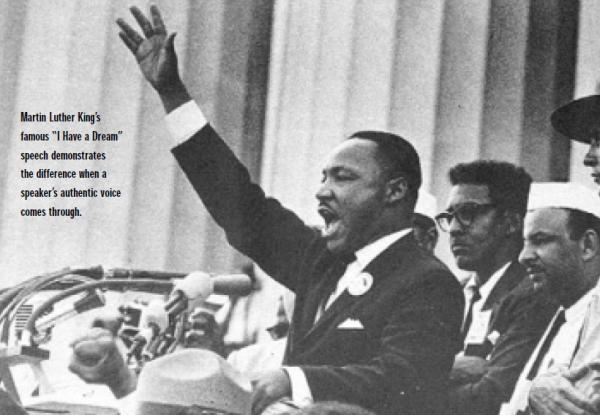
Dr. Martin Luther King giving his "I Have a Dream" speech.As part of her coaching, Roth has presenters watch a videotape of Martin Luther King’s legendary “I Have a Dream” speech, but not simply for inspiration as some might guess. What’s striking about the speech, Roth points out, is how Dr. King’s demeanor changes when he moves into its most famous passage. Before he talks about his dream, King is, as always, an effective orator. “But when he goes into the dream section,” says Roth, “he’s off the page. He’s in ministerial mode, and that is when he’s most deeply connected to who he is.”

Having watched that tape in one of Roth’s workshops, I can confirm that the difference is noticeable, as is the effect the lesson has on her students. The more of themselves they reveal in subsequent exercises, the better their talks become. “I highly recommend having Meryl Streep play you,” Nora Ephron joked at the AFI dinner. As that isn’t a very likely option for most of us, it’s probably best to follow Roth’s advice and get better at playing yourself. The audience at your next presentation will be glad you did. And so will you.

New Report: Foundations, Tell Your Stories!

The Center for Public Interest Communications recently released an important new report, “Philanthropy’s New Voice”, sharing research into common perceptions (and misperceptions) about philanthropy. The report offers six recommendations for trust-building actions foundations should take individually and as a sector, and spoiler alert: four of these actions are about telling stories.

Cover to report: Philanthropy's New VoiceFrom our experience working with foundations over the past 25 years, we’ve seen that many already recognize the power of story. Foundations often bring us in to work on storytelling with their grantees to help them maximize their impact, build relationships and coalitions, connect with other potential funders, and change narratives about the work they do and the people they serve.

What foundations do less often, however, is seek assistance to tell their own stories. And there are many stories to be told – about how they decide which issues to work on, how they choose the organizations they will support, how they have developed their expertise to apply their resources in the most effective ways. In the absence of such stories, most Americans have little understanding of or trust in foundations. Even nonprofits that work with foundations on a regular basis often have an opaque understanding of how and why certain decisions are made.

“Philanthropy’s New Voice” is a useful (and free) resource for assessing the current “narrative vacuum” we are in, and, more importantly, providing guidelines to fill that vacuum. It offers specific, actionable steps to help foundations tell stories ethically, replace jargon with concrete language, build transparency, and more. You will even find a few choice words from my favorite expert, Andy Goodman, Director Emeritus of The Goodman Center.

ICYMI: PowerPoint Corrupts

In Case You Missed It: This month’s throwback article on PowerPoint was originally published twenty years ago in April 2004! Do you have a love-hate relationship with this infamous slideware? Transform all that PowerPoint hate into PowerPoint love with a few simple tips from The Goodman Center!

PowerPoint corrupts, and it can corrupt your presentations absolutely if you let it. Follow a few simple suggestions, however, and you’ll discover how the software that everyone loves to hate can actually enhance your next talk.

Edward Tufte is no fan of PowerPoint. In his treatise, “The Cognitive Style of PowerPoint,” the design guru asserts that the world’s most widely used presentation software does nothing less than compromise “…the presenter, the content, and ultimately, the audience.” Seth Godin, author of Permission Marketing, is even less diplomatic. “Almost every PowerPoint presentation sucks rotten eggs,” he writes in his e-booklet, Really Bad PowerPoint and How to Avoid It.

Such harsh criticism is entirely warranted. PowerPoint, used poorly, ruins presentations and wastes the time of everyone who must endure slide after slide of dense text, meaningless bullets, and unreadable charts. But the key words here are “used poorly.” In the last three months alone I have delivered fifteen presentations and helped design a half dozen more for my clients. At the end of almost every talk, at least one audience member compliments my visuals and asks, “What presentation software were you using?” The answer, which inevitably surprises, is PowerPoint. Loathe it or hate it, most of us are stuck with PowerPoint, but the techniques described inside can help you deliver a few pleasant surprises of your own.

First and foremost, understand what your presentation is not.

A PowerPoint presentation is not a document. Proposals, reports, memos or leave-behinds can do the heavy lifting of information transfer. Your presentation—whether five minutes or two hours long—should neither resemble nor recapitulate printed matter. It is also not an outline projected on screen to help you remember the key points of your talk. If you need prompts, carry index cards.

Your time at the podium is your opportunity to convey the essence of your proposal, shine a spotlight on key points of a report, or tell a story that brings your issue to life in ways that only live delivery can. And the entire purpose of your PowerPoint is to provide visual elements that more clearly explain, more dramatically depict, and more emotionally emphasize each point you wish to make. Bearing that in mind…

Go heavy on images, light on text.

Even when taking copious notes, most audience members will retain very little from your talk. The more you throw at them, the less they’ll tend to remember. Putting text on the screen while you talk only compounds this problem. Not only are you presenting even more information, you’re asking the audience to divide its concentration between competing information sources. A compelling picture, in contrast, can provide an emotionally powerful backdrop that underscores points you wish to make.

For example: a speaker looking to highlight rising rates of childhood asthma in the U.S. would have plenty of statistics from which to choose. A single photo of a young girl sitting in an emergency room with an inhaler in her hand and a frightened expression on her face would make a far greater impression on the audience than any set of numbers. (And keep in mind that black-and-white photography often possesses an authentic, documentary quality that color does not.)

In Really Bad PowerPoint, Seth Godin dictates, “No more than 6 words on a slide. EVER.” I don’t subscribe to such absolutes, but if you intend to display more text than can be read in a quick glance, stop talking and give your audience space to read.

The pause will call attention to the text, honors the audience members’ ability to actually read for themselves (which, amazingly, many speakers fail to acknowledge), and lets them “hear” the words in their own internal voice, which is uniquely powerful.

Design outside the box.

Most presentations I see use the default white background for each slide. This projects the familiar white box on the screen, causing so many presentations to look essentially the same. Even when presenters discover color backgrounds (or, heaven forefend, built-in templates), their images and text remain stuck inside a box. A black background, however, puts nothing on the screen except the images and text you choose. This allows you to create slides with no apparent borders and focuses the viewer’s attention precisely where you want it directed.

Use animation to control the flow of information.

When a slide with five bullet points appears on screen, the audience will automatically read all five bullets, even if you’re still talking about bullet #1. Now they’ve missed part of your explanation and, since they know where you’re going, may tune out the remaining comments until the next slide appears. Using an animation effect to introduce each bullet in sequence keeps the focus on the point you wish to make and eliminates these problems.

Discover the miracle of the B key.

Given the choice of looking at the speaker or a slide, audiences generally choose the slide. It’s just human nature: if they can hear you, they won’t feel obligated to look at you. Sometimes, though, you need their undivided attention. PowerPoint gives you the tool: the letter B key. Press it once while in VIEW SHOW mode, the screen goes black, and every eye in the place returns to you. Press it again, your slide magically reappears, and every head turns back to the screen. The B key won’t help you design better presentations, but it sure comes in handy when you need all eyes on you.

Find all The Goodman Center tips on Presentations in Why Bad Presentations Happen to Good Causes downloadable on our website!

“Yes, And” Your Way to a Brilliant Brainstorm

Exploring new ideas is essential to our work. New ideas help us overcome obstacles, navigate the unexpected, and envision what is possible. That’s why so many meetings contain brainstorming. But not all brainstorms are created equal.

It can be challenging to cultivate an environment where your team is inspired, motivated, and safe enough to contribute their most creative, off-center, imaginative, and outside-the-box ideas. Yet, these are the kind of ideas that most help us change for the better.

This is where the central tenet of improvisation, “yes, and,” comes in handy. The premise of “yes, and” is that we build brilliant things together. We make the most out of our creativity when we let a person’s idea land on us (that’s the “yes”), then we build upon it (that’s the “and”).

Sounds simple enough, but saying “yes, and” takes some practice. All too often, saying “no” is our default. We worry that we will get sidetracked by an idea that feels off-the-mark, so we nip it in the bud:

Colleague: We could have our volunteers do guest blogging.

You: No. That’s too much to coordinate.

End of brainstorm.

When we do this, we are forgetting that time is just one of our many valuable resources. So, while we might be saving 3 minutes in this meeting, we aren’t capitalizing on the creativity and possibility in the room.

Even if you are pretty sure you don’t want to land on your colleague’s idea, if you squash it during the brainstorm, it will have a chilling effect on the room. No one wants to share their ideas (especially the ones they care about) in an environment of squashing.

Often the first step past “no” is trickier than we think. We end up saying something along the lines of “yes, but.” You desperately want to say yes, but part of your brain can’t resist kiboshing an idea you don’t love:

Colleague: What if we have our volunteers do guest blogging?

You: Yes, that could be cool for the blog, but it’s too much to coordinate right now. Maybe we should focus on the newsletter?

Colleague: umm… ok.

(Sound of air going out of a balloon)

“Yes, but” is just a friendlier-sounding “no.” Nobody is going to be fooled by a “yes, but”. Your team won’t offer their ingenuity if they don’t feel heard and supported.

Here’s what a yes, and really looks like:

Colleague: My idea is to have our volunteers do guest blogging.

You: Yes, and we could offer a few story-based prompts to inspire them.

Colleague: Yes, and we can re-purpose this content in the newsletter!

Another colleague: Yes, and we could email Kirsten at the Goodman Center to ask for tips!

Wow! See what amazing ideas happen when we Yes, And? Ok, seriously, the power of “yes, and” happens when you muster up all the enthusiasm you can find and build joyfully off of your colleagues’ suggestions. Let go of critical voices – you can make time for assessing the viability of the ideas later – because you will miss out on unexpected, outside-the-box brilliance if you stifle contributions too soon.

So, is “Yes, and” a powerful meetings tool to unlock the potential in each of us, while fostering a work environment where each person feels heard and valued? Yes, and I hope you start using it today.

Learn more about running productive meetings with “Yes, and” by signing up for our virtual meetings class: Meetings For People Who Hate Meetings (April 23 & 25, 2024).

ICYMI: Five Questions for Better Meetings

In Case You Missed It: This month we’re re-sharing our May 2014 edition of Free-Range Thinking Newsletter, which is all about having better meetings!

A simple model designed to improve all kinds of user experiences can make your meetings more engaging and more productive.

Unless you work alone, meetings are an essential part of your day-to-day operations as well as an expression of your organization’s culture. When meetings go south, not only are they a waste of time and money, they can send messages that ultimately undercut performance, impede collaboration, and lower morale. Bad meetings aren’t just annoying – they’re a problem that needs to be addressed.

Doblin is an innovation consultancy that developed the “Five-E Model” for improving all sorts of user experiences, from walking into a store to navigating a website. The five E’s that Doblin asks designers of those experiences to consider are: entice, enter, engage, exit, and extend.

As someone who regularly leads workshops on improving meetings, I can see how this model can be translated into a useful series of questions to consider while planning your next gathering:

1. How do we entice people to attend (or, if they must attend, how do we create excitement around the event)?

Most meeting organizers address the first E by promoting high-profile speakers, particularly compelling topics, or the location (assuming it’s desirable). But even routine internal meetings can be made more appealing if a carefully prepared agenda is circulated in advance and feedback is solicited to ensure that everyone’s time will be well spent. (See the January 2000 issue of free-range thinking for more details on how to properly prepare an agenda.)

2. When people enter, what will they see or experience that immediately signals an interesting and engaging meeting?

At a recent Grantmakers for Effective Organizations’ conference, a session was held entitled, “We Are All Disaster Funders.” Session designers wanted to help grantmakers understand that – normal funding priorities aside – they may very well find themselves making emergency relief grants in the wake of a hurricane, flood, tornado or earthquake.

Tables with labels atop them designating "hurricanes", "floods", "earthquakes".To set the stage for this discussion (literally), tables in the meeting room were each identified by a particular kind of natural disaster (see illustration below). On entering, attendees were asked to sit at the table where, based on their foundation’s location, that particular kind of natural disaster could affect them.

3. How will we engage attendees throughout the meeting to make sure they are active participants?

Simple: buy Sam Kaner’s outstanding book, Facilitator’s Guide to Participatory Decision Making, and read it cover to cover. You’ll find proven techniques for helping quiet people speak up, getting loud people to shut up, and helping groups in conflict find their way to consensus.



4. When attendees exit, how do we close the meeting to ensure the desired followup actions?

First, recognize that endings are an important part of every meeting. A meeting shouldn’t end simply because time ran out. Meeting planners will often relegate the least important items to the final few minutes of the agenda, and while it makes sense to put first things first, you don’t want participants leaving the room with the last inspirational message being, “And please don’t leave dirty dishes in the sink.” As people leave, they should know exactly what’s expected of them and by what date and time.

5. After the meetings, what can we do to extend its impact?

Several years ago, Heal the Bay, an environmental nonprofit based in Santa Monica, conducted a campaign called “The Forty Day Fight.” At the launch event, attendees were asked to make calls and send letters and faxes to a local water resource control board that was about to make a crucial decision affecting Southern California’s coastal waters.

As guests arrived and checked in at the launch event, they received name tags – the usual rectangular plastic holder with a paper insert for their name and organization. Hidden behind the insert, however, was a second piece of paper the guests didn’t know about.

After a series of speakers fired up the group about the importance of flooding the water resource board with public comments, the final speaker asked the guests to remove their tags and find the hidden piece of paper. What they found was a specific date falling within the forty-day lobbying period. “This is your day,” the speaker declared, explaining that each attendee would receive a call from a campaign volunteer on their assigned day reminding them to send their message.

And allow me to add a sixth E for effort. Good meetings don’t just happen. They take careful planning, but if you spend a little more time working through Doblin’s five E’s before holding your next meeting, I’m confident those efforts will be rewarded.

(Special thanks to Chris Ertel and Lisa Kay Solomon, co-authors of the new book, Moments of Impact: How to Design Strategic Conversations That Accelerate Change, in which I first learned about the Five-E Model.)

If you like what you read here, don’t miss our next Meetings For People Who Hate Meetings workshop on April 23 & 25 at 11AM PT / 2PM ET.

Scene Work makes the Story Work

The newest season of your favorite TV show just dropped, and you’re on the couch ready to binge. You hit the remote and the opening credits play, quickly followed by a montage. “They must be catching us up, you think. Then, the screen goes dark, voice over narration begins… and continues… and keeps going. Now, thoroughly bathed in exposition, you’re thinking, “Get to it!

Just when you thought it couldn’t drag on any longer: Surprise! The TV show’s writer pops on the screen in a Zoom from home set up and summarizes the rest of the episode for you. Then, to your great relief, the credits roll. You lean back thinking, “WORST. SHOW. EVER.”

Thank goodness that story will never be a reality. Why not? Because the writers of your favorite TV show understand that engaging stories require scenes, not just summary! And you’ll want to follow the same rule if you want to write stories that ignite your readers passion, align them with your cause, and spur them into action!

Storytellers use summary when they are giving exposition (Naomi grew up in rural Washington among the trees and wildlife.), contextual information (Naomi graduated and immediately moved back to her home in the forests of Washington.), explanation (“City life wasn’t for Naomi.), and collapsing time (“Six weeks later, Naomi…”). Summary gives us what we need to know to get into the scene.

Two people sitting beside each other outside

Scenes, like the scenes in television, film, and stage plays, unfold in real time and take place in a specific location. They have dialogue between characters, or if a character is alone, an internal monologuethe character’s thoughts. Scenes contain sensory details and emotions that fire up our imaginations and allow the audience to experience the action right along with the characters.

When you’re writing a scene, you bring your audience into the moment so that they are inside the story. The audience feels like they are sitting there next to the protagonist, as if this moment happened to them, too.

Here’s an example of being outside the scene:
Peter went to his first job interview. The restaurant manager, Mr. Henley, was impressed with his preparation and hired him on the spot.

While we might be happy for Peter, his story isn’t grabbing us. In the example below, we are now inside the scene. entering the restaurant with Peter:

a quiet restaurant with tables and chairsPeter enters the quiet restaurant for his first job interview. “Table for two?” the host in his crisp black shirt smiles and picks up two menus. Peter feels the nerves bouncing around inside him. “I’m here for an interview,” he replies, shakily. The host smiles, “Right this way. Mr. Henley uses the back office for interviews”.

Notice the use of present tense and how we’re tracking Peter moment to moment, describing the action as if it’s happening in real time, right in front of us. This technique is more engaging and can more accurately honor Peter’s emotional experience. Of course, if you’re short on space or time, try starting the scene later. Maybe Peter is already in the back office talking to Mr. Henley.

Compelling scenes can arise anywhere in your story. Grab your audience’s attention right away by opening your story with a scene. Emotional or vulnerable moments are important scenes to include. Decision points or “Ah-ha!” moments of realization are engaging scenes. The inciting incident of your story should always be in scene form. This is the moment your protagonist thinks “That’s it! Things have to change! Here, your protagonist makes a decision, their goal snaps into existence, and their journey to achieve that goal begins!

Once you know what scenes you want to write, here are some guidelines for writing them:

    • Use the present tense. It can feel strange at first. But trust us, it helps both you (as the writer) and us (the audience) stay in the moment with your characters.
    • Activate the senses. Using sensory details allows your audience to empathize with your characters and experience the story in real time in their imaginations. Describe sights, scents, sounds, touch, and taste. Which senses do you use when you write stories? Can you activate others?
    • Express emotion. Give the audience an opportunity to feel your characters’ emotions. Sensory details as well as thoughts and dialogue are two great tools for expressing emotion.
    • one woman interviewing anotherInterviewing skills are storytelling skills. The interview is where you need to get all the details required for a compelling story. In the final class of our Storytelling workshop series, we discuss interviewing tips and techniques, and students crafting stories quickly realize the significance of developing this skill. An interviewer needs to be ethical, thoughtful, and painstakingly detailed. Getting good takes training and practice.

Next time you’re writing for your organization, remember to write scenes. Keep your summary to a minimum. Effective, memorable, persuasive stories are full of compelling scenes. Stories are made up of scenes or scenes and summary, but never summary alone. TV writers know this, and they use it to make us hit play on that next episode. Because we can’t wait to experience what happens next!


ICYMI: Once More With Feeling

In Case You Missed It (ICYMI), this article was originally written by Andy Goodman and published in our September 2011 issue of Free-Range Thinking.

You’ve said the same words a thousand times. So how do you keep them fresh for today’s audience? A legendary singer has the answer.

Between in-person speeches and online classes, I give roughly fifty talks a year on the subject of storytelling alone. While I tailor each presentation for the audience at hand, there are certain portions that are invariably repeated. And when I arrive at those portions, a little voice in my subconscious pipes up. “Again?” it asks. “Are you really saying those exact same words again?”

Sound familiar? Even if you’re not hearing voices (yet), I’m guessing there are times when you find yourself reciting an all-too-familiar script. Perhaps you’re pitching to a prospective donor, interviewing a job candidate, or talking to the press. At first you’re in the moment, but before you know it, your mouth is on autopilot and your mind is… beginning… to…. Sorry. Where was I?

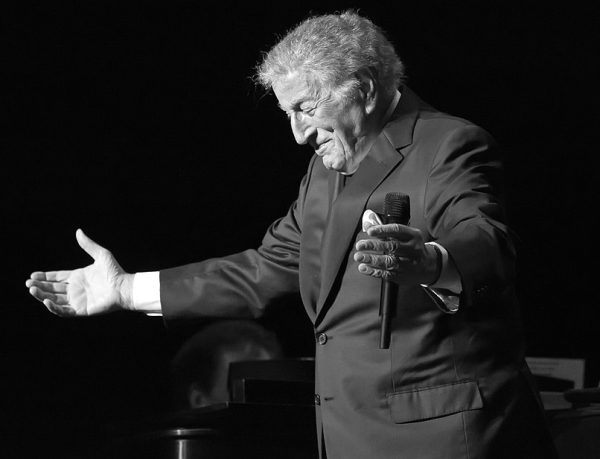
Tony Bennett (photo by Tom Beetz)

As someone who does a lot of public speaking, I must confess this was getting to be a problem, but about a year ago, singing legend Tony Bennett gave me an invaluable piece of advice. (And by that I mean Mr. Bennett was being interviewed on National Public Radio, but the advice he shared was so spot on that I felt he was talking directly to me.)

The NPR interviewer asked Bennett a question about his signature song, “I Left My Heart in San Francisco,” one that several other interviewers have posed as well: When you’ve sung that song so Tony Bennett many times, where do you find the inspiration to belt it out with gusto one more time? I turned up the volume on my car radio. If ever there was an analogy to my particular problem, this was it.

Bennett chuckled and admitted that this was, indeed, a challenge. He’d lost count of the number of times he’d sung that standard. But whenever “San Francisco” appeared on his set list, he consciously took a moment before the performance to stop and think about what the song meant to him.

Bennett said the song had opened doors for him around the world, and that he’d had the privilege of singing it before kings and queens, presidents and prime ministers. It became an “all-access pass” for a crooner who had been relegated to singing in bars, and now he was performing for sold-out crowds in concert halls and arenas.

Black and white image of singer Tony Bennett bowing with a microphone

Tony Bennett (photo by Andy Witchger)

In those moments of reflection, Bennett said he felt grateful for all that the song had done for him, and once that feeling started flowing through him, he knew he was ready to perform. Audiences may respond to the lyrics, the song’s sentiment, or his delivery, Bennett added, but he believed they also connected with this unspoken feeling of gratitude.

I’ve taken his words to heart ever since, and now, whenever I’m waiting for my turn to present, I consciously think about the unique opportunity I’ve been given. When I start to feel gratitude, I know I’m ready to begin. And should that little voice ask, “The same words? Again?” I will be able to answer with conviction, “Yes, the same words, and happy to say them.”

(Special thanks to Anna Christopher of NPR for her help with this story.)

ICYMI: The 10 Immutable Laws of Storytelling

This article was originally written by Andy Goodman and published in our June 2007 issue of Free-Range Thinking. As we prepare for the first Storytelling workshop of 2024, we wanted to review Andy’s ten immutable laws of storytelling!

The question arises at least once during every storytelling workshop I lead, and it drives me crazy. “Can my organization be the protagonist of my story?” a well-meaning non-profiteer will ask politely. “No!” I want to scream. “No! No! A thousand times no!” Discretion prevails, however, and I explain just as politely that people relate to people, so stories about your work—any line of work, really—must provide human protagonists to draw the audience in and lead them through the narrative. And that’s not just a recommendation, I hasten to add. When it comes to telling stories that an audience will remember and even repeat to others (the ultimate payoff for a well-told tale), consider this a law. In fact, through the process of leading dozens of story-telling workshops for literally hundreds of nonprofits, I’ve been able to identify ten such laws. With very few exceptions, the stories that have risen to the top in these workshops tended to follow every one of these laws to the letter.

The 10 Immutable Laws of Storytelling

Photo by Anna Shvets

1. Stories are about people. Even if your organization (a) is devoted to saving flora and/or fauna, (b) toils in the dense thicket of policy change, or (c) helps other organizations work more effectively, human beings are still driving the action. So your protagonist has to be a person. And since this person also serves as the audience’s guide through the story, it’s essential to provide some physical description when he or she is introduced. This helps your audience form a mental picture—after all, it’s hard to follow what you can’t see. And don’t forget to include your characters’ names. Audiences will relate more readily to “Marcus” than “the at-risk youth,” even if you have to use a pseudonym to protect your subject’s identity.

2. The people in your story have to want something. A story doesn’t truly begin until the audience knows precisely what the protagonist’s goal is and has a reason to care whether or not it is attained. So within the first paragraph or two, make sure it’s clear what your hero wants to do, to get, or to change. And given that stories are driven by some kind of desire, beware the passive voice! When you write, “a decision was reached,” the people in your story magically disappear and suddenly the action is forced by an unseen hand. (For more on problems with using the passive voice, see Gonzales, Alberto.)

Photo by Oleksandr P

3. Stories need to be fixed in time and space. Audiences don’t require every detail of longitude and latitude up front, but the moment you begin telling your tale, they will want to know: Did this happen last week or ten years ago? Are we on a street corner in Boston, a Wal-Mart in Iowa, or somewhere else? If you help them get their bearings quickly, they will stop wondering about the where and when of your story and more readily follow you into the deeper meaning within.

4. Let your characters speak for themselves. When characters speak to each other in a story, it lends immediacy and urgency to the piece. Audience members will feel as if they are the proverbial fly-on-the-wall within the scene, hearing in real time what each person has to say. Direct quotes also let characters speak in their idiosyncratic voices, lending authenticity to the dialogue. “The name is Bond, James Bond,” is way better than, “The agent introduced himself, characteristically repeating his surname twice.”

Photo by Hikmet

5. Audiences bore easily. Human beings are hard-wired to love stories, but in this, The Age of Too Much Information, people don’t have time to wait for your story to get interesting. Within the first paragraph or two, you have to make them wonder, “What happens next?” or “How is this going to turn out?” As the people in your story pursue their goal, they must run into obstacles, surprises, or something that makes the audience sit up and take notice. Otherwise they’ll standup and walk away.

6. Stories speak the audience’s language. According to national literacy studies, the average American reads at a sixth grade level. So if your ads, posters, and publications are intended for mass consumption, plain speaking is the order of the day. Good storytellers also have a keen ear for the colloquialisms and local slang that quickly establish common ground between the teller and listener.

7. Stories stir up emotions. Human beings (which should, hopefully, comprise the majority of your audience) are not inclined to think about things they do not care about. We all have too much on our plate as it is. So even when you have mountains of hard evidence on your side, you have to make your audience feel something before they will even glance at your numbers. Stories stir the emotions not to be manipulative, not simply for melodramatic effect, but to break through the white noise of information that inundates us every day and to deliver the message this is worth your attention.

8. Stories don’t tell: they show. Intellectually, your audience will understand a sentence such as, “When the nurse visited the family at home, she was met with hostility and guardedness.” But when you write, “When they all sat down for the first time in the living room, the family members wouldn’t look her in the eye,” your audience will see a picture, feel the hostility, and become more involved with the story.

Photo by Tomáš Malík

9. Stories have at least one “moment of truth.” At their essence, the best stories show us something about how we should treat ourselves, how we should treat other people, or how we should treat the world around us. Since the first forms of humankind gathered around the first fires, we have looked to stories to be containers of truth, and your audience will instinctively look within your story for this kind of insight.

10. Stories have clear meaning. When the final line is spoken, your audience should know exactly why they took this journey with you. In the end, this may be the most important rule of all. If your audience cannot answer the question, “What was that story all about?” it won’t matter how diligently you followed rules one through nine.

Missing Stakes is a Big Mistake

Photo by Markus Spiske

Imagine you’re gearing up to watch an exciting game of basketball. It’s the WNBA finals. You sit down in front of your television with your vegan cauliflower wings (just me?). You turn on ESPN as the commentator explains, “This year we won’t be keeping score in the WNBA finals. Each game will be played as usual, but no one wins or loses. Aaaaand here’s the tipoff!”

Sports fans would be a little upset about this new development in the WNBA. And why is that? Sports are exciting, because, yes, you have teamwork, great plays, and vegan “wings”, but what makes the game dramatic? What makes teamwork important? What’s the payoff for a great play? The score! Take away the score and you take away the meaning.

Okay, but what does this have to do with the stories you share about your work? Everything!

Imagine now that you’re scrolling through social media, and you come across a post from a nonprofit you follow. It’s an image of a smiling schoolteacher holding an airline ticket. You have a minute, so you pause your scroll to read the text. As the story starts you meet the protagonist Leena, a joyful schoolteacher whose goal is to visit her mother across the country. “It’d be cool to see her this month,” Leena thinks as she opens her computer to search for plane tickets. The story goes on.

Photo by Andrea Piacquadio

Are you just dying to know if Leena visits her mom?! Nope. And why not? Because there are no story stakes! Thank goodness you’ve put down Leena’s story and picked up this article about how missing stakes is a huge mistake!

Simply put, stakes are consequences, and consequences, like a scoreboard, create meaning. They engage the audience, making them care about how your story ends.

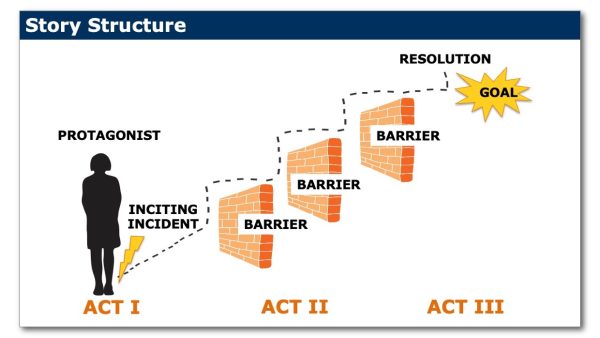
As we introduce the person the story is about and establish their goal, our audience needs to know what hangs in the balance. What is gained if the protagonist succeeds in getting the goal? AND what is lost if the protagonist fails? And if you want your audience to keep listening or keep reading, both need to be conveyed in act one (check out this quick refresher of the 3-Act Structure of Dramatic Narrative).

Sometimes, when talking about the important work they do, public interest folks skip over the stakes thinking, It’s obvious. My audience gets it. But that’s not always true. Especially if your audience is less familiar with the work that your organization does. Bring your audience along for the ride by letting them know what’s at stake, and make it personal.

Let’s dive back into Leena’s story and give it another shot. This time with stakes.

Leena pushes aside a stack of ungraded spelling tests and opens her laptop. A sticky note stuck to her keyboard reads: “flights”. One word reminding her of the day’s final task: buy a plane ticket to visit her mom in San Francisco. Leena smiles, genuinely excited for the trip. Her mother, Donna, is finally able to marry her girlfriend of 10 years, and Leena can’t wait to walk her mother down the aisle. The date is February 12, 2004, and San Francisco just began issuing marriage licenses to same-sex couples. Leena opens her browser and begins her search. 

Photo by cottonbro studio

Now we have a story. If Leena doesn’t make it home, she won’t get to walk her mother down the aisle. She’ll miss her mother’s historic and awesomely gay wedding. We know what’s at stake. Leena’s story now matters to us. In fact, if we were shown how we might help more families like Leena’s, we might even take action.

So, when you tell those stories about your work, be sure to paint the picture from two angles: the best-case scenario and the worst-case scenario. Here are some questions to help you get there:

  • What does success look like for the protagonist? What dreams come true if the protagonist achieves their goal? If they get what they want, what does their life look like? Paint the dream.
  • What does failure look like for the protagonist? What misery is our protagonist trying to avoid? If they don’t get what they want, what does their life look like? Paint the nightmare.

Notice how even the words “paint the nightmare” create emotion? That’s the job of stakes! Stakes are hardworking story elements, creating emotion and meaning, and drawing an audience in. If the audience doesn’t know what’s at stake, it becomes far too easy for to keep scrolling in search of higher stakes and a basketball game with a proper scoreboard.

Join The Goodman Center this February for our first storytelling workshop of 2024!

Three Act Story Structure Refresher

When we teach Storytelling at The Goodman Center, we use the Three Act Story Structure. While there are many story structures throughout the world, we have found this structure to be simple, flexible, and effective in creating positive change in the public sector. The Three Act Structure is especially useful when you need to succinctly engage a distracted audience and move them to action. 

For those of you who have taken one of our workshops, we though we’d offer this very quick quick of the Three Act Structure: 

ACT ONE

We meet our protagonist, experience a moment that alters their journey (the inciting incident) and find out what their goal is. 

ACT TWO

On the way to the goal, the protagonist runs into barriers or obstacles. Something gets in their way, and they must strategies to overcome those barriers. (Hint: often this happens with partnership with our organization!)

ACT THREE

The end of the story, which answers the questions: did the protagonist achieve the goal and what does it all mean? 

If you’re an alum of our Storytelling class, the image and the breakdown above is very familiar. If it’s new to you, consider learning more by jumping into our storytelling workshop at The Goodman Center! The next class begins on February 6th, 2024.