Tools to Build Connection and Strength During Times of Upheaval

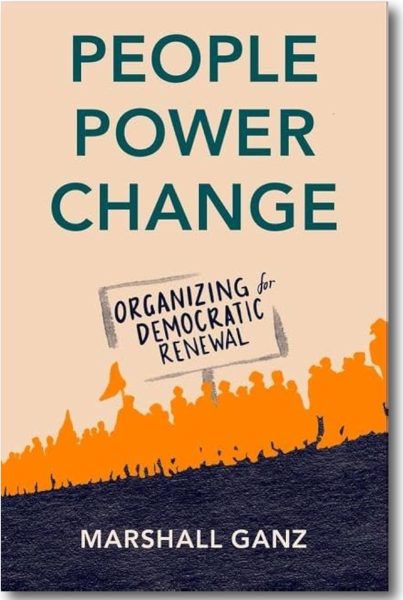
Public interest communications is the work of transformation. Creating a safe, just, and equitable world requires us to transform apathy into caring, caring into action, and action into deep lasting change. Marshall Ganz’s new book, People Power Change: Organizing for Democratic Renewal, provides a framework to build your craft of connecting hearts (caring), heads (strategy) and hands (action). The lessons within are both practical and inspiring: a winning combination.

I’ve been fortunate to take classes with Ganz, and reading this book was like sitting in those classes. So, if you don’t have the time for an intensive 3-month virtual class at Harvard, this book is for you.

Here are my top takeaways, which will hopefully convince you to make this your winter read:

Create connection by listening to and telling stories.

Whether you are building and strengthening community grassroots-style, or you’ve earned your way into a billionaire philanthropist’s office, stories remain the number one tool you have for creating meaningful connections and relationships. Being able to articulate your story and the story of your organization is important, but equally valuable is having the tools to listen and draw out the story of the person you are meeting. What are the values that intrigue them about this work? What are the experiences that have made them care?

Ganz’s teaching on public narrative is invaluable for making a connection at the heart level with your partners and donors that will last past this giving season.

Image generated with the help of AI.

In times of change and loss, build an empathetic bridge.

Our organizations, communities, and countries go through periods of uncertainty and even devastation. How can we shepherd our teams and constituents through times of loss and upheaval?

Whether it is a loss at a leadership level, big changes in organizational structure, funding, or laws that affect our work, Ganz’s concept of the “empathetic bridge” reminds us that first and foremost we must acknowledge the change and the emotions that go along with that. Rather than rushing to action, we should harness the emotional resources that arise through processing frustration, anger, and sadness.

I think of this like gasoline (if you’ll forgive the fossil fuel metaphor). Frustration, anger, sadness, rage – these are fuel to create change, but not if we spray them out into the air. We need to aim the gasoline into our engines to get where we are going.

Don’t fall flat on your ask.

If you’ve attended a Goodman Center Strategic Communications webinar, you’ve heard us say this before. If you have managed to turn that apathy into care and have a potential donor, partner, or volunteer pumped up and ready to get to work, you must have an action for them to take that they can commit to. You also must be able to convince them that this action will make a difference.

In his chapter about action, Ganz digs into the process of securing commitments from our partners. “The key is not making it an easy ask but rather in making a valuable ask.” What difference will it make if I sign up for your newsletter? How do I know that my $5, $50, or $5,000,000 is going to have a real impact if I give that to you? This is about offering proof with story and data and seeing a request to commit not as a burden but as an investment in a better future. Our audiences want a chance to make the world a better place. You are offering them that very thing. Do they know how it works?

The wisdom in People Power Change is speaking directly to organizers and social justice movements, and I believe that the same craft used for building those communities can be harnessed into a force for good by anyone working to transform our world.

ICYMI: Five Fast Ways to Ruin a Webinar

In Case You Missed It: This month’s ICYMI was written by Andy Goodman in February 2013 in which he shares the five mistakes to avoid when planning your next webinar.

Here are five foolproof ways to do it (or, if you prefer, five mistakes to avoid when planning your next webinar).

I can’t remember exactly when I attended my first webinar, but I clearly recall my initial reaction to this wondrous new technology. “Wow,” I thought to myself, “somebody actually found a way to make conference calls more unbearable!” As the technology has proliferated and become less expensive, webinars have become a regular fixture in the workplace, but one thing hasn’t changed: most of them are still glorified conference calls, and almost all of them are boring.

But let’s be honest: you’re busy, and even if you do have a webinar to run sometime soon, who needs to expend all that extra energy trying to raise the bar? Running a webinar that’s just as mind numbing as all the others is easy. Just follow these five simple steps:

Keep ’em guessing right from the start.
When people log into your webinar, they need to know exactly how to participate to the fullest. The most popular services offer different tools, and organizations often have their own rules when conducting webinars. Participants – even seasoned veterans – don’t always know what’s expected of them, so if you want to keep them sitting quietly on the sidelines, skip past any kind of orientation and get right to your first incomprehensible slide.

Assume your audience is paying close attention.
Webinars are a great way to get work done – other work, that is. While you, the webinar host, drone on, your audience is catching up on email, firing off a few memos, and making those crucial updates to their Facebook pages. If you don’t assume they’re paying attention and start doing unconventional things like calling on them by name, or giving them exercises to work out and report back on, you can disrupt this very productive time. So be respectful of the fact that they took all that time to dial in and log on, and just leave them alone!

More text, fewer images, and no video!
Most webinars are basically PowerPoint slides with voiceover narration. If you cram your slides with text, data, and complicated graphs and charts, they’ll practically scream, “Don’t look at me!” Stay away from interesting photographs or those fancy new forms of data visualization that actually make people look more closely at their screens. And by no means use video, even though most webinar platforms now accommodate it with relative ease.

Leave the same slide on screen as long as you like.
Every time you show a new slide, you pull your audience’s attention back to the screen (and, as noted above, distract them from more important activities.) If you leave the same slide on-screen for more than a minute or two, however, your audience will get bored and will start looking elsewhere for entertainment. So keep those slide changes to a minimum, and let every slide have its day. Literally.

Speak in a monotone.
Or better yet, dominate the conversation and don’t let anyone else speak. Just as changing slides rekindles visual interest, speaking with enthusiasm – or introducing new speakers – can stimulate aural interest. This puts you in dangerous territory, because if people start listening, they may actually start to think and, even worse, participate. Droning in a monotone (a la Ben Stein in “Ferris Bueller’s Day Off”) is the surest way to send them back to Facebook, Twitter, or sleep.

To learn more ways to improve your meetings, register for our “Meetings for People Who Hate Meetings” workshop on March 11 & 13.

ICYMI: Strategic Communication Saves the Family Dog

In Case You Missed It: This month’s ICYMI was written by Andy Goodman in September 2010 in which he shares how strategic communication helped keep his family dog safe.

How the principles that guide national campaigns were put to the test in my own backyard.

For more than a decade, I’ve been teaching public interest professionals how to communicate more strategically. The premise of my class is simple: there are four points of connection between you and your audience. If you know what they are and plan your outreach around them, you will have a better chance of engaging your audience and motivating them to act. I’ve seen many national campaigns successfully employ “the four connecting points,” but I never considered using them at home…until this summer.

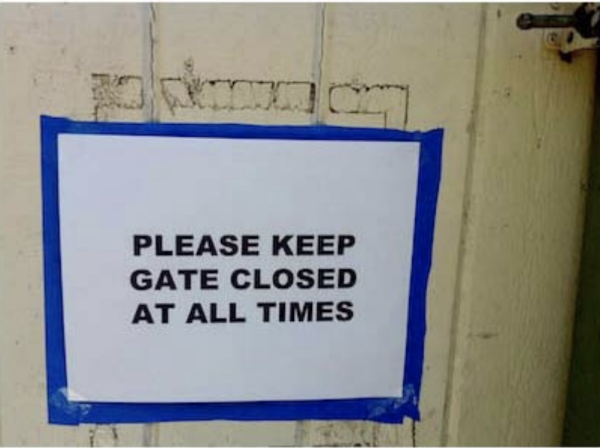
The call to action came when I saw our family dog, Scarlett, romping happily in our front yard. When our family is out during the day, Scarlett is free to play in our backyard, which is fenced in for her safety. Someone had left a gate open, however, and our curious little terrier had gotten out and was now perilously close to a busy city street. I hustled her inside and closed the gate, which bore a sign reading, “Please keep gate closed at all times.” Clearly, this message wasn’t getting through.

The primary audience for this message was my son Daniel, who is 21, and his friends, the most frequent users of the gate in question. In general, these are responsible kids, and they all love Scarlett as much as I do, but when it came to keeping the gate closed and latched, there was a disconnect in the most literal sense. I had tried to “reinforce the message” with verbal reminders, but as this was perceived mostly as “dad yelling,” the reminders fell on deaf ears.”

So I decided to practice what I preach and be more strategic in my communications. If the four connecting points could change the behavior of millions, I reasoned, surely they could be used to convince a few college kids to keep a gate shut.

Connecting Point #1: Theme

Once you’ve narrowed the target audience for any campaign, your first task is to learn what they already care about. If you can identify an existing concern closely related to your issue, you can tap into those feelings through the theme (or frame) of your campaign.

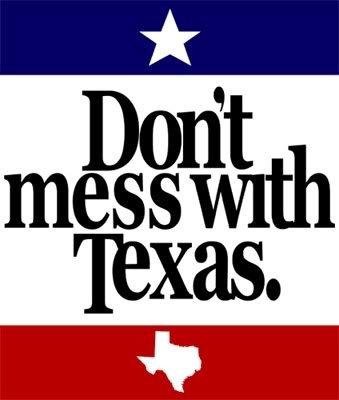
In Texas, to cite a classic example, the Department of Transportation knew that its anti-littering campaign would have to reach young men – an audience that didn’t much care about the environment or beautification efforts. What this audience did love was Texas, so TexDOT made state pride the underlying theme of its campaign.

As to my audience: I knew that Dan and his friends cared about Scarlett, but when I reflected on the first connecting point, I started to see the sign on the gate in a new light. “Please keep gate closed at all times” might have been clear and concise, but it was not speaking to my audience’s concern as directly as it could.

Connecting Point #2: Words

Once you know what your audience cares about, you can develop the slogans, talking points and other language that will link this concern to your issue.

Returning to our Texas example: TexDOT took the proper first step by identifying “state pride” as a core concern, but the campaign would probably have flopped had the slogan been, “Take pride in Texas – don’t litter!” Thanks to the creativity of TexDOT’s ad agency, however, the slogan “Don’t mess with Texas” cleverly translated the theme into words the audience could hear and even embrace.

For my backyard campaign to succeed, I realized I would need entirely new language – words that would trigger an emotional response (love for a sweet little dog) in college-age kids (who read text messages while ignoring signs) and that wouldn’t sound too authoritarian (i.e., dad yelling again).

Connecting Point #3: Transfer

Even if you have the right theme and the perfect slogan, you still have to put your message in front of the audience. I call this “the transfer,” and it can be as complex and expensive as a multimedia campaign, or as cheap and simple as a sign on a door.

“Don’t mess with Texas” was a traditional multimedia campaign conducted over several years, but there was always a heavy emphasis on billboards and radio advertising. That’s connecting point #3 in action: transferring the message at a crucial time and place – in this case, right before (hopefully) an empty beer can is tossed out the window of a moving car.

I had been using the sign-on-the-door approach, and as I reviewed this third connecting point, I concluded the approach was still sound. The message was in the right place; I just needed a better sign, so besides changing the words, I decided to add some colors and a picture to make it more eye-catching.

Connecting Point #4: Ask

Once you’ve convinced your audience to stop, look and listen, you can still lose them if you don’t ask for their help in the right way. But if they know exactly what you want them to do, are comfortable doing it, and believe it will make a difference, they’re all yours.

“Don’t mess with Texas” had an uncomplicated ask – don’t litter – and the campaign reduced the amount of trash on the highways of Texas by a staggering 70% over a thirteen-year stretch.

My campaign had an equally straightforward ask – close and latch the gate – but it was delivered in a humorless manner with no connection to the four-legged beneficiary of the extra effort. So I thought it might be more effective to have the ask come from Scarlett herself.

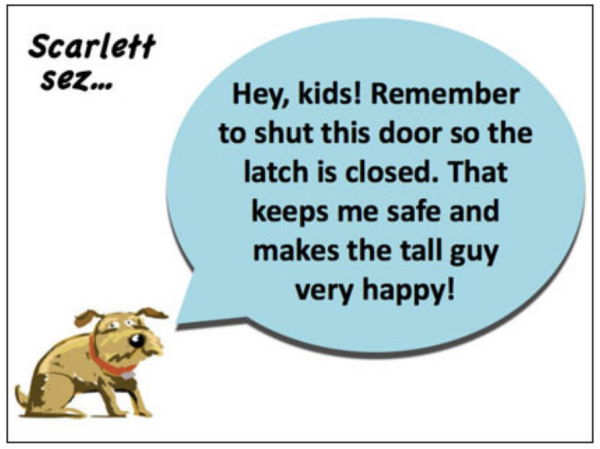
The new and improved sign featured an illustration of a terrier saying, “Hey kids! Remember to shut this door so the latch is closed. That keeps me safe and makes the tall guy very happy!” The “tall guy” reference is for me (I’m 6′ 4″) and is meant to remind the audience that while the new sign may be goofy, its purpose is still serious.

Today, I’m delighted to report that the four connecting points have proven their worth once again. Ever since I posted the sign in August, there have been no more front yard romps for Scarlett, and harmony reigns once again in our household. That probably won’t last, though. A campaign to convince my pre-teen daughter to clean up her room is currently on the drawing board.

Are You Still Deficit Framing?

Let’s play a game. Below are the opening lines of introductions to two people I found featured on well-known nonprofit websites. One intro is for a client and one for an Executive Director. Can you tell which is which? (Please note that language and identifying features have been changed because we are not here to shame anyone). 

Randy’s life was hectic. He survived childhood against the odds, but his potential was clouded by dropping out of school and spending time behind bars. Growing up in a broken home, he got mixed up in illegal activities and struggled with addiction.

Elizabeth is a leader whose dedication to fighting homelessness and supporting communities is unmatched. Her decades-long service record shows unwavering commitment to building equitable and sustainable solutions to issues of social justice, housing, and food insecurity.

Can you tell which is the client and which is the ED? I’m guessing you can. Very easily. Why? Because shaking the habit of deficit-framing the people our organizations serve has proven to be challenging for the public interest sector.

It’s the water we’ve been swimming in, and like the Tiktaalik did about 375 million years ago, we’re gonna have to crawl out of that water and live on land. 

Are You Still Deficit Framing? 

The good news is that we already know how to asset frame. Need proof? We asset frame the Elizabeths of the world. We asset frame our CEOs, EDs, Staff, donors, and volunteers. We do it intuitively. They, too, may come from broken homes or may have struggles with addiction, and maybe they even share that part of their story. BUT, we don’t introduce them that way on our websites, at our galas, or in our annual reports.  

The goal is to practice introducing our clients/partners/neighbors the same way.  

“Randy is a fierce advocate for social justice and the power of second chances. He has committed the last 20 years of his life to advocating for systems change and becoming a role model for his son. Randy devotes his life to this, because he has made the most of his second chance.  

Randy survived childhood against the odds… [continue story]” 

For organizations that advocate social justice, anything other than asset-framing is antithetical to the work you do. Deficit framing perpetuates the judgements and myths behind who needs help and who gives help. It is an ethical pothole too many of us drive right into.  

Trabian Shorters

This fall, we are excited to offer a virtual session of our Ethical Storytelling workshop. In the class you will dig deeper into Trabian Shorter’s concept of Asset Framing, practice it in your stories, and explore more frameworks and resources for storytelling that deepen your impact while honoring your mission and the people you serve.  

Until then, practice making the intros for your Randys sound a lot more like the intros for your Elizabeths. That’s a move in the right direction.

ICYMI: Five Questions for Better Meetings

In Case You Missed It: This month’s ICYMI was written by Andy Goodman in May 2014 in which he shares practices to make meetings more engaging and productive.

A simple model designed to improve all kinds of user experiences can make your meetings more engaging and more productive.

Unless you work alone, meetings are an essential part of your day-to-day operations as well as an expression of your organization’s culture. When meetings go south, not only are they a waste of time and money, they can send messages that ultimately undercut performance, impede collaboration, and lower morale. Bad meetings aren’t just annoying – they’re a problem that needs to be addressed.

Doblin is an innovation consultancy that developed the “Five-E Model” for improving all sorts of user experiences, from walking into a store to navigating a website. The five E’s that Doblin asks designers of those experiences to consider are: entice, enter, engage, exit, and extend.

As someone who regularly leads workshops on improving meetings, I can see how this model can be translated into a useful series of questions to consider while planning your next gathering:

1. How do we entice people to attend (or, if they must attend, how do we create excitement around the event)?

Most meeting organizers address the first E by promoting highprofile speakers, particularly compelling topics, or the location (assuming it’s desirable). But even routine internal meetings can be made more appealing if a carefully prepared agenda is circulated in advance and feedback is solicited to ensure that everyone’s time will be well spent. (See the January 2000 issue of free-range thinking for more details on how to properly prepare an agenda).

2. When people enter, what will they see or experience that immediately signals an interesting and engaging meeting?

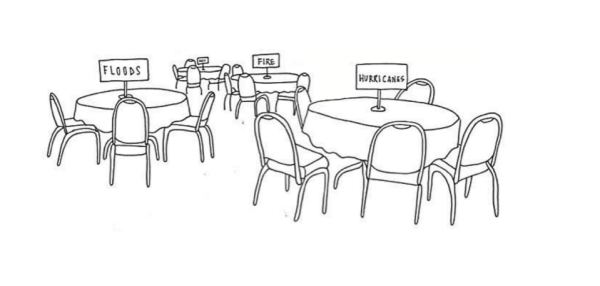
At a recent Grantmakers for Effective Organizations’ conference, a session was held entitled, “We Are All Disaster Funders.” Session designers wanted to help grantmakers understand that – normal funding priorities aside – they may very well find themselves making emergency relief grants in the wake of a hurricane, flood, tornado or earthquake.

To set the stage for this discussion (literally), tables in the meeting room were each identified by a particular kind of natural disaster (see illustration below).

On entering, attendees were asked to sit at the table where, based on their foundation’s location, that particular kind of natural disaster could affect them.

3. How will we engage attendees throughout the meeting to make sure they are active participants?

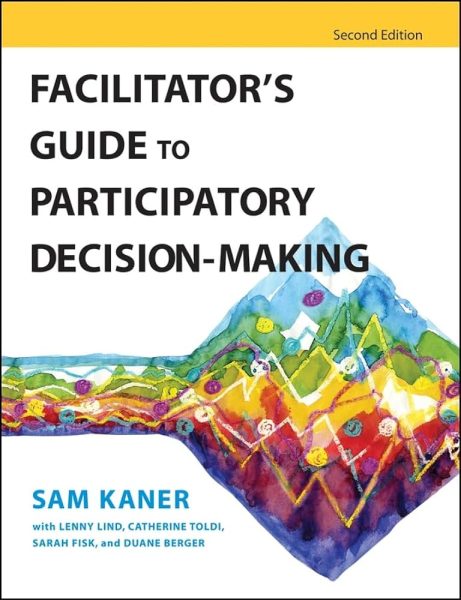
Simple: buy Sam Kaner’s outstanding book, Facilitator’s Guide to Participatory Decision Making, and read it cover to cover. You’ll find proven techniques for helping quiet people speak up, getting loud people to shut up, and helping groups in conflict find their way to consensus.

4. When attendees exit, how do we close the meeting to ensure the desired followup actions?

First, recognize that endings are an important part of every meeting. A meeting shouldn’t end simply because time ran out. Meeting planners will often relegate the least important items to the final few minutes of the agenda, and while it makes sense to put first things first, you don’t want participants leaving the room with the last inspirational message being, “And please don’t leave dirty dishes in the sink.” As people leave, they should know exactly what’s expected of them and by what date and time.

5. After the meetings, what can we do to extend its impact?

Several years ago, Heal the Bay, an environmental nonprofit based in Santa Monica, conducted a campaign called “The Forty Day Fight.” At the launch event, attendees were asked to make calls and send letters and faxes to a local water resource control board that was about to make a crucial decision affecting Southern California’s coastal waters.

As guests arrived and checked in at the launch event, they received name tags – the usual rectangular plastic holder with a paper insert for their name and organization. Hidden behind the insert, however, was a second piece of paper the guests didn’t know about.

After a series of speakers fired up the group about the importance of flooding the water resource board with public comments, the final speaker asked the guests to remove their tags and find the hidden piece of paper. What they found was a specific date falling within the forty-day lobbying period. “This is your day,” the speaker declared, explaining that each attendee would receive a call from a campaign volunteer on their assigned day reminding them to send their message.

And allow me to add a sixth E for effort. Good meetings don’t just happen. They take careful planning, but if you spend a little more time working through Doblin’s five E’s before holding your next meeting, I’m confident those efforts will be rewarded.

(Special thanks to Chris Ertel and Lisa Kay Solomon, co-authors of the new book, Moments of Impact: How to Design Strategic Conversations That Accelerate Change, in which I first learned about the Five-E Model.)

The 23rd Annual Summer Reading List

Sprawl out on your picnic blanket or beach towel. This year we have 4(ish) books to reinspire you with the how, what, and why of storytelling. 

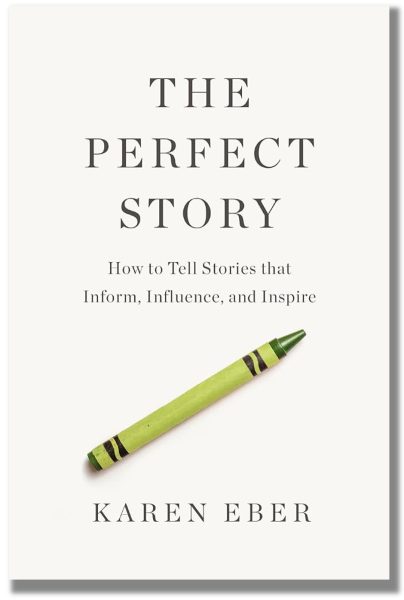
The Perfect Story (Harper Horizon © 2023) by Karen Eber  

The popularity of Eber’s TedX talk, How Your Brain Responds to Stories — and Why They’re Crucial for Leaders, propelled her to write this engaging and straightforward book on applying storytelling to your work. Though Eber tends to consult in the corporate world, her easy-to-follow checklists and models apply equally to the public interest world. 

If you are a regular reader of this newsletter, or you’ve participated in a storytelling workshop with us, almost everything in this book will be familiar. Sometimes, it is helpful to hear it from a new source. 

One word of caution: Eber talks about how to present the stories as well. One of her tips takes a very ‘outside-in’ approach, meaning starting with some set gestures and movements. For some, this may work great! If you practice them enough, these gestures can move from your conscious to subconscious, become natural movement, and enhance your connection to the audience. However, this can also lead to gestures that feel contrived and robotic.  That being said, almost everything in this book made me shout, “hooray!” Take what works and leave the rest. 


Meander, Spiral, Explode: Design and Pattern in Narrative (Catapult © 2019) by Jane Alison 

 Explore beyond the 3-act structure of storytelling in this brilliant book for lovers of language and literature. Jane Alison shares descriptions and examples of story structures that parallel shapes and structures present in nature. If the 3-act structure is a wave (inciting incident, rising action, crest, and resolution), what other natural models can expand our thinking about how to tell a story? How about radials, fractals, networks, cells, and, of course, meanders, spirals and explosions? 

 The examples really make Alison’s ideas come alive as she discusses forms old and emerging. Her focus is fiction-writing, but each one of her tools will help you tell stories that keep your audience’s attention and make them care.  


Reach: 40 Black Men Speak on Living, Leading, and Succeeding (Atria Books © 2015) Edited by Ben Jealous and Trabian Shorters  

I was lucky enough to see Trabian Shorters again this year! He was speaking at the GEO conference in Los Angeles. I am a huge fan of his. His work on asset-framing is transformative for public interest storytellers. HUGE FAN. 

So, imagine my surprise when they introduced him as an author. Y’all! I had no idea he had a book. After I left that ballroom, I went directly to the LA Central Branch library one block away and checked out a copy. 

In Reach, black men from all walks of life share personal accounts of success, learning, growth, and giving. Some of my favorite contributions to this collection are:  

  • Shaka Senghor – his experience illustrates how we can use the stories we tell to transform ourselves and uplift others. 
  • Barrington Irving – the youngest and first African-American pilot to fly solo around the world. Irving’s story takes you on a ride! 
  • Trabian Shorters – If you don’t read in order, maybe start with this one. It shares the why behind this book in a powerful and personal way. 

Follow Your Fun

There are lots of great books about storytelling and writing, but I still think the best way to learn is by reading what you love. Not only do you deserve a break (beach read, much?), but diving into a book or graphic novel that keeps you on your toes, makes you laugh or cry – that experience teaches you exactly what you need to know about how to make the audience care, and what makes them read on. 

The book we read just for the joy of it can be the one that changes the way we approach storytelling or even how we view the world. 

ICYMI: Numbers That Don’t Numb

In Case You Missed It: This month’s ICYMI was written by Andy Goodman in June 2015 where he explains the most effective ways to use Social Math.

An image of a young man's face, but half his face is of him as a graduate and the other half is his face in a mug shot. Next to the graduate text says, SCHOOL: $9,100. Next to the mug shot the text reads, PRISON: $62,000. Indicating that sending this young man through school is considerably cheaper than housing him in prison.

While driving around Los Angeles recently, I saw this billboard and was struck by its powerful presentation. Using a single composite picture, two words and two dollar figures, this ad quickly and clearly makes the case that spending priorities in California are upside down. What’s working so well here is “social math,” a technique in which numbers – that often can be cold and abstract – are placed in a context that conveys meaning. Social math can pack a serious emotional punch, but translating data into concrete contexts doesn’t always add up as intended. In fact, poorly constructed equations can actually be more confusing than presenting raw numbers alone.

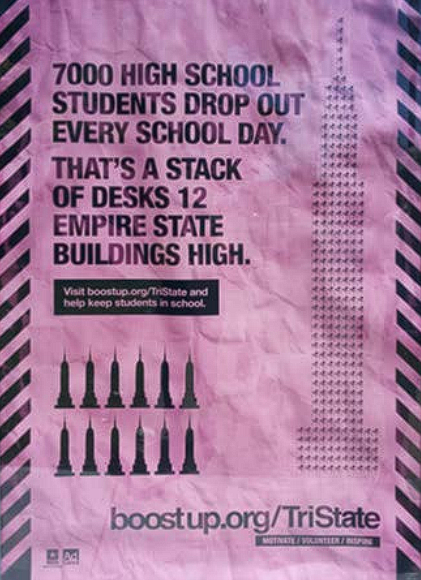
Text on image reads, 7,000 high school students drop out every school day. That's a stack of desks 12 Empire State Buildings high. The image features a graphic of stacked desks in the shape of a very tall empire state building.Consider this example from the Ad Council’s BoostUp campaign, which is using social math to contextualize the 7,000 students dropping out of high schools in the United States every day. The ad asks us to imagine a stack of desks as high as 12 Empire State Buildings, something that may be more difficult to picture than simply envisioning 7,000 students. In part, the problem is the mixing of measurement units: we are left trying to compute population into terms of physical space. If readers walk away from this ad thinking about the logistics of stacking desks on top of one another more than the magnitude of the dropout rate, an opportunity is lost.

Similarly, an article about waste in the Atlantic Monthly states “this year, the world will generate 2.6 trillion pounds of garbage – the weight of about 7,000 Empire State Buildings.” Again, because we don’t have personal experience with the weight of the Empire State Building, the 2.6 trillion pounds of garbage remains completely abstract.

Fortunately, the article eventually figures out how to bring the problem into focus, stating: “The typical person in a developed country produces about 2.6 pounds of garbage a day. That would mean the average American man, weighing 175 pounds, produces his weight in trash every three months.” By converting the pounds of daily waste into something (or someone) we encounter every day, we are much better able to visualize what three months of trash looks like.

The trick to using social math effectively isn’t simply avoiding comparisons to the Empire State Building (although that’s not a bad start). To make sure you’re effectively conveying both your data and message, we recommend three strategies to find the equation that underscores your point best.

Break your data down into smaller, relevant units of measurement.

Classic examples of this strategy include breaking the numbers down by time – per year, day, or minute – or by population, as with the oft used “per capita.” The following example, taken from a National Geographic article on food waste, uses both time and population, while also converting the quantity from pounds to calories, a much more relevant and understandable unit for food.

“The average American family of four tosses over 1,160 pounds of food a year – from scraps, to spills and spoilage. That’s 1.2 million calories – enough to provide one person over 3,200 calories of food a day.”

Compare your data to another figure to add meaning and create context.

One of the biggest challenges with statistics is getting your audience to understand how your data relates to their everyday lives. Try comparing your key data point with another number that is part of their day-to-day experiences. The example below, from an article in the online publication Medium, examines water consumption in personal terms.

“Turns out that the water needed to grow two and a half pounds of beef, or ten 4oz hamburgers, is the same amount the average person uses to shower. For a year.”

The math highlights the misconception that we consume the most water through our faucets. Creating a surprising contrast like this can bring attention to value inequalities and make your math memorable.

Connect your data to a story.

The most effective social math equations add up to something more – in the space between the numbers, a story begins to form. In our first example from the #SchoolsNotPrisons campaign (produced by Californians for Safety and Justice), the teenager pictured on the billboard serves as a protagonist faced with two distinct paths: prison and school. By juxtaposing the figures and placing them in a human frame, the ad evokes a story that moves the argument from statistics into the real world.

In Presentations: Access is Everything

Somewhere in a fancy hotel ballroom, a distinguished speaker takes the stage. The crowd is hushed. This session is the reason they came to the conference. The speaker confidently scans the audience. Ready to deliver a slam-dunk keynote. The audience collectively leans forward in their seats as the speaker begins.

“Good morning. This presentation is not for you and, frankly, I don’t care about your experience.”

Shocking, right? Rude, even. Who would start this way? What if I told you, that your presentation materials may be sending this very message to people in your audience? When we fail to address accessibility for speeches, presentations, workshops and meetings, we are disinviting people from the experience.

I recently had the opportunity to interview James Warnken, a Digital Accessibility Consultant at Blind Institute of Technology (BIT), whose mission is to help professionals with disabilities, and the employers who hire them find success in the workplace. At BIT, James teaches a 14-week class which prepares these professionals to pass the Certified Professional in Accessibility Core Competencies exam.

Talking to James was a privilege. His passion and depth of knowledge was apparent immediately. Our conversation was a great reminder that now is always the time to improve the accessibility of our presentations. 

Kirsten
What are some of the most common mistakes that you’ve observed in presentations when it comes to accessibility?

James
The biggest thing that comes across in in-person [presentations] is that the organizers don’t always know their audience. They don’t know who’s coming into the room, so they find it very challenging to account for the different types of abilities or people that are coming into the room.

You might have people in the room that don’t disclose that they have a disability or that they have a hard time seeing or a hard time hearing, and so you ultimately end up with your users having a little bit of a sour taste in their mouth because the event wasn’t designed from a “universal lens.” [For example,] the speaker asks if everyone can hear them and if they get a couple of “yesses”, they don’t use the microphone.

[You] might be creating a barrier that you’re never going to know about [for] somebody who has a hard time hearing or somebody that’s sitting in the back, that doesn’t even have a disability. The same thing goes from a visual standpoint. If you’re referencing things on the slide and using language like, “as we can see by this slide” or” looking at this chart,” or whatever those visual cues or indicators might be.

It’s disengaging when there’s a visual component, and I don’t know what’s going on and have no context to it. To me, that’s when I start to daydream.

There’s a lot of nuance to it, but it ultimately comes down to knowing your audience. And I’ll say that for [virtual presentations], again, it’s knowing your audience, but being prepared and being equipped to accommodate people sort of on the fly at the ready and just thinking about those different user abilities before the event even happens.

One of the things I do is make my slide decks available before the event so that somebody with, say, a screen reader or somebody with low vision can get access. If there are things that are being referenced or pointed out, then the user most likely has already familiarized themselves with it. If not, I make them available immediately after and one thing that I always do is include multiple different formats.

I’m always including a PowerPoint and a PDF or a PowerPoint and a Google Slides version because chances are with assistive technology, one it’s going to work better than the other.

Kirsten 
What are the considerations you should make about your platform?

James
[Whether it is] Zoom, Google Meets, or Microsoft Teams, does IT support live captions or not? Does IT support minimizing distractions on the screen for somebody with cognitive disabilities? Since there’s 30 people in there and they can see 30 tiles, but there’s only one person talking and presenting. That might be a big cognitive load for somebody with trouble paying attention or focusing or becoming easily distracted. Try to maximize the accessibility for everyone that is coming into that room.

Not to make this sound overwhelming, because once you actually get into it, it’s really not that difficult or complex. It’s just a different way of thinking than most of us have been trained or that we’ve learned how to do things we have.

Kirsten
Right, it can feel a bit scary when you first do an accessibility check and you have a lot of errors, you’re like, “Oh my gosh. How am I gonna fix all this?” But you’re saying once you start to understand it better, and you start practicing it, you can learn the skills fairly easily and put them into practice?

James
Yeah, it will just become the default, right? You’re just creating a new default version of how you present or how you design a slide deck. [Beginning] can be as simple as right clicking on an image and adding alt text or changing the color. Very minor, subtle things like that can make a huge difference in the presentation and keeping people active and engaged.

Kirsten
Those are excellent examples. When audience members may be using screen readers, how do you handle imagery?

James
I try to minimize the content of my slides and keep them very visual to keep the visual user engaged. A lot of people are very visually driven so I [use] images or icons or things like that off to the right, text to the left, but to answer your question about the screen reader, if you’re marking things appropriately as decorative, a screen reader is going to completely skip over it like it’s not there.

So it just goes back to that intentionality. Is this something that the user needs to know about? If the answer is “no,” mark it as decorative. If it adds value to the conversation or to the presentation, then let’s give it a proper description. Typically, we want to keep those descriptions to a sentence or two. We don’t want to write a novel.

From your perspective as the author, what value is this adding? [For example], if [I’m] giving a presentation, talking about choosing accessible colors, and I put the color wheel there as my visual, I would want to put some kind of description there that says, “When it comes to choosing colors, there’s a lot of options out there. But only certain combinations are effective when it comes to different user visual acuities,” or something like that. That doesn’t just say this is a color wheel, or this is a cup of coffee, or this is a dog with his tongue hanging out because he’s hot. We don’t want to necessarily be 100% literal all the time.

We want to approach it with that same creative approach that we are the rest of the presentation.

Kirsten
When a presenter forwards to a slide with images with alt descriptions, should they take a beat for the screen reader to read the information, so the presenter isn’t talking over it?

James
You don’t need to change your presentation style. I would just create small check-ins, or small pauses essentially taking the temperature of the room as the presenter. Look around. If somebody’s looking down at their phone or they’re messing around with their keyboard or something like that, chances are they’re probably taking notes, or they’re trying to advance the slides. So maybe give them a second or two – take a drink of water. You can brush it off in a very nonchalant way to where it doesn’t seem like you’re waiting on the audience.

Kirsten
I love that, because a presenter should always be paying attention to their audience. Checking in and pausing to make sure they are with you.

James
And that all comes down to fine tuning your presentation style. You can do it with comedic relief. You can walk to the other side of the stage if you’re in person. You could ask if there’s any questions. There’s a lot of different ways you can integrate pauses without disrupting the content in a way that will allow users with assistive technology to catch up if they need to.

When I’m teaching a class, trying to keep attention for two hours straight is difficult. I try to chunk my content out, and after 15 to 20 minutes, I’ll throw a story in there or I’ll throw a Q&A break. I’ll do something to give [the audience] relax, refocus, reengage. That way they can easily and more effectively retain the information.

Kirsten
That’s the whole ball game! Those are tools that ought to be put into place in every presentation. How do you know when more specialized accessibility tools should be implemented?

James
If your audience is filling out a registration form, one of the things I always encourage event coordinators or organizers to do is just include [questions] in the event registration like, “Do you have any special requests [or] an accommodation? Would you prefer sign language interpretations? Should we ask everyone to keep their mics muted during the meetings?”

Kirsten
Is it better to include specific examples or ask about accommodations in general?

James
Anytime you can, include examples, [and remember] not all disabilities can be treated the same, because there’s more to a person than their disability, right? There’s personal preferences, there’s customization, everything can be tailored to the individual now. I can turn my phone in dark mode and all of my apps update. I can do all of these different things to customize my experience. Assuming that this is only going to benefit people with disabilities is the wrong way to think about it.

Accommodations don’t only benefit people with disabilities, and I think that is a huge component that more and more organizations need to start to take account of. We’re not doing this specifically for people with disabilities. We’re doing this to create and foster a better and more inclusive experience for everyone based off of their personal preferences, accompanied with their accommodation request or their assistive technology.

Kirsten
In our Platinum Rules of Presentations class, we advise presenters not to read the slides out loud because from what we have read and researched, reading the slides is a pet peeve and even inhibits learning. However, is that outdated in terms of accessibility? And is it different for in-person versus virtual presentations? If somebody puts a big quote up? I usually put a quote up and then I’ll say, “everyone take a moment to read this for yourselves.” What’s your recommendation about that?

James
I’ve gotten mixed feedback on this. Personally, I don’t read off of my own slide decks. Primarily because I can’t see them. For me to be fully on camera in a digital setting, I have to be too far to be able to see what’s on my screen, and even more so in person – I can’t see what’s on the screen. I lean towards the slides being complementary. Not being a replacement.

This is just my presentation style. I want people to focus on me and what I have to say more than I want them reading off of a script, because if everything can be read off of the screen, what’s the need for me as the presenter? Why didn’t I just send them a Microsoft Word?
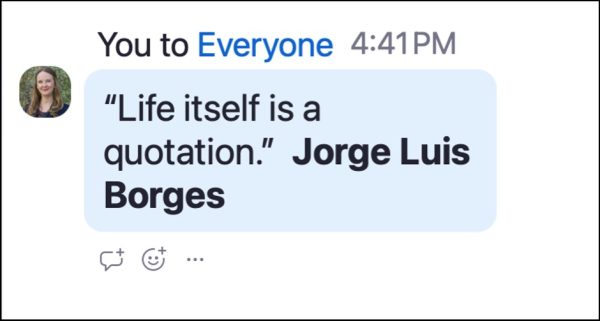
In the case of something like a quote, if you’re sending the slides in advance, don’t read word for word off of your slides because they’ve already read it. They’re familiar with it. They’re now here to hear the in-between, to answer the questions they had about what they read. If you can’t [send the slides in advance], one of the things you could do in a [virtual presentation] is if you put a quote on the slide – one of the features that is usually pretty accessible is the chat feature. You could have that quote or that text geared up to copy and paste into the chat without directly coming out and saying we’re putting this in the chat for people who can’t see it to be able to read it with your screen reader. You could say, “I’m also going to drop this quote in the chat for anybody who wants to save it.”

Kirsten
I’ve had people request the quote in the chat many times. That sounds like a great practice as an accessibility tool and also just to support everyone’s learning.

James
It’s one of the things I’ve learned over the last four years with all of my research and experimenting within the accessibility space: A lot of people the gap between user experience and accessibility is quite large. I think the space between them is quite grey. Accessibility becomes user experience, and a lot of user experience is accessibility.

I learned so much from this conversation with James. If you’d like to learn more, James recommends studying the Web Content Accessibility Guidelines (WCAG) 2.2 guidelines (not just for websites!), taking advantage of the accessibility tools and guides within most slideware programs, following Section508.gov best practices, signing up for the BIT newsletter, and connecting with him on LinkedIn, Instagram or his website.

Thanks to Blind Institute of Technology, James Warnken, and Amy McCaw.

Do you have advice or questions about The Goodman Center’s accessibility practices?
Please share them with us! Email Kirsten at kirsten@thegoodmancenter.com.

Special thanks to Amy Holloway from the Centers for Medicare & Medicaid Services, who took the time to reach out and talk with me about accessibility best practices. She shared some great resources, inspired us to interview James, learn more, and up our game in general. What a gift!
ICYMI: The 10 Questions We Hear Most Often

In Case You Missed It: This month’s ICYMI was written by Andy Goodman in August 2017 where he answers some of – what were and still are! – our most frequently asked questions.

What is the ideal length for a story? Is it okay to make up stuff? How can I use social media to tell stories? These are just some of the questions we regularly hear when we conduct storytelling workshops for our clients. And after leading over 500 workshops for organizations large and small around the world, I usually have a pretty good idea of what’s coming every time we pause for Q&A. So this month we’d like to share our answers to the ten most frequently asked questions, because we’re guessing that you may have been wondering about some of these things, too.

Q. What is the ideal length for a story?

A. Let me state definitively and without fear of contradiction: it depends. If you’re a great storyteller, you can take several minutes. If you’re boring, even thirty seconds will feel too long. That said, consider what happens when someone says, “Hey, I’ve got a story for you.” You’re all ears, right? But whether you’re aware of it or not, a little clock starts in the back of your head, and somewhere around two or three minutes the alarm goes off and that story had better be over. I’m not sure why – maybe that’s because most stories on the news are a couple of minutes long, or that’s how long commercial breaks are on TV – but whatever the reason, most listeners will usually give you 2-3 minutes. (For more on this subject, check out “The Ideal Length of Everything Online, From Tweets to YouTube Videos,” Adweek, 10/24/14. Two stats of particular note: the average length of the top fifty YouTube Videos that year was 2 minutes and 54 seconds; the average length for blog posts was 1,600 words.)


Q. If everyone is telling stories, won’t my audience get tired of stories?

A. After a ten thousand year run, it’s doubtful that stories have suddenly lost their power. The reason stories fail is not that people are tired of stories in general, it’s more that the storyteller has failed to produce something fresh, authentic and compelling. Romantic comedies are a case in point: we’ve all seen a bunch of them, and everyone knows what to expect, but when someone finds a fresh way to tell the story, we’ll stand in line to see it. (Still not convinced? Go see “The Big Sick.”) When people suddenly stop going to movies, watching TV and reading books, then you can start worrying.

Q. I feel uncomfortable telling somebody else’s story – I feel like I’m exploiting them. Do you have any advice about this?

A. We hear this a lot, and we’re very sensitive to the issue of exploitation or appropriation of someone else’s story. The best-case scenario is when the individual can tell her or his own story – nothing is more powerful than first-person storytelling, i.e., having someone stand before an audience and say, “This happened to me.” If your storyteller is not comfortable or simply cannot be in a certain place at a certain time, then the next option is to obtain their permission (preferably in writing) to tell their story, using their name and all the facts as they happened. Sometimes people will want you to tell their story but will ask you to change their name and a few details to protect their identities – that’s a third option. And lastly, in some cases, you may have a community that’s so small, changing the name and a few details would not be enough to hide their identity. In those cases, you can create composite characters, saying something like, “This is the story of Mary. Everything that happens to Mary happens to women in our program, and all the outcomes are real outcomes. But Mary actually represent many women, so while her story isn’t factual, it is truthful nonetheless.”

2024 Update: In our storytelling workshops we direct people towards the resources found at EthicalStorytelling.com. They have an excellent media consent form that you can download straight from their website.

Q. Is it okay to make some things up? (Or: How much can we embellish?)

A. If you can tell a story exactly as it happened, being faithful to every single fact, that’s the best-case scenario. Sometimes, however, you may be fuzzy on some of the facts or may not be able to recall certain details, such as specific quotes from a conversation. In that case, if you offer your best recollection, that’s acceptable as long as (a) you disclose to your audience that some parts of the story are “best recollections,” and (b) you are not in any way altering the basic truth of the story. For example, if you say that you met someone on a Tuesday and it turned out to be a Thursday, it’s unlikely that would have a material effect on the truth of the story. But if you say you personally saw thousands of homeless individuals when, in fact, there were only hundreds, then you are stretching the truth in what is probably a misleading way.

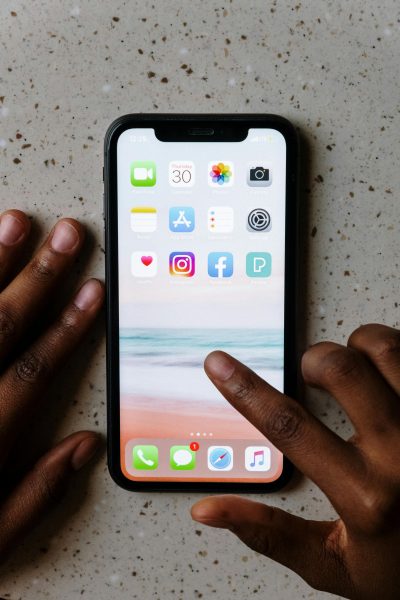
Hands on a cell phone. The logos of Instagram and Facebook are visible among others.

Q. What’s the best way to tell/share our stories? (Or: How can I use social media to tell our stories?)

A. Your website is probably your primary audience-facing medium, so that’s the first place to consider. And if you want to tell stories on your website, video is your best friend. Your audience is much more likely to sit and watch a 2-3 minute video than they are to read 750-1000 words. If video is too expensive or takes too long to produce, you can also tell stories on your website using pictures with captions or short summaries. (Exposure.co or Atavist.com are great resources to help you craft image-driven stories.) Newsletters – either electronic or hard copy – are also great vehicles for storytelling, and if you’re delivering speeches or making presentations, you should weave stories in there as well. As for social media, you can certainly tell stories on YouTube and Facebook, but I see the principal value in Twitter, Instagram and similar tools as pointers more than carriers of content. Tweets can serve as compelling headlines that make you follow a link to a place where you can spend a little more time watching or reading a story.

Q. Is there a correct amount of data to sprinkle into your story?

A. I have yet to see research that specifies a certain number of data points per words in your story, but I’m a believer in “less is more.” If your 2-3 minute story can make one data point memorable and compelling, that’s enough.

Q. What if I don’t have enough time or space to tell a complete story?

A. First, if time or space is limited, consider “connecting narrative moments.” This term, coined by Frank Dickerson, is a fancy way of saying that sometimes a snippet from a story will do – a single moment or a scene that evokes emotion without having to tell you the entire story. (Ernest Hemingway is famously credited with evoking an entire story with only six words: “For sale. Baby shoes. Never worn.”) But you should also consider creating a little extra space or time for a story even where you think there isn’t any permitted. I know of several instances where people had to submit proposals or make presentations that had very strict guidelines and there was no room for a story. They filled in all the boxes as required, gave all the information necessary, but then added a short story to bring a human dimension to all that information. I believe it’s worth the risk.

Q. What if you’re talking to an audience that actually prefers data to stories?

Daniel Kahneman, Israeli-American cognitive scientist

Daniel Kahneman

A. You may run into audiences – scientists, economists, researchers – who are inclined to see data as serious business and stories as “fluff.” I’m not insisting that you force-feed them stories – sometimes, if data is what they want, just give them the data! But if those same people are ever in the business of changing how people think and behave, then you have to explain to them that numbers do not have that power by themselves. (If you want to cite a higher authority than me, refer them to the Nobel Prize winning economist Daniel Kahneman, who said, “No one ever made a decision because of a number. You have to give them a story.”) Stories are like the software of the mind, telling us what data to let in, and what data to ignore. If you change the story, you can open their minds to your data, so you need to tell stories first.

Q. You say that audiences can only identify with one person – but what if the story is really about a team that worked together towards the goal. How do I tell that kind of story?

A. Identification is a one-on-one process, that’s true. People do not naturally identify with teams, groups, or an entire organization. That said, if your story is about a team, then introduce the members of the team one by one, and let your audience meet them as individuals. The audience can then track the progress of the story as the responsibility for moving the action forward passes from one team member to another.

Q. I work in policy (or systems) change. I don’t do direct service delivery. How can I tell a compelling story?

A. You have two options. The best-case scenario is to tell a story that shows at ground level (and featuring real people) how your policy or systems change is improving lives. If your audience can see that change up close and get a true feeling for the impact it’s having, then they will follow the links in the chain that ultimately lead from ground level all the way to your offices. If you simply don’t have access to those stories, you have another option. Effecting policy or systems change often boils down to getting people together in a room and moving them from no to yes. Changing minds isn’t easy – it’s a challenge we all face in one way or another – so stories about how that is accomplished hold interest for everyone and are also worth telling.

Feel the Facts

Stories connect us through shared experiences is a thing I used to say but had little idea what I meant by it. For years, that was my platitude-like answer to the question “why are you a storyteller?”. I’ve always felt an immense passion behind telling stories, but for as long as I can remember, I couldn’t explain it. Not knowing why really bothered me. I would spiral, hoping I was a storyteller for the right reasons… that is, until I spent time working at The Goodman Center and learning the difference between the impact of data and the impact of story.

Data gives us the facts. Stories help us feel the facts. And feeling is critical for making change. Stories are most effective when we honor the characters’ emotional state. Crafting stories with The Goodman Center has taught me that conveying the emotion of your story is part of capturing the truth. Without emotion, you’re not telling the whole story.

In the public sector, it is our job to honor the people who trust us with their story by expressing how it feels to be in that story. Using emotion, we help our audience feel and understand the impact of systemic barriers and injustice. What if you could make the audience actually feel the impact of injustice? What if their stomach knots and their shoulders rise in tension? And then at the resolution, what if they sigh in relief? Or hold their breath in awe? Or tighten their jaw in outrage?

Of course, your audience may not feel the same exact emotions, nor will they feel them to the same degree as your protagonist, but if you become skilled at conveying emotion in your stories, your audience will feel something. If your audience feels the impact of injustice, they’ll want to do something about it. Andy Goodman always says “If you don’t feel, you don’t do,” or in other words expressing emotion is directly connected to getting people to take action. Dare I say, they are connected through a shared experience?

There it is, the same old “platitude-like” answer to why I do what I do. But now, after having worked at The Goodman Center, I know what I mean: I’m a storyteller because emotional stories invite empathy, and empathy transforms the world.