Lessons Learned from a Decade of Story Collecting

In 2012 the YMCA of Rye, New York launched a story-collecting project to capture the personal experiences of its members, staff, and volunteers. Modeled loosely on StoryCorps, a national oral history nonprofit, “The Rye Story Project” has collected over 450 stories since then and has regularly shared them in on-site exhibits, marketing materials, annual reports, and social media.
When we first interviewed Lisa Tidball, Communications Director, and Denise Woodin, Director of Community Impact and Social Responsibility, in November 2013, they told us that capturing and sharing these stories helped build community, added a more personal touch to marketing materials, and supported the Rye Y’s fundraising efforts. With the project marking its 10th anniversary this month, we thought it would be a good time to reconnect with Lisa and Denise and find out what lessons they have learned with a decade of story collecting behind them.

Kirsten Farrell: I have a hunch there are plenty of lessons learned after ten years of collecting stories, but does one rise above all the others?

Denise Woodin: I think it’s that everyone has a story. While it may not be an earth-shattering “The Y Saved My Life” story – although we do get those – a lot of the stories are just “I bring my kids here for swim lessons and they love it,” or “This is just such a great place for our family to come and spend family time,” or a senior citizen telling us, “This is how I get out of the house. This is how I make social connections.” Sometimes those are the best stories.

Kirsten: Has the process changed over the years? Have you found some things that were more helpful in gathering or telling stories?
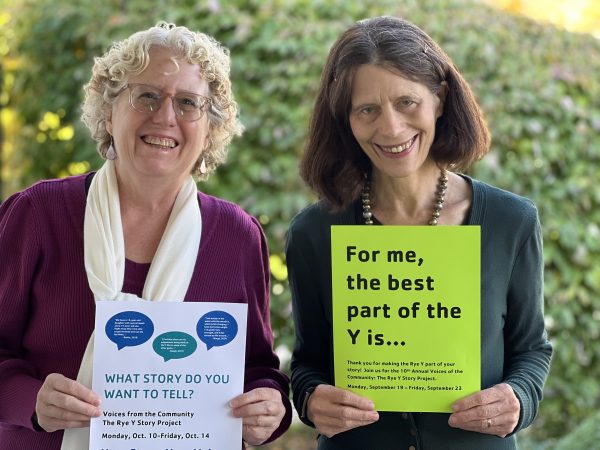
Denise Woodin and Lisa Tidball

Denise: For the most part, we hit on a formula right away that worked. One change is that a lot of interviewers, including myself, started out by recording people’s stories on a legal pad, writing them down. Now most of us are recording them on our phones, and it makes it a lot easier to transcribe them.

Lisa Tidball: I much prefer that because I can really focus on the person I’m talking to. Also, we always tell the story in first person. We started that out in the beginning, and that’s one of the things we ask our interviewers to do.

Denise: If you’re transcribing the person in their own words, it’s in their voice. It makes it fresher, more immediate. Most of the people that we use as interviewers are not writers. So, it’s easier for them to transcribe the story. Then they send it to me, and I go through and I edit. I edit very lightly. I take out the “ums”, I take out the repetitive things, but I try and keep it in the interviewee’s voice.

Lisa: We also send every story to the person we interviewed for their approval, so that they can feel comfortable with it.

Kirsten: Given that many of the interviewers are not professional journalists or necessarily storytellers, do you provide other guidelines to help them gather these stories?

Denise: We give them a tip sheet, and we try to do a 20-minute training every year. We give them a list of questions but we say, “Glance at this before the interview, but never look at it while you’re interviewing the person.” We want you to have a conversation with this person. Pretend it’s someone you’ve met at a cocktail party and you’re genuinely curious about them. How long have they been a member? Does their family come here? What are some of their goals? What are some of their challenges?

Lisa: And let the interviewee lead it. Let it take the form that they want.

Kirsten: You told us in 2013 that you regularly use the stories and in several different ways. How are you using them now, ten years in?

Lisa: Denise will read a story often before a board meeting, and it keeps the board members connected. We’ll put some stories in social media. We’ll put them in our annual report. We’ll use them throughout the year to remind people of who we are, the people who are benefiting from the Rye Y, and then we have our on site exhibit for people who are just coming to the Y, they’re bringing their child to swim, or they’re getting on the treadmill, and they may not be aware of all the important work we do.
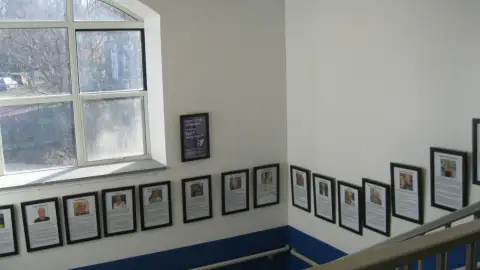
On-site display of stories

Kirsten: I can imagine that it makes people feel so good if they work there, but also anyone who is in that space. Even if you’re just going to do some laps. Reading these stories must make people think, “I like being here in this space that provides so much to so many people.”

Lisa: Yes, and if you’re just having a hard time dragging yourself to a class, and then you read this amazing story about a person who came to the Y through all these different challenges, it’s helpful.

Denise: It’s great for staff morale too, because over and over again we hear people say what they love about coming here is the friendliness of the staff, the helpfulness of the staff, and they name them. So, if we put that in the story – “Caitlin and Rich greet us at the front desk and they know our names” that’s a great boost for our staff.

You can read examples from The Rye Y Story Project here and also access the interview tips they use, their permission form, and the PowerPoint they have used in the past to help spread this storytelling project to other organizations.
ICYMI: Story Collecting: The Y Shows How

In this newsletter article from November 2013, Goodman Center alum Celia Hoffman introduced our readers to the Rye Y Story Project. 

Now entering its second year, “The Rye Y Story Project” offers a useful model for nonprofits that want to collect stories from their members.

Recognizing that stories are uniquely powerful communications tools is an important step for nonprofits, but it’s only a first step. Once organizations realize that stories can add a turbo boost to advocacy, fundraising, recruiting and more, they have to find ways to gather them – from staff, members, volunteers, donors, and others.

In 2012 the YMCA of Rye, New York launched a new project to capture stories from its members, and the response was so positive that the “The Rye Y Story Project” enters its second year this month. The challenges the Y encountered and solved along the way provide a helpful example for good causes that may be considering story collection efforts of their own.

Denise Woodin and Lisa Tidball

“We really struggled with finding stories and putting them together in a meaningful way,” Communications Director Lisa Tidball said during our telephone interview. She and her colleagues had attempted to solicit

member stories through videotaped group interviews, via a form on their website, and by asking staff to periodically gather them. But they had trouble creating a collection of stories that felt cohesive and really exemplified the depth of the Rye Y’s community.

When Denise Woodin was hired as Director of Community Outreach and Social Responsibility last year, she joined the team trying to solve this problem. A long-time fan of StoryCorps, the personal history-collecting project, Woodin thought the method of one-on-one, in- person interviewing might be the key to drawing out the members’ stories the Rye YMCA sought to uncover.

Woodin, Tidball and additional staff members formed a committee to create an event solely focused on story collection via one-on-one interviews. They ultimately decided to hold the event over a three-day period and to call it “Voices of the Community: The Rye Y Story Project.” A select group of staff members were asked to conduct the interviews and were briefly trained on interviewing techniques.

To prime the Y’s members for this first-time project, the committee used several tactics. Ten days prior to the event, details were posted on the Rye YMCA’s website, and as members passed the front desk they were handed a flyer detailing both when and why their stories would be collected. Additionally, Tidball interviewed several staff members and posted their stories at the front desk – each accompanied by a picture – to give members a better sense of what the project would entail.

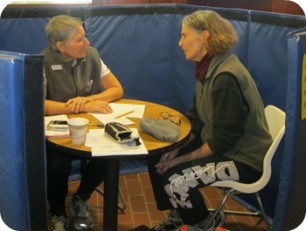
Everything was in place for the event except one crucial aspect: where the interviews would be conducted. The committee wanted a location that would be highly visible but would also create a sense of privacy for the storytellers. A member of the maintenance staff suggested standing gym mats on their sides and bending them into three-sided compartments. Once a small table and two chairs were put inside the gym mat “story booths,” the project was ready to commence.

The Rye YMCA “Story Booth”

Though the event was cut short a day due to Hurricane Sandy, it was still a great success. “I was surprised how easy it was to interview people. Right away, members really opened up and talked earnestly about themselves,” Tidball said.

“They stepped into the booth because they wanted to tell their story,” Woodin added. (You can read some of the 27 stories that were collected here).

Ultimately, collecting the stories was only part of the Rye YMCA’s goal. The other part was sharing, and to do this, the committee set up an exhibit of stories and pictures throughout the halls of the facility. Viewing the stories as a collection helped people to fully appreciate the wide and continuing impact that the Rye YMCA has. “When we eventually exhibited the stories, people stopped and really read them. There was a buzz in the hallways. I think it really got people thinking about how special our community is,” Woodin said. “It helped our members form new connections with each other. After reading someone’s story, if you saw them in the hallway, you felt like you knew them a little bit better,” said Tidball.

As the Rye Y Story Project enters year two, Woodin and Tidball are excited both to collect and display more stories. “We could throw out statistics all day long, but it doesn’t mean the same thing as the intangibles–the person who ran their first triathlon as a member here, the senior citizens who find friendship here–and that’s conveyed through the stories,” Woodin concluded. “It’s as important for us to tell those stories as it is for us to hear them.”

Ten years later, you can read an update on this impressive story project here.

Talking About Poverty? This Report Can Help

Read no further than the first line of the report, “BROKE: How the Nonprofit and Philanthropic Sectors are Talking About Poverty – and How We Can Do Better,” and you’ll hear a loud and alarming wake-up call: “Our research shows that organizations in the nonprofit and philanthropic sectors are reinforcing repressive, victim-blaming narratives that shift fault and responsibility for poverty from greedy corporations and unfair laws to ordinary people.”
The report, a collaboration between The Center for Public Interest Communications and the Radical Communicators Network, analyzes the language, framing and narratives around both poverty and wealth – or, in plain language, why the rich get rich and the poor stay poor. Its conclusions show how nonprofits, foundations and others working in this area have unintentionally made matters worse, but the report also offers recommendations on how they can start improving their communications immediately. Download the full report here.

6 Commitments for More Ethical Storytelling

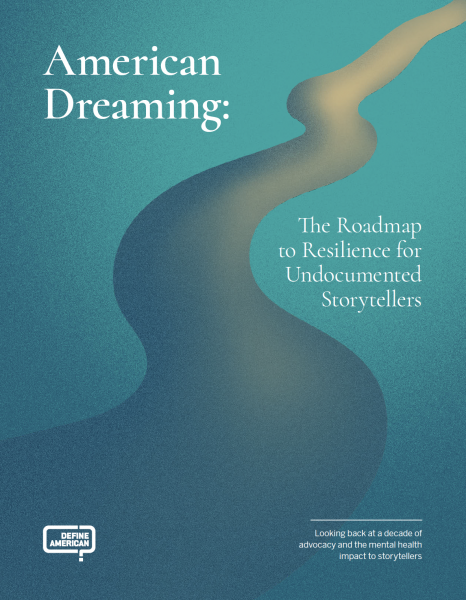
Since 2011, Define American has been telling the stories of people who have made America their new home so that they will be recognized first as people before they are demeaned by a label like illegals. Earlier this year, Define American released the report, “American Dreaming: The Roadmap to Resilience for Undocumented Storytellers,” culminating two years of research into the experiences of 40 storytellers from the immigrant rights movement.

For any organization that collects and shares stories of people whom it serves, the report offers practical advice for ensuring those stories are told in a fair, respectful, and ethical manner. You can download the full report here, and this month we’re pleased to reprint six commitments which Define American recommends making to anyone with the courage and generosity to share their story with you.

We will ask: Is now a good time to share your story? How have you been since we last connected? We will offer ways to scale down the work or provide a way of stepping away from the project if necessary.

We will ask: What do you feel comfortable sharing now? We will use the answer as a guide for healthy boundaries in our collaborations and will not ask for additional details or efforts.

We will ask: Have you shared your/this story before? We will facilitate training and give guidance to lay a foundation for good health and well-being in the storytelling community.

We will offer a scope of work, compensation, and a timeline for involvement, and ask if it feels in line with your expectations.

We will design ways of seeking feedback and suggestions for nurturing storytellers’ mental health and well-being within our work.

We will hold others we work with, particularly in the media, accountable for honoring your contributions:

  • For pronouncing and spelling your names correctly
  • For honoring your gender identity and pronouns
  • For being forthcoming and transparent about when conversations are “on the record” or “off the record”
  • For including you in the decision-making process around your stories
  • When possible, sending you a draft of the story write-up before it publishes or being open to edits after a story has published if you, as the storyteller, feel uneasy about story details
  • For following up with a link to a written/recorded story once it is published
  • For simply thanking a storyteller for their time and vulnerability when sharing their story

(Special thanks to Define American and especially report authors Sarah E. Lowe, Adrián Escárate, and Valeria Rodriguez for permission to reprint these recommendations.)

A Label Past Its Expiration Date?

If you use the term “vulnerable population” to describe an audience you serve, Rashad Robinson has a word of advice for you: don’t. Robinson, the President of Color of Change, was the opening speaker at the Southern California Grantmakers conference in Los Angeles on September 20th. The theme of the conference was “Narrative Power: Reframe Stories, Redefine Culture,” and Robinson had some reframing of his own in mind.

Search the word “vulnerable” on Thesaurus.com and the most common synonyms listed include defenseless, weak, and liable. Are those terms that you would want to be associated with? And I’m guessing that the people we’ve been labeling as such would be equally offended. Robinson recommends that we should stop denigrating these people and soft-peddling the systems and policies that have placed them in challenging circumstances. Instead, he recommends, call them what they are: exploited or targeted. The conversation that proceeds from there, Robinson promises, will be very different, but much closer to the truth.

Rashad Robinson

The 21st Annual Summer Reading List

The warm and lengthening days of summer are upon us, and hopefully they bring with them some free time to curl up in the shade with a good book. If your interests tend more toward escape than work, start with

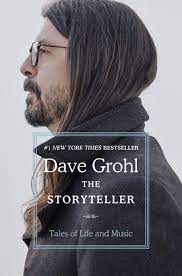
The Storyteller: Tales of Life and Music”(Dey Street Books © 2021) by Foo Fighters front man Dave Grohl.

You’ll meet iconic rock stars through Grohl’s eyes, and even if a who’s who of the music industry doesn’t necessarily appeal to you, Grohl brings such a sense of delight and child-like wonder to every tale that you can’t help but be swept along by his anecdotes. What I loved most, though, was the first section, where he shares short personal stories from his life. As advertised, they paint a “real, raw and honest portrait of an extraordinary life made up of ordinary moments.” You’ll catch yourself grinning as he learns drums by beating on pillows and share his awe at being invited to jam with Iggy Pop. And all the while, I have a hunch you’ll also be learning how to tell stories better.

Of course, if you’d like your summer reading to be a little more on point, we have 3 more suggestions for you.

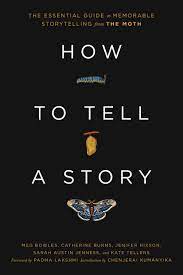
How to Tell a Story: The Essential Guide to Memorable Storytelling from the Moth (Crown Publishing © 2022) by Meg Bowles, Catherine Burns, Jenifer Hixson, Sarah Austin Jenness, and Kate Tellers

Between live shows, podcasts and books, The Moth has made invaluable contributions to the art and tradition of storytelling, and their latest work is no exception. Billed as a how-to, this book delivers when it comes to guiding aspiring storytellers through the steps the Moth team has used so successfully to cultivate and share personal stories.

They illustrate their concepts with excellent examples and helpfully sum up key points at the end of each chapter. I was practically up on my feet cheering through the first chapter that talks about the power of true stories and what happens to humans when they hear or tell stories.

The writers will guide you through structuring your story so that it opens strong, makes sense throughout, keeps the listener engaged using stakes and cliffhangers, and sticks the landing. Their StorySlam how-to poster alone is worth the cost of the book. Here’s an excerpt:

 “What we do want: Hook us in. Make us care about you. Paint the scene. Clearly state your fears, desires, the dilemma. Make us invested in the outcome. Introduce the conflict. Make us worried for you. Impress us with observations that are uniquely yours. Rope us into the moment when it all goes down. Conclude as a different person: Triumphant? Defeated? Befuddled? Enlightened?…CHANGED.”

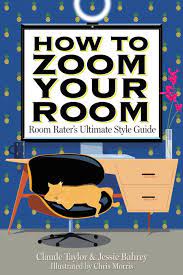
How to Zoom Your Room: Room Rater’s Ultimate Style Guide (Little, Brown & Company © 2022) by Claude Taylor & Jessie Bahrey, Illustrated by Chris Morris

The authors capitalized on our COVID captivity with their popular Twitter feed, “Room Rater,” where they critiqued the Zoom windows of professional broadcasters and pundits. Now you can follow their tips for making sure your Zoom room is a 10/10.

There is helpful advice about choosing the best lighting and angles, avoiding no-no’s like visible lampshade seams and electrical cords (heaven forfend!), and there are even several pages of recipes from former US Senator Claire McCaskill. (I’m not entirely sure why, but I might make that layered strawberry cake.)

Taylor and Bahrey seem to be telling us: make your Zoom room feel like you, and don’t take it too seriously. Frankly, I don’t think “How to Zoom Your Room” is intended as a front-to-back read, so I’d recommend it for a coffee table or your powder room. That said, the book does have a good-looking spine, so I’m putting my copy behind me in my Zoom window.

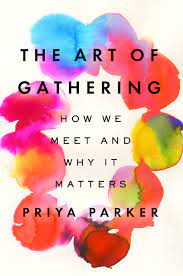
The Art of Gathering: How We Meet and Why it Matters (Riverhead Books © 2018), by Priya Parker

Yes, the book is four years old, but now that many of us are finally getting together again, the timing feels right to add this title to our reading list. Priya Parker (who has been popping up on several podcasts recently) is a facilitator and strategic advisor trained in group dialogue and conflict resolution. Her work is all about creating “collective meaning in modern life, one gathering a time.”

Parker reminds us that our gatherings can be memorable and even transformative, but only if we do the work beforehand to examine why we are getting together in the first place. She encourages us in “committing to a bold, sharp, purpose,” instead of just meeting out of habit.

As our organizations, families and friends navigate gathering once again, now is a great time to pick up this book, which was named a Best Business Book by NPR, Amazon, Esquire and more.

It may very well help you plan a gathering where every participant leaves thinking, “Now that was worth going to!”

A Story a Day: Healthcare Workers Share Stories to Treat Burnout

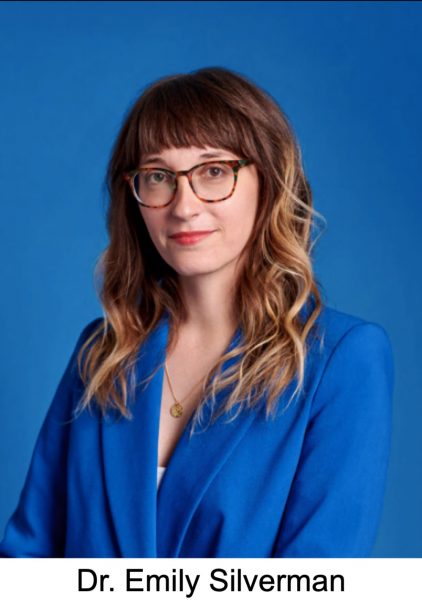
Since 2016, Dr. Emily Silverman has been using live storytelling shows as well as a podcast called “The Nocturnists” to “cultivate the well-being of healthcare workers, enable compassionate patient care, and contribute to meaningful public dialogue about the practice of medicine.”

In March 2022, Dr. Silverman teamed up with Doctors Without Borders for a storytelling event during which doctors across the globe shared personal experiences with COVID-19. After viewing this event and listening to several episodes of “The Nocturnists,” we reached out to Dr. Silverman to learn more about the impacts of her storytelling work.

Whether or not you are directly involved in healthcare, we believe readers who operate in large systems and who are trying to make the world a better place can relate to feeling burned out and weighed down by high expectations. For these ailments, Dr. Silverman prescribes sharing stories. 

Kirsten Farrell: On your website, you talk about starting “The Nocturnists” to answer questions about the disconnect between patients and doctors, clinician burnout and distress, and what it means in the modern world to be a doctor. Could you tell me more about that?
Dr. Emily Silverman: In the last decade or two, medicine has really changed. I came of age in medicine during a time where the healthcare system was becoming way more complicated and dysfunctional. The electronic health record was coming onto the scene, everything was going onto the computer. The days of the community doctor hanging up a shingle and taking care of patients were on their way out. Big health systems, big hospitals are gobbling up independent practice and the vast majority of physicians in the United States are employed now by these big companies, which are profit driven. They push the doctors to do more and more and more with less and less and less.

I started to feel this as a resident. Why am I sitting on a computer for half the day typing and doing data entry? I thought that medicine was going to be spending time with patients and their families. Why am I running my own body into the ground, and then, in the same breath, telling my patients to get better sleep and decrease their stress? It didn’t make sense to me, and I started to experience a lot of burnout. Even before COVID, physician burnout was a huge issue. A lot of my colleagues were feeling the same way.

Then a friend invited me to a live taping of “The Moth.” And something clicked. I thought, “This is something we should be doing in medicine.” There’s something about that very ancient form of oral storytelling. People together in a room and the magic and the electricity of that live experience.

And so, on my days off from my residency, I would drive around San Francisco and show up at different theatres, walk in and say, “I’m Dr. Emily Silverman, and I want to rent this theatre.”  Finally, I found this place that let me rent a space for $90. That was 2016. I got an audience of 30 or 40 people, and I got eight people to tell stories. It was so successful that 4 years later we are selling out a theatre of 700 people.

It was this magical thing: you walk into the theater and look around and you see med students and nurses and doctors and therapists. There are people from UCSF, Stanford, Kaiser, Marin and Oakland all coming together to have an experience.

Farrell: What have you noticed or heard from medical professionals who tell their stories? What is the effect on them?

Silverman: I think one of the ways the storytellers benefit from the experience is that we give them a practical opportunity to let go, to surrender and to get into their bodies. Our culture tells us, “Oh, you don’t need sleep,” or “You don’t get sick, you can just work 8 hours a week. Take care of people while you’re sleep deprived.”

Medical training really changes our brains. It suppresses the side that is more improvisational and reflective. But as an embodied practice, it can be really exciting for physicians to reconnect with those parts of themselves. We also pair them up with a story coach who can help them unpack their story and maybe make some meaning out of it.

To get on stage in front of an audience of 700 of your peers and tell the story about a time that you experienced doubt or made a mistake is very, very countercultural in the medical world, but if you can do that in a way where it feels safe, then we can laugh and just celebrate our community and not pretend that we are perfect robots. There’s something really healing and empowering about that. To walk off the stage after the story is finished and into the arms of a friend, or family, a colleague and to be embraced and accepted. There’s really a feeling of belonging that comes up both for the storytellers and the audience members.

We’ve also had audience members who have shared that the experience has changed the way they practice medicine.

Farrell: What do you look for in in a great story for your show or your podcast?

Silverman: Physicians and other healthcare workers tend to be very process-oriented and theory-oriented, so they’ll submit what they think is a story. But really it’s 10% story and 90% process. We have to coach people down from 20,000 feet to 2 feet. We ask them, “What day was it? What were you wearing? Who are the characters? Paint a picture. What were the smells?” We want to ground the story in sensory details. So, I’m definitely looking for scenes, images, characters: basic building blocks of what makes a great story as opposed to  a monologue about an idea.

 I’m also excited about how do we generate the most beautiful and compelling and exciting stories possible and then put them to work? How do we actually deploy these stories to transform culture?

Farrell: Changing culture is extremely difficult. What have you learned to help you do that?

Silverman: Until you notice the status quo, you can’t really change it. So, you can use storytelling to explore the culture in all its nooks and crannies, and then come out with the final product and say, “This is what we found.” Is this where we want to be? If the answer is no, or even if we want to keep parts and discard others, then that starts a really exciting conversation: how do we tell a different story? What is the story that we want to be telling collectively?

 The Nocturnists first live show since spring of 2020 will be June 10th at the Brava Theatre in San Francisco. If you live in that area, check it out and let us know what you think. For everyone else, we recommend listening to some excellent storytelling from the podcast, especially episode 8 from  Season 4 (“House Call”) or Episode 1 from Season 4 (“Burn the Map.”)

Asset-Framing Case Study: How SEARAC Got it Right

In last month’s edition of free-range thinking, we featured an article entitled “Why Asset-Framing is Better Storytelling,”  and we were thrilled to hear from many readers who expressed interest in applying this approach in their communications.

This month, in response to such enthusiastic feedback, we’re spotlighting an exemplary use of asset-framing by the Southeast Asia Resource Action Center (SEARAC), a national civil rights organization whose mission is to “[empower] Cambodian, Laotian, and Vietnamese American communities to create a socially just and equitable society.”
SEARAC recently created a series of public service announcements to mark the 25th anniversary of the Illegal Immigration Reform and Immigrant Responsibility Act. The final drafts of these PSAs are excellent examples of asset-framing, but earlier drafts were falling into the familiar trap of deficit-framing. Fortunately for our readers, SEARAC generously offered to share both versions with us, because when viewed side-by-side, they provide a helpful case study for any good cause looking to apply asset frames of their own.

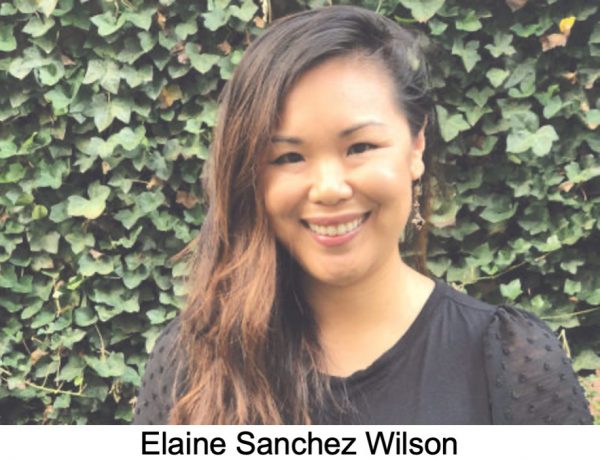
Elaine Sanchez Wilson, Director of Communications and Development for SEARAC, recently participated in one of our four-week storytelling classes, which contains a unit on ethical storytelling. After we presented background on Trabian Shorters and asset-framing, Elaine told us she had already been learning about this approach, and she wanted to share with us a project they were working on at SEARAC.

That project was the PSAs for the anniversary of the 1996 immigration act. Each PSA featured a story of a Southeast Asian American refugee who have served time for a decades-old conviction, and who was personally affected by deportation.

In the first draft profiles of these brave individuals, however, Elaine and her team hadn’t yet applied the principles of asset-framing. The descriptions they wrote leaned on deficit frames that remain all too common throughout the public interest sector. Here are two examples: (Please note: to protect privacy, we have replaced real names with pseudonyms and changed certain facts. While these are not actual profiles, they are accurate representations of the early drafts SEARAC had developed.)

Kiry Chan, a Cambodian refugee, experienced the trauma of the Killing Fields. He survived only to face the threat of deportation after serving 18 years in prison. Now, he has turned his life around to become a loving father and revered community member. Nevertheless, the threat of deportation is a constant in his life.

Minh Do, a Vietnamese refugee who endured gang violence and poverty growing up, served a long sentence in prison. He has since transformed his life, dedicating himself to serving his community. He is hoping to make things better by sharing his story. But despite the new life he has created for himself, ICE may deport him at any moment.

As you can see, the first thing you learn about each individual is that they are a “refugee,” which is a label that makes them more of a thing than a person. We learn they have “survived deportation” and “endured gang violence” before getting to anything positive, which is more likely to prompt pity as opposed to empathy.

After learning more about asset-framing, Elaine and her colleagues at SEARAC took another look at these profiles. They realized that how they introduce people can either reinforce stigmas or help to break them down, so they knew what they needed to do. Here are the new descriptions they wrote:


Ge Vang
is a leader in the Hmong culture Vang clan. He is a father of four kids, including Damu who joins him in his PSAs. He recently won post-conviction relief, but, as a Hmong refugee, he still faces the threat of deportation. He wants people in similar circumstances to understand that they are not alone and that there are communities that want to help.


Nghiep (Ke) Lam is a member of a resilient and kind community of formerly incarcerated individuals, artists, queer leaders, and members of community organizations. He has been honored by every level of the US government (city, county, state, and federal) for his work. A refugee from Vietnam whose family survived the South China Sea and Hong Kong refugee camps to make it to America, Nghiep is doing this project in order to help give voice to the thousands of people fighting for their freedom to be accepted as citizens. Yet he can be deported at any moment to a place he barely knows.

Leader. Father. Resilient. Kind. Consider how these words build a frame for the reader as opposed to refugee, survivor, trauma and poverty. Instead of meeting labels, we are meeting Ge and Nghiep as people with aspirations and contributions.

Today, Elaine and her team at SEARAC are changing the narrative about deportation not only by sharing stories, but also through the way they are sharing stories. We hope these examples they have generously shared will help you do the same.

Why Asset-Framing is Better Storytelling

Somber music plays behind hard-to-watch pictures of starving children. The voiceover begins: “The need is painfully evident in their eyes, in their tiny bodies that weigh no more than young babies. In their desperate struggle to find any means to survive, and in their loss of hope that help will ever arrive in time. Sixteen million people are on the brink of starvation here in East Africa, and hunger takes its toll in many brutal ways.”

This is a verbatim excerpt from a PSA intended to raise money to end hunger, and if the script sounds familiar, that’s because it’s a recipe that has been used for decades. Start with a problem; add some music, sad pictures, and a sad tale; ask for money. The formula can work, but take a step back and you’ll see a bigger problem. It’s called “deficit framing.”

In stories told with deficit framing, the people we meet are already in a distressed or perilous state. They are starving, homeless, addicted to drugs, or a victim of abuse. Stories told this way may evoke emotion, but that tends to be pity instead of empathy. The people who are experiencing hardship appear as objects at the mercy of events and without agency to change things. This also strengthens a savior-style narrative that positions the organization as the only thing (along with your dollars, of course) that can fix these broken people.

Fortunately, this ethical trap in storytelling can be avoided through a practice called “asset-framing.” Trabian Shorters, a leading expert and advocate for asset-framing, calls it “a narrative model that defines people by their assets and aspirations before noting the challenges and deficits.” This means your story introduces the protagonist (i.e., who the story is about) as a person with accomplishments, hopes and values before we get to the challenges that ultimately led them to your organization.
Consider the following transcript from a video posted on the website of Pathfinders, a nonprofit that offers services to people who experience homelessness. The guest speaker, Yolanda Seely, talks about her journey into and out of homelessness, but before she gets to any of that, she will tell you a few things about herself:

“My name is Yolanda Sealy. I was born and raised in Rantoul, Illinois. I’ve always been a hard worker, and in high school I was a triathlete. I played basketball, volleyball and I ran track, and I was an honor student. My talents earned me a Division One scholarship. I played basketball at the University of Illinois, Champaign-Urbana. When I graduated from the University of Illinois, I moved to Houston, TX and shortly after I joined the United States Army. I served eight years in the army active duty and two years Army Reserve. I’m a mother of two beautiful girls: Ariana, my daughter who’s 14 and Ariel, who’s three years old. And those are the joys of my life.”

Asset-framing is not only a more ethical way to tell stories – it’s fundamentally sound story structure.

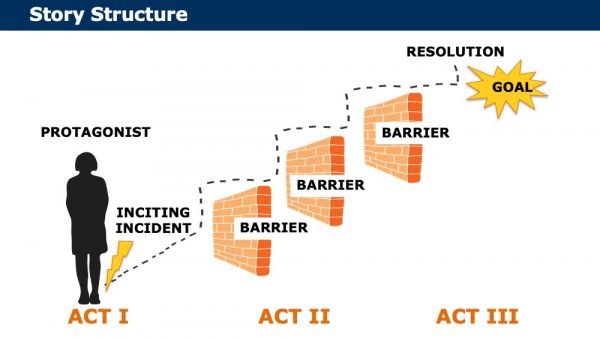
Act 1: We introduce the audience to a protagonist – someone they can care about and root for through the rest of the story. In the Pathfinders example, that’s Yolanda: a loving mom, a college graduate, and a veteran. Then comes the inciting incident, the event that kicks the story into motion and gives the protagonist a goal: Yolanda loses her job. Now she must find a way to keep food on the table for her children.

Act 2:Our protagonist encounters barriers: hardships, struggles and brick walls. Yolanda loses her apartment, and without someplace to live, it is nearly impossible to find a job. Yolanda is not one to give up, however, and working with Pathfinders she finds ways to surmount these barriers.

Act 3: This is where the story resolves and the meaning becomes clear. Yolanda has a home again and has recovered the self-sufficiency she valued about herself. She’s changed and she’s learned a lot, and we have some new insights into exactly how Pathfinders works with the people it serves.

If you tell stories with deficit-framing, you are starting with the barriers. Go back to that PSA about starving children in East Africa at the beginning of this article. It skips Act I and goes straight to the barriers of Act II! To a certain extent, this mistake is understandable. When organizations tell stories about people they have served, they start from the moment they met them. But that isn’t the beginning of their story.

Every person has a whole story before they meet us. They have aspirations and accomplishments, they have values, things and people they love. That’s how we should get to know them. Before the inciting incident. Before the barriers. Because you want the audience to see themselves in this person. Because you want them to feel compelled to act. Because you are striving to create empathy, not pity.

And because it’s also better storytelling.

How Stories Make Two Hearts Beat As One (Literally)

As Valentine’s Day approaches and thoughts turn once again to love and romance (and that dinner reservation you forgot to make, so get on it already!), we would like you to remember that a” heartfelt story” is more than just an expression.

Chelsea scooches her chair closer to the small, candlelit table for two and takes in her date’s uneven dimples. He’s cute. Almost cute enough to forget the pain of her going-out boots which are cutting off circulation to her toes. Her mind is racing, “Are we going to have anything to talk about?” A few exchanged niceties about the restaurant don’t do much to ease the awkward tension. But then Dimple Guy says something that gets Chelsea’s full attention: “I was almost late because I’m watching the last season of Ozark and I could barely turn it off.”

Chelsea sits up excitedly, suddenly forgetting this is a first date. “I love that show!” she exclaims, maybe a little too forcefully. And they are off to the races, sharing favorite parts and theories about what’s coming next. Jordan (the date formerly known as Dimple Guy) doesn’t feel like a stranger anymore to Chelsea. They are both really into this show, and it’s starting to feel like, maybe, just maybe, they could be into each other, too.

So, what does this meet-cute have to do with you? A study authored by Lucas Parra, a professor of biomedical engineering at City College of New York, helps to explain the connection made in moments like these. “Conscious processing of narrative stimuli synchronizes heart rate between individuals,” Parra writes. Or as Susan Pinker writes in an article for the Wall Street Journal: “Research shows that listening to the same narrative leads our heart rates to rise and fall in unison.” First date or not: when we read, watch or listen to the same story as someone else, whether they are in the same room with us or not, we sync up. We share the experience in a visceral way.

Between theories about the brain’s mirror neurons and now Parra’s study of the heart, scientists are proving again and again that stories connect us with one another. You have probably experienced this synchronizing effect yourself. Each time you discovered a shared story with a colleague, client, legislator or donor, you probably got the feeling that you really shared something. And that’s because you did. Your hearts, the actual organs themselves, took the same journey. You really were in it together.

So, when you need to create a spark between your audience and your organization, why not sync their heartbeats with each other’s and with yours? Connect, create common ground, advocate, and make your audience fall in love with your cause by using the most powerful tool there is: a good story.

And Happy Valentine’s Day from all of us at The Goodman Center!