My Story, My Choice: Contributor Centered Storytelling Shares Narrative Power

When considering ethical storytelling, experts often focus on how we gather stories, acquire deep consent, and use asset-framing and asset-based language. These are excellent practices, but Jess Crombie, senior researcher and lecturer on Documentary Storytelling and Ethics at the University of the Arts London, wants us to go one step further. She wants the power to shape narratives to belong to the people who are affected by the issues we are trying to solve, and that means deciding the way their stories are obtained, developed, and told.  

In her report, “Rethink, Reframe, Redefine,” the sharing decision-making throughout the storytelling process is tested with a group of Rohingya storytellers who are living in Bangladesh as refugees. 

Rohingya people are a Muslim ethnic minority group who have been denied basic rights, citizenship, and protection by authorities in Myanmar. They are the world’s largest stateless population and are living in over-crowded camps in Bangladesh. 
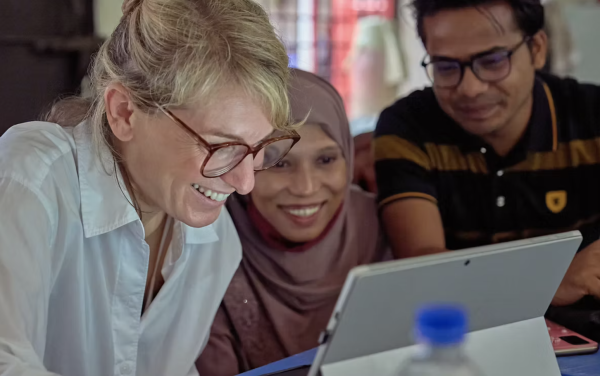
Jess Crombie at work

Combie’s report is phase one of a study started in 2023, in which Rohingya storytellers teamed up with Crombie, staff

from the UN Refugee Agency (UNHCR), and translators to create fundraising appeal materials to raise money for UNHCR’s work in Cox’s Bazar, a Rohingya refugee camp. These materials included a direct mailer, information insert, designed envelope, and emails sent to existing donors. 

Their quest was to discover whether the process of co-producing these materials and being led by people with lived expertise could be sustained and scaled into day-to-day use.  

It is an incredible report. I encourage you to read it for yourself, but here are some of my biggest takeaways (please note I had to take two passes at the report, because during the first pass I highlighted EVERYTHING.) 

Take-Away 1:
Storytelling can be generative instead of extractive 

I admit it, I have used a lot of “mining” language to talk about stories. I’ve described them as gold, an invaluable resource, something we have to collect and dig for. On its own, recognizing the beauty and value of stories is a great thing. It is when we go for them like strip-miners that we create harm. 

When, instead, we partner with the people we serve, the storytelling process can be an investment in relationships and skill-building for all involved. The first time I saw this process in action was when I participated in the Speak Up program at the Corporation for Supportive Housing.  

In this eight-month program, storytellers, coaches, and trainers learned together, built together, and ultimately the power to make decisions about the stories and how they were used were in the hands of the storytellers. Ann English, who was the program director for 10 years, says that our job is to be “an architect of creating space,” and continue to ask ourselves, “how do we put back into the [storyteller]?” 

Take-Away 2:
A “donor-led” model can lead to perpetuating harmful narratives 

When decision-making about our content is determined solely by metrics on donor response, then our messages tend to stay within strict parameters of their comfort zone. This is possibly why deficit-framing has had such staying power. 

Instead, we could create a donor-leading model which builds solidarity between the affected community and the donors. Our narratives could lead our dedicated supporters away from the lure of savior-mentality and towards true partnership. 
Take-Away 3:
Voice is Power 

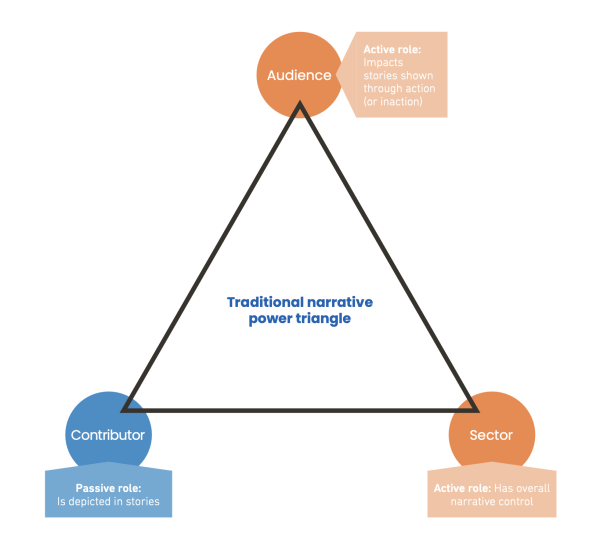
Gathering and retelling someone else’s story is very powerful, but much of that process (what questions are asked, what pictures are taken, how the story is edited) is out of the control of the true owner of the story. “It is more than just having your quotes or images included in storytelling, it is about the power to make decisions about all aspects of the narrative.” (Crombie, 2024, p. 13)

Crombie’s report shows how that power can be acknowledged and shared. Decisions about every aspect of producing the donor appeals were made by the whole team. They also set aside time to speak frankly about the status and power dynamics between staff and the storytellers who depended on aid from UNHCR. 

Take-Away 4:
We are still figuring this out… together. 

Rethink Reframe Redefine shares their methodology, what worked, what didn’t, and how they will do things differently next time. They share some essentials for this kind of work (i.e. trauma-informed facilitation) and mistakes they learned from (i.e. careful vetting, keeping the ratio of participants even, and removing parts of the process that felt competitive.) 

There is a lot to learn from and build upon in this report. The next installment should be coming out in the next few months. I, for one, will spend that lag time reading more of Crombie’s work: The People in the Pictures and Who Owns the Story?

ICYMI: The #1 Reason Your Communications Aren’t Clear

Here’s a hard truth: if you’re assuming your audience knows your lingo, you aren’t communicating effectively. This month’s In Case You Missed It, written by Andy Goodman in 2015, offers solutions to make sure your audience is still with you.  

Do you care if millions of Americans have low food security? Are you moved by the plight of charismatic marine megafauna? And if there were more than 350 ppm of CO2 in our air, would you be concerned?

Public interest communicators who use these terms want you to be very concerned, but you may not know they’re talking about hungry people, dolphins and whales, or a safe level of carbon dioxide. So, if they want us to care, why are they speaking in code?

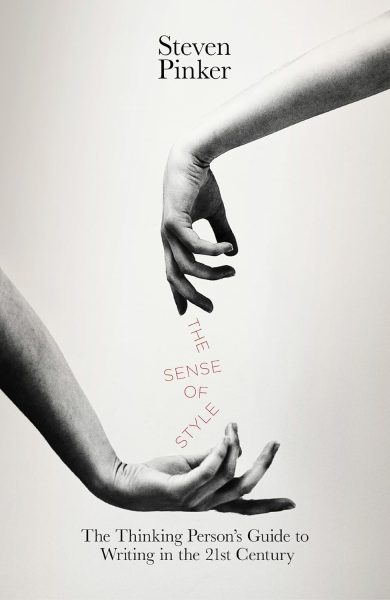
In his new book, The Sense of Style: The Thinking Person’s Guide to Writing in the 21st Century, Steven Pinker says he has “the single best explanation I know of why good people write bad prose.” A professor in the psychology department at Harvard, Pinker believes there’s a reason writers use excessive jargon, abbreviations and technical language. He calls it “the curse of knowledge,” and according to Pinker, no one – not even you, dear reader – is immune:

“Every human pastime…develops an argot to spare its enthusiasts from having to say or type a long-winded description every time they refer to a familiar concept in each other’s company. The problem is that as we become proficient at our job or hobby we come to use these catchwords so often that they flow out of our fingers automatically, and we forget that our readers may not be members of the clubhouse in which we learned them.”

Signs of the curse are everywhere. When talk turns to “widening access for underserved communities,” it’s there. When “ASTHO and NACCHO meet with POTUS about the role of the CDC,” it’s there. And, as Pinker points out in his book, if a questionnaire asks you to “evaluate each statement with a subsequent assessment word” – when what they really mean is “choose true or false” – it’s definitely there.

Lifting the curse is not as easy as you may think. If the problem boils down to forgetting about your readers, you might conclude that spending a few moments considering their level of understanding will be enough. The research, says Pinker, shows otherwise. “Social psychologists have found that we are overconfident…about our ability to infer what other people think,” he writes. But all is not lost for the accursed, and Pinker offers some actionable tips on how to redeem your writing:

JARGON

Illustration by Veronica Cerri

Insider language, which is often abstract and conceptual, rarely helps your audience visualize the subject matter. If they can’t see it, it’s a good bet they won’t make the extra effort to understand it. As Pinker writes, “many experiments have shown that readers understand and remember material far better when it is expressed in concrete language that allows them to form visual images.”

Your readers may know what an “economically depressed urban sector” is, but “a downtown with empty storefronts and abandoned lots” is a place they can see and feel.

ABBREVIATIONS

In general, writes Pinker, they are more for the benefit of the writer than the reader. “Abbreviations are tempting to thoughtless writers because they can save a few keystrokes every time they have to use the term. The writers forget that the few seconds they add to their own lives come at the cost of many minutes stolen from the lives of their readers.”

TECHNICAL TERMS

There will be times that you cannot avoid using them, but “…a considerate writer will [add] a few words of explanation to common technical terms, as in ‘Arabidopsis, a flowering mustard plant,'” says Pinker.

Nonprofit communicators should be particularly vigilant where the curse of knowledge is concerned. In a sector where nearly 60% of executive directors hold masters degrees or doctorates, talking above the audience’s heads is all too common.

Pinker’s book is filled with excellent advice for communicating more clearly, but in the end, his insight into the curse of knowledge may be the most valuable. And I believe the author would agree.

“The imperative to overcome the curse of knowledge may be the bit of writerly advice that comes closest to being sound moral advice,” Pinker writes. “Always try to lift yourself out of your parochial mindset and find out how other people think and feel. It may not make you a better person in all spheres of life, but it will be a source of continuing kindness to your readers.”

To learn more practices for strategic communication, sign up for The Goodman Center’s workshop Strategic Communications: Cutting Through the Clutter on December 2 and 4. 

Are You (Still) Telling Stories Ethically?

During a time where words like “diversity,” “equity,” and “inclusion” are being flagged by the government, storytelling plays a more imperative role than ever. The way we not only tell those stories, but obtain them, matters.

If we are introducing the protagonists of stories through deficit framing, if we are not confirming the words or edits we use resonate with our protagonists, if we are not utilizing tools like “deep consent,” we are doing a disservice to our protagonists and their stories.

When someone makes the choice to share their story, they are vulnerably letting an audience in. Our job as story collectors, is to treat their stories, dignity, and mission with care.

In 2018, The Goodman Center connected with Story and Spirit’s Michael Kass to chat about Ethical Storytelling practices. Now, seven years later, we reconnected with Kass to discuss changes in the space, and why this work matters right now.

Michael Kass

The Goodman Center: We wanted to talk to you about any updates that have come into existence in the ethical storytelling word since we last spoke in 2018. 

Michael Kass: In 2018, [Ethical Storytelling] wasn’t a field yet. And now it is. There are a ton of resources and toolkits that have been produced really since 2020 with BLM and George Floyd and the community-centric fundraising movement, which also wasn’t a thing [in 2018].

So now there’s an entire field of practice around this. People more often than not at least have sort of heard of ethical storytelling and have an idea of what it means, which simply wasn’t the case when we had that first conversation.

TGC: What do you think spurred on that shift?

MK: I think it’s a conversation that’s been had for decades in nonprofits, but off in the corners. Nobody’s ever felt good about the way nonprofits tell stories.

I remember when I was on staff doing fundraising work, we outsourced a fundraising letter to a consultant, and it was the most horrific thing. It was like “Jasmine showed up on the door of our clinic covered in blood screaming.”

And I think the reason Ethical Storytelling has blown up is it’s finally a conversation that’s being had more publicly and research around it is being funded. There was a major research report around International Aid by David Girling and Jess Crombie that directly compared a fundraising package that was designed and led by people with lived experience with one designed by a professional fundraiser.

It showed that the participant-led package outperformed the professional fundraiser one, which did not use ethical storytelling practices, by 35% across the board.

I also think that Ethical Storytelling fits into the growing conversation around decolonization in general, and in the nonprofit and fundraising space specifically.

Edgar Villanueva puts it really nicely in Decolonizing Wealth. He says, colonizing practices divide, control, and exploit. Decolonizing practices, like ethical storytelling, have, at their center, connection, relationship, and belonging.


TGC: What do you think Ethical Storytelling looks like with the particular political climate that we’re in? 

MK: DEI or diversity or equity, those terms became terms of art that were just used as blanket terms. People said, “oh, yeah, we do DEI.”

Well, what does that mean?

What I love about Ethical Storytelling is that you’re embodying all of the values of that field, but you don’t have to use that language in order to advance the cause.

In other words, if I talk about a room, and I say, “at the table we had people from this walk of life and this walk of life and they interacted in these beautiful ways,” I don’t have to say, “we did diversity.”

It’s the classic storytelling tactic of “show, don’t tell.” People get it.

TGC: Do you feel that the definition of ethical storytelling has changed? 

MK: I’ve actually started defining Ethical Storytelling as a process instead of a thing. And that process is defined by a certain set of tools, practices, and conversations. But when people ask, “what’s the definition?” I say, “aligns with your mission and lifts up the voices, dignity, and humanity of all.”

But then they ask, “how do I do that?” and that’s a bigger conversation. There are definitely concrete tools that have now been documented in all sorts of places. But they take time to integrate well and it almost always requires culture change.

Organizations that do it well really invest the time because they understand how powerful it is for every aspect of their operations to be in coherence and alignment with their mission.

If you’re serving folks who are experiencing homelessness and part of your mission is to uplift their voices and help them feel a sense of dignity, and all you do is tell stories about how they were drug addicts and then lost their homes and then they found you and they’re better. Then you’re out of alignment with yourself and that can’t help but compromise your ability to achieve your mission.

Ethical Storytelling is a powerful way of bringing organizational culture back into alignment with mission and vision so that our impact can be deeper, more expansive, and more in integrity. That’s common sense and it’s what the research is showing.

It can be really challenging because the forces of inertia are really powerful. And so, depending on where you are geographically, some funders might not be on board with this Ethical Storytelling thing. They might really be addicted to those unethical stories of trauma exploitation or poverty exploitation. And there’s scientific reasons for that. It triggers our dopamine. It’s like, “ooh, yay, yum, yum, suffering that I get to alleviate.”

That’s where unethical storytelling caters to the savior complex. At a deeper level, what Ethical Storytelling is doing is rewiring the whole pleasure, reward, savior complex of the nonprofit and philanthropic system.

TGC: Is there anything about Ethical Storytelling that you want to touch on that you feel like we haven’t spoken about? 

MK: If you visit the Ethical Storytelling resource page, there’s a great resource about how to have better conversations about Ethical Storytelling. There’s some really great material that didn’t exist even three years ago. The Dignified Storytelling Handbook is phenomenal, with documented step-by-step processes.

That’s the big one. There are so many resources and toolkits available now.

Story and Spirit provides a multitude of resources as you and your organization continue practicing Ethical Storytelling. Asset framing, deep consent, and transparency all play imperative roles in obtaining and sharing stories more ethically.

To learn more ways to integrate ethical storytelling, register for our “Ethical Storytelling: The Case for Asset Framing” workshop November 18 & 20. 

ICYMI: Are You Telling Stories Ethically?

The stories organizations tell have the power to shift perspectives. The way your organization obtains and tells those stories matters more than ever.  In this months’ In Case You Missed It from 2018, Celia Hoffman chatted with Story and Spirit’s Michael Kass about how we can all be more ethical in our story gathering and telling. 

You know that stories are powerful. You also recognize that with great power comes great responsibility. But when was the last time you thought about the specific responsibilities that come with sharing your organization’s stories? Compelling stories are often deeply personal, and if you want to use them in an ethical manner, considering how they can influence a target audience is only half the battle. You must also think about their impact on the person whose story is being told.

Michael Kass has made a study of the challenges presented by ethical storytelling. The founder of The Center for Story and Spirit, a storytelling consultancy for both individuals and organizations, Kass has worked for several nonprofits including My Friend’s Place, the Los Angeles Free Clinic, and the Nonprofit Finance Fund.

Last year, Kass partnered with the Hollywood Homeless Youth Partnership to publish an issue brief entitled “Navigating the Ethical Maze: Storytelling for Organizations Working with Vulnerable Populations.” The Goodman Center’s Celia Hoffman recently sat down with Kass to learn more about the steps any organization can take to ensure it’s telling stories ethically.

Celia Hoffman: How do you define “ethical storytelling?”

Michael Kass: Ethical storytelling, at base level, is making sure that everyone has a shared understanding of the purpose of the story, where it’s going to be used, how it’s going to be used, and that the storyteller gives informed permission before, during, and after sharing their story.

CH: How have you seen organizations struggle with this practice?

MK: The struggle I see is that they’ve been told over and over again that they need to tell a story in order to connect and pull at the heartstrings. Simultaneously, they also want to protect the confidentiality and the interests of people that they serve. I think we’ve all seen stories that feel they may be exploiting the people they are trying to serve. I don’t think it’s done out of any sense of malice. I think it’s done because of a lack of awareness.

There hasn’t been a lot of training around how to meet both of those needs, and so the dynamic that’s come up is organizations feel they need to tell a heartwarming story and that they’re going to need to feel a little bit dirty when they do that. But that’s not a true assumption.

Part of what I’m trying to do is explode this assumption and say you can actually meet both of those needs in really creative, interesting, and impactful ways.

CH: In your issue brief, you outline a number of risks that organizations face when gathering client stories. One of which is re-traumatizing the storyteller. Can you tell us more about this?

MK: Because of the way story works on the body, the brain doesn’t know the difference between something that is happening and something that it’s imagining. Therefore, if you’ve been traumatized and you begin to retell that story of trauma before it’s ready to be shared, you risk re-experiencing the trauma in your body.

When storytellers re-experience trauma, it’s common to see them backslide. Perhaps they were making progress and then they tell their story and it re-traumatizes them, putting them back in a tenuous place.

CH: How do organizations guard against re-traumatizing their storytellers?

MK: Having a really good relationship with the storyteller is very important. If it is a clinical relationship, really talk to the clinical staff and ask, is this person ready to tell their story?

Even more important is to allow the storyteller to tell their story the way that they want to tell it. Rather than saying: you’ve got such a good story! Tell me about the most horrible thing that happened to you. Try: you have an amazing story to tell. Where do you want to start? What is it that’s important to you that people know about you and the work we do here? This way, the storyteller gets to navigate their way through the story.

CH: Do organizations that are not working with vulnerable populations need to be concerned about this topic?

MK: Absolutely. In any situation that you’re sharing a story to promote any kind of change, making sure that everybody is on the same page is a valuable practice across the board. It’s highlighted when you’re working with vulnerable populations because of the potential for re-traumatization and these other challenges, but it’s good practice for any organization.

CH: There are different ways organizations share stories, and each of these comes with its own challenges as well. Video is such a popular tool, I’m curious about the potential problems with that medium.

MK: There are so many! One issue with video, and this is true for writing as well, is how readily in can be edited. Sometimes an organization captures a beautiful story but they decide that it’s a little long, and it’s a little complicated, and so they chop it down. The storyteller then sees the edited story, and though it’s ostensibly their story, they think, those are my words but that’s not the story I told.

Whether it’s a client, a board member, or a staff member telling the story, editing a story without permission is a humongous breach of trust with the storyteller. Everybody should have sovereignty over their own story.

CH: You describe many ways to help organizations ensure storytellers feel they have control over their stories. One of these is a process you call “deep consent.” Can you tell us more about that?

MK: “Deep consent” is not just about a storytelling giving their consent. Rather, it’s the process of deeply informing them about all aspects of the project. In my experience, when people have asked me to share stories, there’s a consent form, which is pretty basic. It says that I give you permission to use my image or likeness and then I sign it and there’s no real conversation.

“Deep consent” is a real conversation that makes sure that the storyteller, whether it’s someone who is in a vulnerable place or a board member or whomever, fully understands that they’re going to be sharing a story, what the purpose is going to be, what media is going to be used, and for how long it will be displayed.

I’ve seen organizations begin to have a deep consent protocol and say they’re going to check in with a storyteller every six months and see if that person is still okay with what’s being shared. They also tell storytellers that at any time, they have the permission and power to get back in touch and get their story removed.

CH: You say that ethical storytelling serves a “double-bottom line.” What do you mean by that?

MK: Usually in organizations there’s one bottom line, which is financial. In ethical storytelling, there are two bottom lines for stories: meeting the needs of the organization is one bottom line and the other is safeguarding the needs and interest of the storyteller. Having a double-bottom line helps organizations ask themselves, are we putting the metrics in place so that those needs are being met and can be measured at the same level as the financial bottom line?

To learn more ways to integrate ethical storytelling, register for our “Ethical Storytelling: The Case for Asset Framing” workshop November 18 & 20. 

The 24th Annual Summer Reading List

Find a light breeze or crank up your de-humidifier, it’s time to get comfy with great reads to boost your communications. 

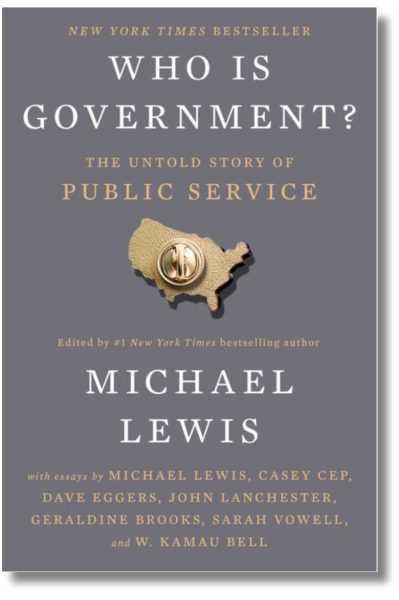
Who is Government: The Untold Story of Public Service
(Riverhead Books © 2025) Edited by Michael Lewis with essays by Michael Lewis, Casey Cep, Dave Eggers, John Lanchester, Geraldine Brooks, Sarah Vowell, and W. Kamau Bell

Back in April, my mom texted me a phone recording she made of Michael Lewis on MSNBC with a note: “About the importance of storytelling! I just had to send this to you! What you are doing is very important!” I like to think I inherited my use of exclamation from my mom!  
Well, she proved the adage “mom knows best” because Michael Lewis’s book Who is Government has turned out to be one of my favorite books in years. Filled with the kinds of stories everyone working in the public interest sector needs to be telling, each essay of a government worker is written by a world-class writer. 

I have told and retold these stories many times already. Michael Lewis knows how to make us care about the brilliant people who have chosen public service. Take a page out of his book to make everyone care about the people doing your work.  

The only downside of this book is that maybe it came out a little too late… 

Say More: Lessons from Work, the White House, and the World
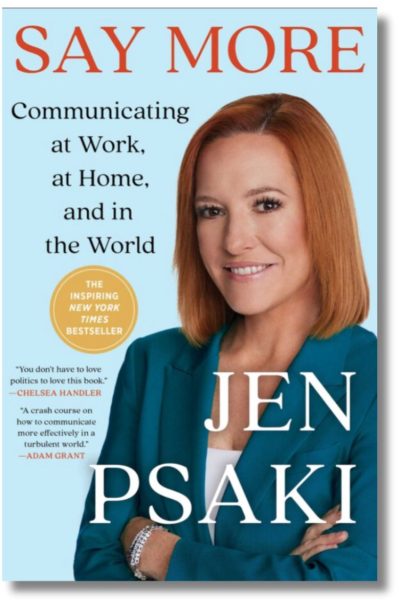
(Scribner © 2024) by Jen Psaki  

Political analyst and former white house press secretary Jen Psaki has gifted us with a book that is clear, actionable, and breathtaking in its lack of pretention. Any communicator who creates or delivers talking points for their organization, boss, program, or policy should read this book.   

Psaki emphasizes active listening, connecting and understanding your audience (and even your audience’s audience), preparation in pursuit of agility, flexibility, and more. She cuts right to the purpose of communication: getting people to listen and then maybe even understand.  

“Conventional strategies don’t always work; they’re usually more about finding a shortcut and controlling the conversation than about actual effective communication.” Psaki offers you strategies that will work. 

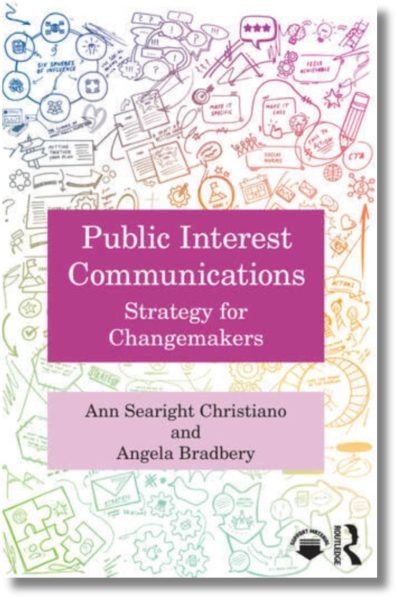
Public Interest Communications: Strategy for Changemakers

(Routledge © 2025) by Ann Searight Christiano and Angela Bradbery  

The first textbook on public interest communications was published this year by our friends at The University of Florida. While it might be a stretch to call it a summer read, it is chock full of useful strategies and inspiring examples of great communications at work. 

Christiano and Bradbery are communications pros, after all, so this book is refreshingly straightforward and has a sense of humor. (There is an anecdote about the board game Monopoly that blew my mind!) 

This book should be a cornerstone of communications curriculum, but I also think it is a great read for brushing up your skills after years on the job or as a learning tool for someone entering the field. Warning: it is one of those books that will give you a million more books that you can’t wait to read. 

An inconvenient joke? The case for comedy in the climate crisis.
(Article on TheHill.com June 2025) by Michael Oppenheimer, opinion contributor
 

Your cause is no laughing matter. Or is it?

Michael Oppenheimer, an internationally recognized climate scientist, recently wrote an op-ed entitled “An Inconvenient Joke: The Case for Comedy in the Climate Crisis.” In it, Oppenheimer explains why he believes that it’s appropriate to use humor when addressing an issue as serious and complicated as climate change. We believe Michael has made a convincing case for just about any serious and complicated issue to do the same — even yours, perhaps?

We encourage you to read his essay here 

ICYMI: You Have the Story, Now Let’s Work on the Telling

As we move through a time where clutter, misinformation, and jargon is used to silence and discredit organizations’ messaging, your organization needs to help your audience connect with your story and message more effectively. In this In Case You Missed It, written by Andy Goodman in October 2017, we share five tips to attract and hold attention.

Having a good story to tell is one thing; delivering it effectively in front of a live audience can be quite another. The Goodman Center regularly provides one-on-one coaching for public speakers, and recently we’ve seen an uptick in requests for advice as more and more gatherings feature TED-like talks, use the Ignite or PechaKucha formats (where a set number of slides advance automatically), hold “Fail Fests,” or convene “Fast Pitch” competitions that challenge presenters to tell their stories in precisely three minutes.

As diverse as the stories and their tellers may be, invariably I find myself giving similar advice in almost every coaching session, so I thought I’d share my five most common recommendations. If you have a story to tell – whether you’re facing an audience of hundreds or just a handful around a table – these tips can help you deliver it with greater clarity and confidence.

Stories live in the specifics.

A presenter whom I coached recently had this line in her three-minute story: “Our organization brings together existing resources in an innovative, collaborative way.” Uh huh. I’ll bet they’re also mission-driven, committed to diversity, and engage with the community whenever they can. Jargon like this has no place in storytelling because it doesn’t help the audience see and feel what you actually do.

When one client told me, “We teach children financial literacy,” I stopped him and asked for an example. He said, “We show them exactly how much money they can save if they buy a large bag of potato chips at the supermarket and bring a small baggie of chips to school each day instead of buying the single serving packages at the cafeteria.” To which I replied: “Great. Say that.” Sure, it’s more words, but shorter isn’t better if your audience is still wondering what you really do.

Help your audience travel with you.

When an audience is hearing your story for the first time, they don’t have all the context and color that’s in your brain. And if yourstorytelling isn’t supported by slides or other graphics, all they have are the words coming out of your mouth and the expressiveness of your delivery. So when your story jumps around in time or space, be sure to clearly denote each move.

Recently, I coached a presenter whose story started when he was a teenager and then jumped to his thirties. His transition sentence between the two eras was five words: “When I was thirty-seven….” As you read those words here, they may seem sufficient, but in spoken form the transition is simply too abrupt. I suggested that when he had finished talking about his teen years, he should take a breath – letting a moment of silence signal the end of a chapter – and then say, “It’s twenty years later. I was thirty-seven.” By just adding two seconds of silence and three more words, he will help his audience make the two-decade jump with him.

Embrace the power of the pause.

As the previous tip suggests, pausing between distinct thoughts or passages in your story serves a valuable purpose. The silence creates a space in which the audience can reflect on what they have just heard. It can also denote the end of one section of your story and the beginning of another. As TED Talks and Fast Pitch competitions make the clock tick louder in the speaker’s mind, the common reaction is to talk faster and deliver a non-stop barrage of words. “The right word may be effective,” said Mark Twain, “but no word was ever as effective as a rightly timed pause.” It’s also worth noting that if you prefer to remain conscious during your talk (which I highly recommend), stopping to take a breath every now and then is a good idea.

When using statistics, cite sources.

Stories and data can coexist peacefully – in fact, a good story can help make data stick – but if you’re going to drop in a number or two, be sure to quickly cite the source. In this era of burgeoning fake news, audiences are more skeptical than ever, so saying something such as, “There are over 83,000 places where you can legally buy a gun in America,” is more likely to generate the response, “Says who?” than the jaw-drop you were hoping for. But if you add, “According to the Bureau of Alcohol, Tobacco and Firearms…” you give your data point the authority it deserves.

Your first and last words matter most.

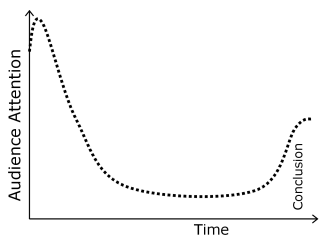
Google “audience attention span graph” and you’ll see a series of images that essentially deliver the same message: an audience’s attention is highest at the beginning, sags in the middle, and surges upward at the end (but rarely to the same height as the beginning). From my experience, this appears to be true whether your talk is three minutes or thirty.


So whenever I coach public speakers, I always tell them to spend a little extra time polishing their opening and closing. Even the friendliest audience will make a snap judgment about you within the first 10-15 seconds of your talk, so keep rewriting until that opening is clear and compelling, and memorize your first few sentences (at the very least) so you can look them in the eyes.

And pay no less attention to your closing. Audience interest always spikes towards the end of a talk, and you want to take advantage of the fact that they are likely to remember the last thing you say. As with your opening, don’t stop rewriting until your final sentences offer a clear summary or a compelling call to action, and memorize here as well so you’re looking at the audience (and not your notes) at the finish.

To learn more effective ways to communicate your organization’s message, register for “The Fast Pitch: Tell Your Story in 3 Mintures” on July 29 & 31. 

The Power of Engaging Your Volunteers 

Engaging your volunteers benefits an organization in the short-term and has long-lasting impacts as well. According to research by FIDELITY Charitable, volunteers donate an average of 10 times more money to charities compared to non-volunteers. Don’t let your organization miss the mark with your volunteers from the start: at orientation.  

Volunteer orientations are an organization’s opportunity to draw a volunteer in, lead them to understand the power and potency of their work, and better understand the organization’s “why.” Story is the way to get them there.  

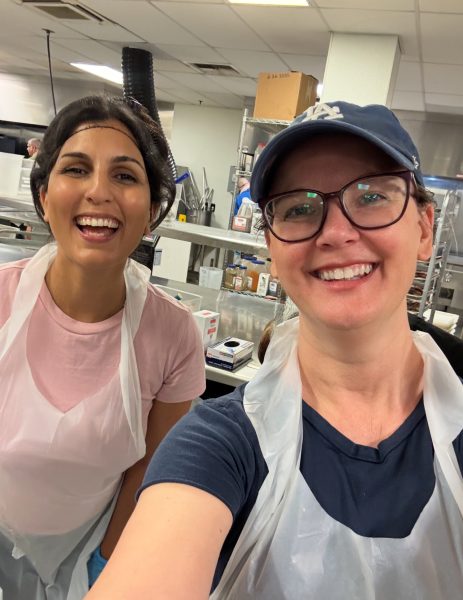
The Goodman Center recently volunteered at Project Angel Food and we were quickly captivated by the stories Volunteer Services Coordinator, Mark Cirillo, shared about the non-profit.  

Project Angel Food prepares and delivers more than 1.5 million medically-tailored meals each year, free of charge, to individuals affected by life-threatening illnesses. Jasmine Elist, Operations Manager at The Goodman Center, Facetimed with Cirillo to talk communication style, the value of creative solutions, and the power of stories in changing minds. 

The Goodman Center: During orientation, you shared the story of the history of Project Angel Food. Why was that an important story for you to share?   

Mark Cirillo: I think it’s always important for people to know a little bit about the history and what we do and how we got here.  

For my opening in orientation, I focus on the moments where [Project Angel Food] pivoted to serve L.A. County the way it needed us the most in that moment. Our start was serving all people with serious illnesses, but realized within the first few years that it was the HIV/AIDS community that needed us most. And that was the majority of our clients at the time so we actually narrowed our mission to serving only clients with HIV/AIDS for a few years, until science and medicine caught up.
That was a pivot.  

And then as soon as people were doing better and living longer – which unfortunately took almost 10 years – we were then able to open up to serving all serious illnesses again.  

And when the pandemic hit, our need doubled, and we had to expand drastically and as quickly as possible, which is why we’re in this temporary location now.  

I think it’s pretty amazing that a non-profit can pivot to do what is needed most in the community, while staying true to the mission.

TGC: What communication style do you like to use?

MC: Light and fun. I just feel people hear things better that way – if it’s framed in a way that keeps them paying attention. And because people’s minds wander all the time, if you’re keeping them engaged, they absorb more and retain more.  

I think comedy is a great way to get information to people without overwhelming them. People need the release of laughter at some point because even in our orientation, some of the statistics are horrifying. But you need them to know that we’re here. We’re doing the work. We’re here every single day. And the work is getting done. And we’re doing what we can in the greatest capacity possible to get it done.  

TGC: During orientation, you offered the “why” behind certain rules. Why was including the “why” an important element of orientation for you?  

MC: It’s so important. For me specifically, I have ADHD, so clarity is really important for me. And if it’s important for me, it’s probably important for a lot of other people – because then your head is not spinning or questioning and wondering why. Which may cause them to tune out and possibly miss the information that follows. 

I don’t want people building resentment because of the frustration over not understanding. It’s all about keeping it as positive as possible while giving them the information they need. 

TGC: What other big communications and storytelling moments do you use in your job? 

Mark Cirillo, photo by ePhotoLA / Erin Leigh Photography

MC: We send weekly e-mails where we tell our over 4,000 active volunteers what special events are coming up that we need volunteers for. What are the needs in the kitchen this week. What are the different ways we need volunteers.  

And that could be a really boring email. That could be like: we’re doing this, we’re doing this, we’re doing this.  

And, so, I’m always trying to inject either a theme into the e-mail or something that ties into whatever else is happening that month. Something that makes it light, fun, and funny. Sometimes I just lean in so heavily to alliteration or something that just keeps your mind engaged. It’s always about keeping the engagement.  

And I’m lucky because I grew up creative – focused in the arts and I think I am a natural storyteller. Not everybody has that. Not every nonprofit can find somebody where that’s natural to them. And I imagine that is a huge obstacle because it can be hard for people who aren’t creative to do that.  

Jasmine Elist (left) and Kirsten Farrell volunteering at Project Angel Food

I think when [an organization] is hiring, especially a nonprofit where you’re always going to be involved with other departments, there’s always going to be an all-hands-on deck moment – it’s important to include creative people. It’s easier for [creative people] to switch back and forth, find creative solutions, and think outside the box. So, when people are hiring, they should realize the importance of that.  

The feedback I get is so crazy positive from the e-mails and from the way I do engage with people that I’m like, “well, I guess it’s working.” And I know when a volunteer is coming in on a day when they don’t normally volunteer, or I’m meeting volunteers who have not volunteered since we moved to this new location and are responding to my emails, that it’s working and that makes me feel good.

TGC: What are some places organizations often forget to use stories that really matter, that you’ve noticed in other organizations?  

MC: With almost any company, you find something out and wonder, “why is this not part of your story? This is going to impact people.”  

It’s why I keep the detail in my orientation about how there are still clients where we may be their only human contact that day. If they are bedridden and if they don’t have a support system, they’re not seeing other humans. And now everybody knows what it was like in the pandemic to be alone, or to be trapped with people you didn’t want to be with. Everybody gets what that loneliness is like and what that can do to our mental health.   

That’s where people connect – in the details.   

TGC: Why do you think stories matter? 

MC: I mean, history is stories and history matters. And stories are how everybody connects. Everybody has their own story. And I think – I don’t know why I’m getting emotional when I think about this – But… People not knowing people’s stories is why hate exists. The details and the similarities are how we connect – it’s how we realize we’re all in this together.  

People that ignore history, the personal stories in history, and those details in history, that allows them to remain ignorant to what it is like for other people. And it makes it easier to not be kind. And to not care. Not being aware makes it easy not to care.  

Stories change minds and open minds. The human race has always told stories.  

As your organization seeks way to better engage volunteers, donors, and employees, consider Cirillo’s advice of infusing communication with lighthearted fun, with the “why” behind it all, and, of course, with the story that has the capacity to connect us all.  

ICYMI: Fear or Hope: Which Motivates More? (This group tried both.)

In Case You Missed It: This month’s ICYMI is adapted by a piece written by Andy Goodman in January 2020. In it, Andy chats with Climate Resolve and asks the question: when it comes to action around climate change, is fear or hope a more effective tool?

The question inspiring this month’s newsletter is one I hear with regularity during our workshops and webinars. My response, which I stand by even though it sounds like a dodge, is: “It depends.” Just a few weeks ago, however, I was compelled to rethink that answer when I received an end-of-year solicitation from Climate Resolve, a Los Angeles-based nonprofit.

Climate Resolve works to put a local face on climate change, and they are small but effective. They convinced the city of LA to update its building code so that all new or refurbished buildings will include “cool roofs,” and in 2019 they killed plans for a new 8-12 lane freeway that would have created even more sprawl in a region that already defines the term.


Jonathan Parfrey founded Climate Resolve in 2010 and serves as its Executive Director. Parfrey knows his way around the nonprofit world in general and the environmental community in particular. He served as the LA Director of Physicians for Social Responsibility for 13 years, as a commissioner at the Los Angeles Department of Water and Power for 5 years, and he cofounded the statewide Alliance of Regional Collaboratives for Climate Adaptation. When Jonathan and his team try something new, it gets my attention, so I called him last week to find out why they decided to use both fear and hope in their solicitation, and more importantly, if it worked.

From the outside, the letter from Climate Resolve that arrived in early December looked more like a holiday card than anything else, right down to the stamp. This was entirely intentional. The solicitation targeted 5,000 likely donors, mostly in Southern California, and the primary target was millennials. Parfrey told me that using direct mail was influenced by an article he read in Forbes that said millennials pay more attention to snail mail because they get so little of it.

The card inside was designed by Ride or Cry, a marketing firm that works mostly on rock concerts. Parfrey thought they would be an ideal partner for this project because “the aesthetic we get working with them is tilted towards a younger audience,” he said. Here is the cover they designed for the card:

When I opened the card, which has the look and feel of a standard greeting card, rather than seeing a blank area on top and a message on the bottom, I saw two messages of equal length filling the interior. The message on the top panel of the card, dated “December 31, 2049,” read as follows:

Dear Andy,

It’s another blisteringly hot day – our second killer heat wave this December.

And we thought our summers of 30 years ago were hot. Little did we know.

Some days, it’s 100% dangerous to go outside. And indoors, too, our house doesn’t stay cool for long, due to the rolling blackouts. Most days the AC is useless.

I dream about how it used to be… we simply did not act in time. We saw sea levels slowly rise, wildfires burn more frequently, and droughts last longer. We saw the decline before our eyes and still, we just didn’t understand the gravity of it all.

Back in 2020, our leaders failed us – perhaps better put, we failed to sufficiently push our leaders. We had the solutions. We had the technology. Why did we passively accept this miserable future? I wish we’d pushed harder to make a difference.

Anyway, best wishes for the new year…

Your Loving Grandchild

The message on the bottom panel of the card, which had the same date and was also sent to me (by name) from my “loving grandchild,” said this:

Getting ready for next year’s Olympics in Los Angeles. (Our fourth time! I know it’s a little embarrassing.)

The days are warm here in LA but we’ve taken quite a bite out of the heat as a result of our cool city program. Cool pavement. Shade trees. Cool walls. Cool roofs. Green spaces – all together we’ve lowered temperatures significantly. LA isn’t the post-apocalyptic city that “Blade Runner” predicted. In just a few short years, we were able to transform this jumble of dark asphalt and tree-impoverished neighborhoods into a thriving healthy network of livable communities.

I’m thankful for you. You worked to make cooling solutions possible. You saw the signals of climate change and saw it as a challenge that we could overcome. You listened to the wisdom of scientists and indigenous people in the right ways to handle wildfire, drought, and heat waves – all the things that used to plague us. You helped Los Angeles become a beacon for cities across the world.

Thank you. And hey – happy new year.

So there it was: a shot of fear with a chaser of hope. The idea for presenting alternative visions for Los Angeles was one that Climate Resolve had been kicking around for several years. “We thought presenting these two alternative LAs would make a great comic book. Or what if James Cameron used his CGI skills to show two different versions of our fair city? It’d be powerful,” said Parfrey.

When the organization decided to do a year-end solicitation – the first in its ten-year history – Parfrey was convinced that themoment had finally arrived to give the dual-vision concept a try. Michael Parada, Climate Resolve’s manager of communications, wrote the first draft of the text and Parfrey provided the final polish.

“Our people are unaccustomed to getting solicitations from us,” said Parfrey, “so this was part of a larger effort. Getting money was only part of the goal. The other part was communicating that we’re smart, we’re creative, we can be trusted, and we’re going to ask for money.” That said, the piece did pretty well, raising somewhere between $15,000 and $20,000 on an investment of $5,000.

And as to the central question of using both fear and hope: “I think we’re in a moment where fear is a stronger motivator than hope,” Parfrey began. “I’m looking at the evidence. I’m looking at Greta Thunberg. There is a tinge of the apocalypse in her framing.” But Parfrey was quick to add that fear, by itself, isn’t the only button to press.

“The data is clear on this,” he said. “The more dire the messages sound, the more individuals will tuneout. And I say this with full-knowledge that the climate picture is dire. You have to be honest, you have to present the sobering information, yet we still have the choice before us to dramatically improve the situation or make it worse. The choice is still ours.”

Before our conversation was over, Parfrey qualified his comments, saying that this analysis pertains only to messaging around climate change, and that it is not necessarily appropriate for all causes. So noted. But as you, dear reader, prepare for a new year, ask yourself this: If your organization has been wielding the carrot or stick exclusively, has the time arrived to try both?

To learn more effective ways to communicate your organization’s message, register for our “Strategic Communications: Cutting Through the Clutter” Workshop on July 8 & 10. 

Stories for Survival

These days, knowing one’s rights and what supports might be available can be life-changing or even life-saving. As an organization, getting facts and actionable steps out to your community is imperative

Even more imperative? Getting that information out in a way people can understand and remember. 

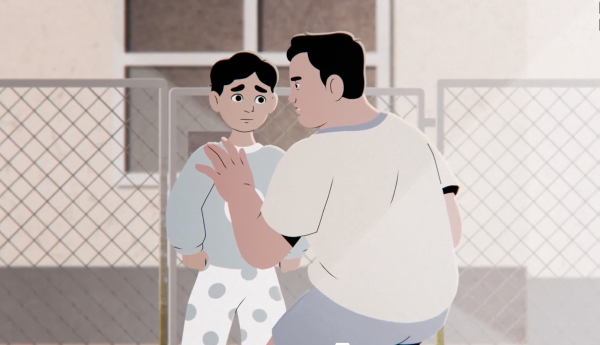
The team behind WeHaveRights.us has achieved this brilliantly. In 2018, the ACLU and Brooklyn Defender Services released a series of four videos created in collaboration with MediaTank Productions and a fifth in 2020. The series is meant to inform people of their rights when interacting with Immigration & Custom Enforcement agents (ICE). Each video shares dos and don’ts: Be prepared for encounters. Do not show any documents. Document arrests. And, each  guideline is embedded within a personal story. 

Take a moment to watch the videos (they are each just a few minutes long), and you will see how the narrative moments give the instructions clarity and a sense of urgency.

Michael Kleinman, the founder of MediaTank Productions, co-wrote and co-directed the episodes. Kleinman told us about the inspiring success of the campaign.  

“The videos have been viewed tens of millions of times since their release. Notably, millions of views have come in 2025, nearly 7 years after the initial launch, proving their durability as a tool for information. The videos benefited from partnerships with major media outlets and hundreds of nonprofit partners who participated in the campaign as well as celebrities who lent their voices and platforms to the project, including Jesse Williams, Kumail Nanjiani, Diane Guerrero and Fiona Apple.”  

What made these episodes resonate so much with viewers? Their use of story. Michael told us, “We decided to couch the vital information we were providing to viewers in human stories for several reasons – the dramatic narrative structure made the videos more engaging, which allowed for a wider reach and greater shareability while also making it easier for the viewer to retain information. Because the stories we used were all based on real world examples of encounters with ICE, they also provided viewers an emotional window into what is happening in communities across the country. In creating the stories, we worked closely with immigration lawyers and undocumented communities to ensure the storylines were accurate and that they connected with our target audiences.” 

Whether sharing information about funding losses, language changes your communities might need to know for grant forms, or how to participate in your programs, don’t leave stories at the door.

When you have instructions to share with your partners, clients, and communities, connect information to real human experiences. Stories are a doorway to engaged learning. 

Make an Overture

Every time I sit down in the audience for a keynote or breakout at a conference, I am hoping I will hear a brand new insight or innovation that can make the world better sooner! But excitement doesn’t always translate to absorbing and adopting new ideas. When most of us encounter true innovation, it passes us by because it is too unfamiliar for us to understand.  

So, what can someone with a brilliant new idea do to speed up the rate of understanding and adoption to their new idea? There is a method to introduce fresh concepts in a way that feels familiar to the audience. I call it the “speaker’s overture.” 

On my recent trip to New York, I was lucky enough to catch Gypsy, starring the unparalleled Audra McDonald. Gypsy premiered on Broadway in 1959, and was written by Jule Styne (music), Stephen Sondheim (lyrics), and Arthur Laurents (book). This powerhouse team followed a musical tradition that presenters and public speakers can borrow. 

Before the curtain rises, the pit orchestra plays a medley of the tunes you are about to hear, called the overture. The overture contains a riff from “Let Me Entertain You,” a snippet of “Small World,” and a taste of “Everything’s Coming Up Roses.” For audiences that have never seen or heard the show, these new melodies are being gently introduced to our brains. When the songs come back within the story of the show, they feel familiar. Our brain recognizes the musical idea. We can absorb them. We can almost hum along. 

In presentations, we call this “telling them what you are going to tell them.” If you have brand new ideas, programs, and innovations for our field (and we hope you do!), sprinkle some of those big ideas into your intro, so that when we get to the meat of your presentation, the audience can absorb them. “Hey, that sounds familiar.” Which is a whole lot better than, “I’m not sure I’m understanding this. Sounds risky.”  

Great examples of the speaker’s overture can be found in a few of the most popular TedTalks of all time (according to Oprah Daily). Watch the first minutes of Kelly McGonigal’s talk, How to make stress your friend, and you will hear strains of her big idea that changing your mind about stress can change your body’s response to it. In Sir Ken Robinson’s talk, Do schools kill creativity?, before the 3-minute mark he shares, “all kids have tremendous talents, and we squander them, pretty ruthlessly.”  

Your opening will help the audience absorb and adopt your new ideas, if you play them a speaker’s overture.