How 9/11 Reminds Us of the Awesome (but Volatile) Power of Living in the Same Story

Where were you that day?

I was in Los Angeles, three thousand miles away and three hours behind, but the distance in space and time collapsed that morning. After our son and daughter had already left for their respective schools, my wife and I got word that something inexplicable was happening in New York City. By the time we turned on our TV, both towers of the World Trade Center were billowing smoke, the Pentagon had been hit as well, and it was clear this was a coordinated attack unlike any other. Just before 7:00 AM our time, the South Tower collapsed right before our eyes. About a half hour later, the North Tower went down. And then the rumors started.

There were still hundreds of planes in the air. Any plane might be turned into a missile. Nobody was safe, even thousands of miles away from the devastation on the East Coast. Despite assurances from their schools that our children were safest where they were, we hustled them home as fast as we could. And then, like millions of others, we spent the rest of the day frozen in front of the television, horrified but unable to look away, and struggling to understand what was happening.

In the ensuing days and weeks, I noticed a change in my interactions with strangers whom I passed on the street or stood behind in line at the supermarket. We would catch eyes momentarily, and without speaking a word, an understanding passed between us. We had all seen it. We had all felt (and were still feeling) the shock of it. Even the mundane act of waiting in a crowd for an elevator was suddenly charged with emotion. You just knew what everyone was thinking: What about those people who waited for an elevator that never came? What about the loved ones they left behind? But along with the horror and sadness, we were feeling something else, and perhaps you felt it, too: a sense of connection borne of shared trauma. We were all in the same story.

Extraordinary things can happen when millions of people feel connected by a single narrative. They can march for justice. They can also march into war, which was the direction that the Bush Administration chose to lead us in the aftermath of 9/11. Stories are neither inherently good nor evil, but I would submit that they remain unparalleled when it comes to bringing people together and moving them towards action. Human beings have literally evolved as a species that relies on stories to understand how the world works, how to survive, and how to thrive. When we all agree on the same stories, we pull together and form tribes, religions, and nations.

And yet, these rare, all-encompassing stories can also be volatile, quickly mutating and dividing into conflicting stories that tear us apart. Certainly, this is one of the major lessons of the coronavirus pandemic. Think back to March 2020 when reports of the virus started to accelerate until suddenly every aspect of daily life came to a crashing halt. I remember standing in line outside my local supermarket waiting to buy toilet paper, again catching eyes with strangers, but this time because it was the only part of their face that wasn’t covered by a mask. Once again, we were able to communicate without words because we were all in the same story. But not for long.

Within a few months (if not weeks), the simple act of wearing a mask divided into two stories. One was about protecting your health and the health of people around you. And the other was about succumbing to government interference and yielding personal freedoms. Once again, we witnessed how powerfully stories can unite groups of humans, but tragically in this case, into warring tribes within one nation.

So, on this 20th anniversary of 9/11, as we all remember how we felt and consider what we’ve learned, I hope you’ll also take a moment to consider the unequaled potential of stories to unite your audience, advance your mission, and make the world a better place. Your work is too important to use anything less.
Your Summer Viewing List (Part 2)

We hope you had a chance to check out the five award-winning campaigns featured in our July issue and, as promised, this month we’re introducing you to five more. Once again, they address a wide range of issues – everything from infant malnutrition to the epidemic of loneliness among older adults – and each has been recognized by the Cannes Lion Awards for outstanding creativity. Thanks again to Lovethework.com for compiling the complete list of 2020-2021 Cannes Lion award winners, and to Storythings for introducing us to Lovethework.

  MOTHER BLANKET

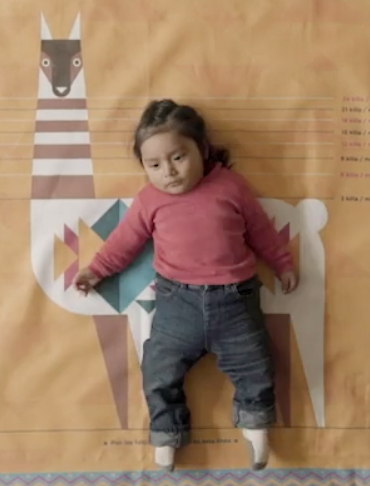
In the Ecuadorian Andes, over 300,000 children suffer from chronic undernourishment. Parents often believe that a chubby baby is healthy, but the child’s height is actually a more precise indicator than its weight. To address both the problem and popular misconception, Fundacion Vivir, a local NGO, produced baby blankets (known in the Andean tradition as “Sikinchi”) with a growth chart sewn into the blanket’s design. Following World Health Organization guidelines, the blankets help parents accurately track their babies’ growth and recognize abnormalities early on. Last year, the “Mother Blanket” helped identify over 15,000 cases of malnutrition that might otherwise have gone undetected.


THE PEDESTAL PROJECT

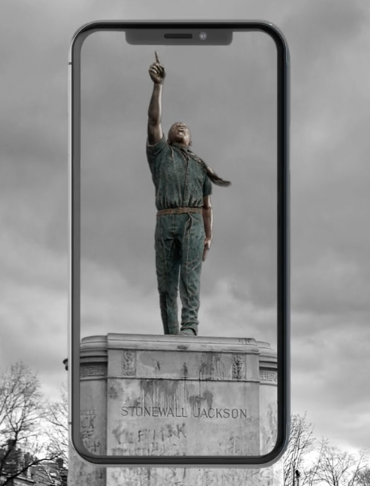
What do you do with a monument to Confederate soldiers after the statue has been torn down and only the empty pedestal remains? In February 2021, Color Of Change, the nation’s largest online racial justice organization, launched The Pedestal Project to place racial justice leaders atop those pedestals. This wasn’t a costly statue-for-statue replacement program, however. Color of Change asked people to use an augmented reality tool on their phones to place 3D images of the new statues on the pedestals (displaying leaders such as John Lewis, Chelsea Miller and Alicia Garza), take pictures of the virtual monument, and then share them on Instagram. The online campaign reached 48 countries and tallied over 600 million media impressions without Color of Change spending a single dollar to promote it.

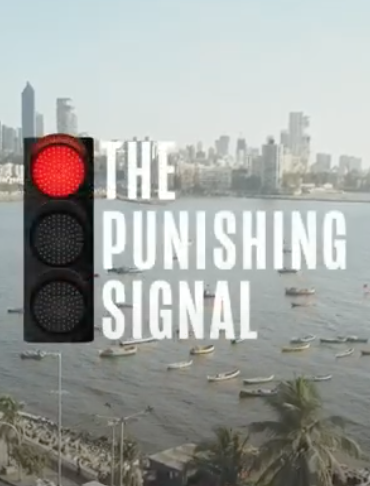
THE PUNISHING SIGNAL

Mumbai is infamous for its traffic jams, and rightly so: frustrated drivers are known to honk during red lights even though a countdown timer indicates exactly when the light will turn green again! To address the noise pollution resulting from these jams, the Mumbai Police department implemented a creative solution: “The Punishing Signal.” Devices measuring decibel levels were connected to traffic signals throughout the city. When the cacophony from the honking horns exceeded 85 decibels, the countdown timers would automatically reset to a longer-than-usual waiting period while an electronic sign would flash the message, “Honk more, wait more.”


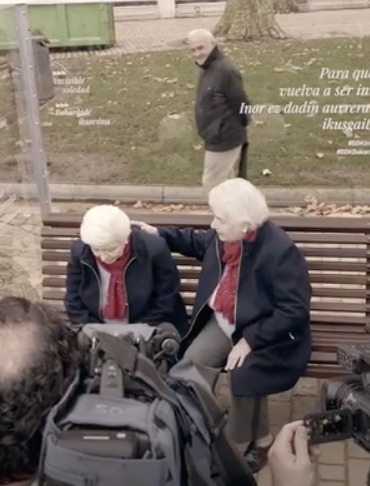
THE LAST OLDER PERSON TO DIE IN LONELINESS
The World Health Organization has called loneliness “the epidemic of the 21st century.” The problem is particularly prevalent in Spain where over 2 million older adults live alone. Further aggravating the situation is that loneliness is often an invisible problem since older adults may be isolated in homes and apartments, out of view from the general population. To raise the visibility of this issue, the BBK Foundation designed and installed a hyper-realistic sculpture of an older woman, Mercedes, and placed it on a park bench in a busy city. The sculpture attracted the attention of passersby, then the media, and ultimately went viral via the Internet, creating 148 million social media impressions.


GIVE HER A BREAK

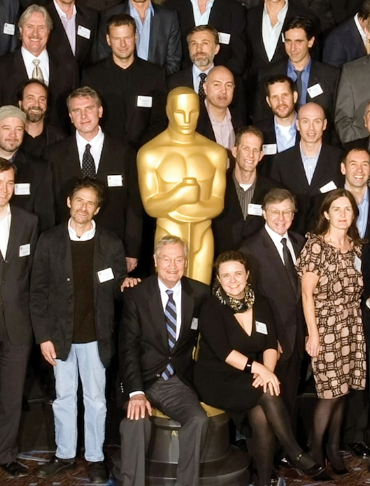
When Chloe Zhao won the Oscar for Best Director this year, it was both well-deserved and anomalous: in the 92 years prior, only five women were even nominated for this award.

In 2019, GiveHerABreak.org called attention to this nearly century-long discrimination against women by creating a technology that replaced commercials airing during the Oscar telecast with trailers for female-directed films. (We could fill another entire newsletter just explaining how the technology works, but the important things to know here is (1) that it actually worked, and (2) that it was entirely legal.) GiveHerABreak used Twitter and Instagram to promote the stunt, the media picked up the story, and when the Oscar telecast began, people started logging on at the rate of 75 per second! Ultimately, that added up to over 22 million impressions at no cost to GiveHerABreak.

Your Summer Viewing List (Part 1)

Long-time subscribers to this newsletter will recall that our July issue traditionally presents a “summer reading list,” but since the past year has been unlike any other, we thought it fitting to try something new this time around. So, instead of recommending books to bring to the beach (or wherever you find respite from the summer sun), we’re providing links to videos from award-winning public interest campaigns that were conducted in 2020-2021 around the world.

These campaigns addressed a wide range of issues in healthcare, the environment, racial justice, the drug trade, gender bias and more, and every one earned a Cannes Lion Award for outstanding creativity. If you’re looking for inspiration as you prepare for battles ahead, look no further than the five amazingly clever and effective campaigns listed below. And we’ll have five more for you next month in part 2 of this list.

Special thanks to Lovethework.com for curating the complete list of 2020-2021 Cannes Lion award winners, as well as to Storythings for introducing us to Lovethework. Scroll down to access the five award-winners on part 1 of our list.)

THE BREAD EXAM

In the Middle East (as well as other parts of the world), it is considered taboo for women to talk about intimate parts of their bodies. For organizations intent on disseminating information about breast cancer and techniques for self-examination, this is a formidable barrier – but not an insurmountable one for the Lebanese Breast Cancer Foundation. As Mirna Hobballah, vice-president of the foundation, explained: “Since many households bake their own bread and are interested in this subject – especially now, during the Covid 19 pandemic – we decided to use baking bread as a euphemism and talk to women about baking bread instead of talking about breasts, self-examination or cancer.” Thus, the “bread exam” was born and eventually duplicated in countries all over the globe, reaching millions of women with critically needed information and advice.

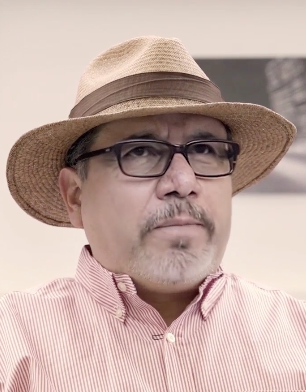
STILL SPEAKING UP

Since 2007, over 120 journalists who were investigating the drug trade in Mexico have been murdered. Journalists working in Mexico today are understandably reluctant to speak out against the murderous cartels, but last year Propuesta Civica, a human rights organization based in Mexico City, found a way to let their voices be heard while also protecting their identities. Using the artificial intelligence technology behind “deep fakes,” they brought back to “life” Javier Valdez, a prominent journalist killed in 2017. Valdez appeared “live” on national TV in Mexico to directly address the country’s president and demand justice for his journalistic colleagues. The campaign continues to this day on the #StillSpeakingUp platform using deep fake spokespersons to help expose the cartels while protecting the journalists who cover them.


ADDRESSPOLLUTION.ORG

Air pollution is one of those environmental issues that everyone will tell you they care about, but most people will do nothing about until it affects them directly. In London, the Central Office for Public Interest knew that 10,000 residents die prematurely every year due to toxic air, so they decided to make it a pocketbook issue. Working with the agency AMVBBDO, the office devised a system to link air pollution to property prices. Simply by logging on to addresspollution.org, any London resident could find an Air Quality Report for their address showing both the health and financial impacts of pollution. Properly motivated, the homeowners were then directed to actions they could take at both the local and national levels to fight pollution. The campaign led to the passage of a law requiring home sellers to disclose the pollution levels in their neighborhoods to prospective buyers.


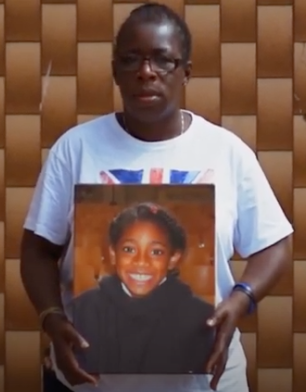
THE CALL

“When it comes to getting proper healthcare, it shouldn’t matter what your name is or how you sound like. Your pain shouldn’t be underestimated because of biological myths that are not only scientifically false but also fantastical in nature.” So says EmpowHer New York, a nonprofit fighting unconscious bias in health care among other issues. Despite clear data that shows how

black people are less likely to be prescribed proper treatment or medication for conditions such as abdominal pain, most people still do not recognize the built-in biases in health care. So EmpowHer set up an experiment to show exactly what this looks and sounds like. In “The Call,” an actress, Corin Wells, places several calls to a 24-hour help line staffed by registered nurses to complain about abdominal pain. The script never changes – what does change, however, is the names she gives, the way she reads the script, and most telling of all, the responses of the nurses.


A FUTURE WITHOUT CHANGE

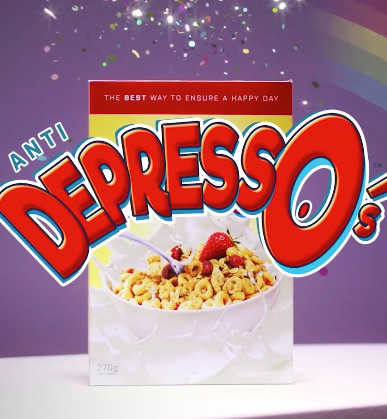
University recruitment campaigns: if you’ve seen one, you’ve seen them all…right? “Come to Fill-in-the-Blank University and build a better tomorrow!” Monash University in Melbourne, Australia took a decidedly different approach last year when they asked potential students to consider a dystopian future – one in which current problems have only gotten worse. But rather than focus on the problems themselves, the campaign featured the Black Mirror-like products that were created as a result of these problems, such as a government surveillance robot, anti-depressant breakfast cereal for children, a “MiSlave” app, and more. “A Future Without Change,” as the campaign was called, presented what the world could become if we adapt to problems rather than solve them – a much more interesting way to say “Come to Monash University and build a better tomorrow.”