
In this month of hearts, it seems fitting to focus on the role emotions play in connecting your audience to your cause. How can your comms efforts have the power to compel action? How can you get your audience to donate, to volunteer, to vote – even just to pay attention? How do you win hearts and minds?
Let’s take a moment to consider that phrase itself. There is good reason it is “hearts and minds” and not “minds and hearts.” The pervasive attitude since Descartes famously coined, “I think therefore I am” has been that humans are rational beings who have feelings, but experts like neuroscientist Antonio Dimasio and anthropologist George E Marcus have been making claims that turn Descartes on its head.
Marcus, in his paper The Sentimental Citizen: Emotion in Democratic Politics claims that reason itself relies upon emotion to determine what to respond to, what is central and vital to us and to initiate and manage action. Or as one of my favorite experts, Andy Goodman, always says “If you don’t care, you don’t do.”
In public interest communications, we have to win their hearts in order to access their minds and help them make the decision to sign up or show up. We need to give them all the feels.
Science backs me up on this, too. In their paper Emotion and Decision Making, Jennifer S. Lerner, Ye Li, Piercarlo Valdesolo, and Karim S. Kassam state that “The research reveals that emotions constitute potent, pervasive, predictable… drivers of decision making.”
If you want your outreach to be potent, pervasive, and persuasive, you are in the realm of storytelling. Neuroscientist Paul Zak has shown in his lab that storytelling has the power to release oxytocin in the brain of the listener or watcher. Oxytocin is a hormone which plays a key role in human bonding.
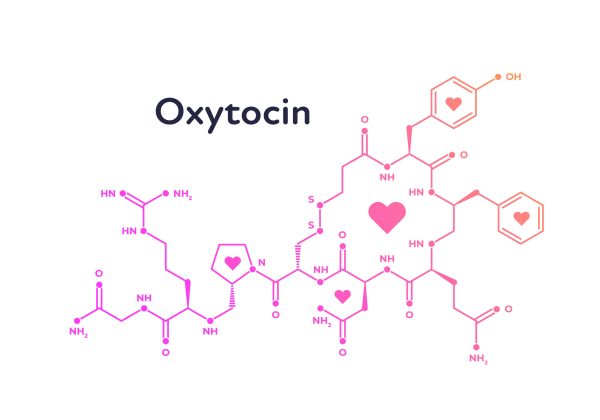
Zak goes further to call oxytocin the “moral molecule.” “My lab pioneered the behavioral study of oxytocin and has proven that when the brain synthesizes oxytocin, people are more trustworthy, generous, charitable, and compassionate.”
You already know this, because you have experienced it. Stories in the form of films, tv, a loved one’s anecdote or bedtime story have elicited your joy, hope, compassion and more. I think we are sold on story.
Here’s a warning though: the word “story” is bandied about. “Tell your brand story.” “What’s your website’s color story?” “Your data tells a story.” These are not the stories that Zak and I are talking about. You need to be telling stories where real people experience real things and are changed. This is dramatic narrative.
So, if you want to capture those hearts and minds and spur some action, tell your audience the stories of what you do and how you do it. And if you want to know more about how to do that… well, my friend, you are in the right place.