“Jen is tired from a long week of ten-hour days and seemingly endless subway delays. She winds her way through bustling Times Square, skillfully maneuvering around the tourists gawking at the towering skyscrapers above as she rushes into work. Her well-tailored coat nearly gets caught in the closing elevator doors as she squeezes in. She almost falls into a bike messenger balancing too many packages.”
We are inside what could be the beginning of almost any romcom (after all, it’s February!).
Action, drama, mystery, romance, memoir. As different as these genres may seem, they all start with a where. A good where is a non-geographical location (i.e. an office, a kitchen, or a classroom) that serves as the setting for the story. The where invites us to come inside with the characters. It is the first building block to story structure.
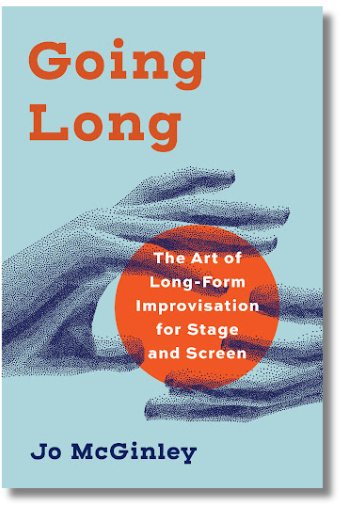 I recently read “Going Long” by Jo McGinley, one of my dearest improv mentors. Her excellent book reminded me that “knowing where you are is a launching pad… It pulls [the audience in] and immediately gives you a structure to work with… we are somewhere specific so [the audience’s] minds are engaged.”
Establishing the where is the very first thing in so many great movies and books, but it is often missing altogether in the stories we tell for our organizations.
Instead, many start their stories with a data point. An impact story on the website of a nonprofit often begins with something like this: “In Charles County 12% of the population lives in poverty. The small rural county with a population of just 58,000 has an ALICE percentage of 38% and a very busy Care Together chapter addressing needs.”
These facts are then followed by a whole paragraph giving more context and data and eventually get to a story about an event at which the local organization (I’m calling them “Care Together”) and their partners distributed 350 backpacks filled with essential school supplies to students. No doubt, those backpacks made a big difference to those kids and their families. We learn the facts about this event, but we aren’t carried inside of it. We might recognize the good accomplished, but could we feel it more strongly?
A where isn’t simply a geographic location–it’s setting the scene and painting a picture for the reader. Charles County is a place, but not a where. The gym with a pile of backpacks Tina navigates while a line of people snakes around the basketball court is the where. Like you create a set for a movie, you are bringing the audience into a specific time and place where the action is happening.
If you want to pull your audience inside, borrow from the best storytellers and start your story with a where. “Tina steadies the tower of backpacks as she pulls a blue canvas one from the pile. Behind her, folding tables and tents have been set up on the basketball court of Charles Elementary. Tina swings the backpack, heavy with school supplies, onto her shoulder and carries it towards the next family waiting at her station.”
Once the audience is brought into the world of the story, then you can add the data you want, being careful not to burst the delicate bubble of the narrative. “In a small rural county with a population of just 58,000, Tina wouldn’t expect so many families to be in need, but 38% of people in Charles County are Asset Limited, Income Constrained, and Employed—what Care Together calls ALICE. Tina glances from the line winding around the free-throw line back to the pile of backpacks. She hopes there’s enough for everyone.”
The where is a powerful tool. Include a where in your success stories. Ask about the where when gathering a testimonial. Bring your audience into a where during a presentation. Don’t leave your audience hanging out in the wind. If you have no where, you have no story.
So, next time you are wondering, “how do I tell this story?” Start with where.
Want to practice the where of your story and hone other storytelling skills? Sign up for our next “Storytelling: Tapping the Power of Narrative” workshop on May 13, 20, 27 & June 3.