
A number of years ago, I took on a job as Operations Manager at a small nonprofit. I had been a part of their community for a long time, and I couldn’t wait to answer the call to improve systems and workflows to make the organization and community stronger.
One of the first items on my to-do list was reformatting the weekly staff meeting. I had heard from nearly every person in that meeting that it was a drain on energy, and it felt like the same meeting every week. I even sat in on a couple before officially beginning my job there. They were painful.
What was so egregious about this meeting? What horrible structure had they put in place to make it unbearable? Well, uh, there was nothing egregious, and the structure was to hear reports from each person in the meeting about their current projects – pretty run of the mill. So what was the problem?

I was pretty sure at the time that the issue was the agenda. So, I changed the format of the agenda and tried to get us focused on deadlines and actions so that projects had movement from week to week. I also added a cute title slide to the agenda to celebrate International Pancake Day or Pizza Day to try to alter the vibe of dread that had become the norm.
For two meetings, there was a lift in energy. The staff was smiling – even breathing sighs of relief. It was working! However, within one month, it went back to the same draining experience it always had been. I didn’t know at the time that I was missing the ultimate meeting question: “Why have we gathered?”
Many leaders skip the step of crafting a purpose for their meeting. In The Goodman Center class Meetings for People Who Hate Meetings, we focus how to build your meeting agenda using an objective statement, the why of your gathering. Our method for digging into the objective is to keep saying “…in order to” until you have landed on a purpose, not just a process.
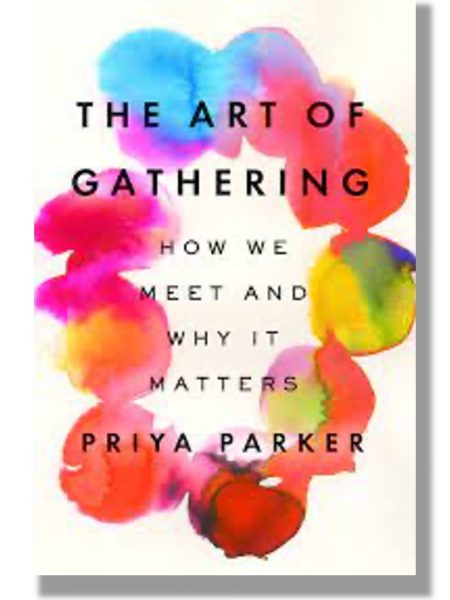 Priya Parker talks about this in Chapter 1 of her book, The Art of Gathering – How We Meet and Why It Matters. Parker advises that for every gathering you lead you “Ask why you’re doing it. Every time you get to another deeper reason, ask why again. Keep asking why until you hit a belief or value.”
For example, you might think the purpose of your weekly staff meeting is to “keep everyone informed.” Why? In order to… what? At that unnamed nonprofit above, one coworker thought we needed to be informed in order to offer ideas to each other, one thought it was because there were problems when “the right hand doesn’t know what the left hand is doing,” someone else thought it was for accountability. No wonder these meetings never felt like a success. Everyone was there for a different reason, and no one was getting what they expected. A cute title slide wasn’t going to help. We needed an objective statement and to understand our roles in the context of that objective.
Join us on October 11th and 13th for our next Meetings for People Who Hate Meetings class. In this gathering, we will share tools for agenda-building, meeting leadership, and brainstorming in order to make sure your organization can stop draining your time and energy and save that energy for making the world a better place.