An organization’s brand has the power to be a memorable point of connection, or an after-thought. As integral as an organization’s brand is, it’s a tricky element to achieve effectively, and prone to easy missteps. In this month’s “In Case You Missed It” from 2002, Andy Goodman poses seven questions to ask yourself before building your brand’s story.
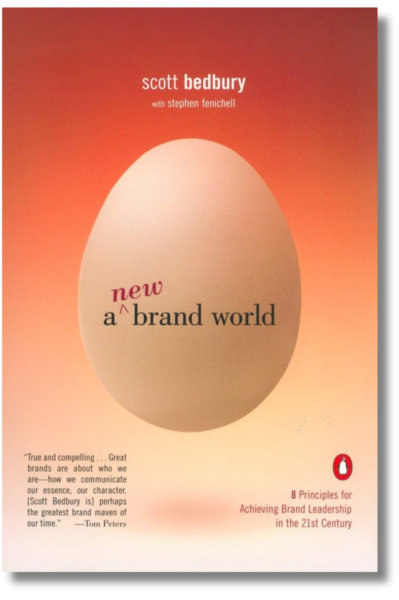 Scott Bedbury knows something about branding. He ran brand-building campaigns for Nike and Starbucks and wrote, A New Brand World, a highly acclaimed book on the subject. “In an age of accelerating product proliferation, enormous customer choice, and growing clutter and clamor in the marketplace,” Bedbury says, “a great brand is a necessity, not a luxury.”
That’s conventional wisdom in the commercial sector, but many public interest organizations continue to wrestle with “the B-word.” In talking to nonprofits and foundations of all sizes and in all regions, I’ve come to the conclusion that five myths underlie this problem:
Myth #1: Branding is for Procter & Gamble, not us.
Face it: Bedbury’s statement holds equally true for public interest groups. Nonprofits and foundations have proliferated rapidly, too, and your audience is probably just as overwhelmed with the number of groups working on your issue. Increasing media clutter affects your message just as much as commercial ones. Branding is a necessity because, at its essence, it’s about establishing a genuine relationship with the audience, and what kind of organization doesn’t need that?
Myth #2: We define our brand.
You’re half-right. Consciously or not, every organization sends messages about itself to its target audience. In ads, newsletters, annual reports, or just door-to-door canvassing, you may be telling your audience you’re a leader, you get results, you’re competent, you care. But that’s not your brand! There’s another half to this equation: the audience’s experience. Your brand lives in their heads. A strong brand is a strong relationship, which generally implies respect, trust, and some degree of affection.
“Anyone who wants to build a great brand first has to understand who they are,” says Bedbury. “You don’t do this by getting a bunch of executive schmucks in a room so they can reach some consensus on what they think the brand means. The real starting point is to go out to consumers and find out what they like or dislike about the brand and what they associate as the very core of the brand concept.”
 Myth #3: We’ve got an identity system. We’re covered.
R. Christine Hershey has worked on such international brands as Disney, Coca-Cola, and AT&T, and through her nonprofit design firm, Cause Communications, she has strengthened the identities of The James Irvine Foundation, Los Angeles Urban Funders, and Liberty Hill Foundation. When it comes to designing logos, picking company colors, or selecting just the right paper stock, Chris is an award-winner, but she’ll be the first to tell you that branding doesn’t end there.
“Branding is your organizational DNA,” says Hershey. “It is everything that represents you to the world. It’s how you get the phone, how your office looks, how you look, your website – it’s not just your printed stuff.”
In Chris’ office, providing personal client service is such an intrinsic value that she ruled out a voicemail system. “Our clients demand a high level of accountability. They want a live person,” she says, so when they call, they get one – every time.
 Myth #4: We’re a foundation. The audience is competing for our attention!
Granted, when you’re handing out money, people will always beat a path to your door. But consider the experience of The California Wellness Foundation (TCWF), which disburses up to $40 million a year to groups that improve the health of Californians. In 1996, TCWF surveyed grantees past and present to ensure that the foundation was properly serving its audience. The feedback was mostly positive, but when asked to evaluate the foundation’s communication materials, some of the respondents described them as “intimidating,” “hard to understand,” and “slick in an HMO way.”
With the help of Cause Communications, TCWF gave itself a makeover that affected all aspects of its visual identity (color, typeface, style of photography, paper stock) and every communications tool (website, newsletter, annual report, stationery, signage). The intent was to “warm up” the foundation’s image and make it more accessible to worthy applicants – i.e., community groups that might otherwise have shied away from what they perceived to be a huge, impersonal institution. And it worked: according to VP of Communications Magdalena Beltrán-del Olmo, more grant applications are coming in, and a higher percentage conform to foundation guidelines, indicating clearer communication with the target audience.
Myth #5: We’re a small nonprofit. We can’t afford it.
Presenting a consistent image to your constituents does not have to be a costly affair. Chris Hershey tells do-it-yourselfers who want to reevaluate their organization’s look to take a piece of paper and divide it into four columns:
- In column one, list what your organization does – the services you provide, issues you cover, audiences you serve, etc. No judgments or adjectives here – this column is simply for the facts about your work.
- In column two, list words that describe how your organization approaches these issues and serves its audiences. Are you new and confrontational, established and collaborative, multidisciplinary or single-issue focused? Find the adjectives that your audience would be most likely to use to describe you and list them here.
- In column three, translate these adjectives into colors, textures, typefaces, and photographic styles. At this stage, it may be useful to have samples to look at (design books or even magazines can help) so you can point to particular shades, fonts, or photos that feel like your organization.
- In column four, list all your communication tools, from simple door-hangers to television PSAs. Now consider how your list in column three can guide the design of each tool so that all communications materials consistently reflect your image.
A former professor at the University of Wisconsin School of Business, Michael Rothschild now serves as associate editor for Social Marketing Quarterly. “As social marketers, I feel that we have not been concerned enough with developing brands or bonds,” says Rothschild. “We have been more concerned with telling people how to behave and less concerned with building relationships.” Perhaps if we all tried thinking of branding as relationship building, our entire sector will stop being held back by myths.
For more tips on connecting to your audience through brand, voice, and communication, sign up for The Goodman Center’s workshop Strategic Communications: Cutting Through the Clutter on March 31 and April 2.